 Season 1: The Crimson Plague
 is the first major seasonal campaign in
Last War Survival. It introduces Virus Resistance, Infection Stacks, Immune Protein, Mutant Crystals, Protein Farms, professions, Military Strongholds, seasonal Cities, cross-warzone territory, Mason’s UR promotion, and the first Exclusive Weapons.
The most important change is that normal squad Power is no longer enough.
Virus Resistance becomes a second progression gate: if it falls below an infected enemy’s requirement, your damage can be heavily reduced even when your heroes and troops would normally be strong enough.
Your best early priorities are to join an active alliance, develop Protein Farms, spend Immune Protein on the Virus Research Institute, complete seasonal quests and first-kill rewards, and follow your alliance’s Stronghold route instead of attacking seasonal objectives randomly.
★Quick Take: In early Season 1, prioritize Virus Research Institute → Protein Farm economy → one main combat formation → alliance territory objectives. Avoid spreading Immune Protein across every Military Base before your Virus Resistance can handle the next infected enemies and Strongholds.
What Is Season 1: The Crimson Plague?
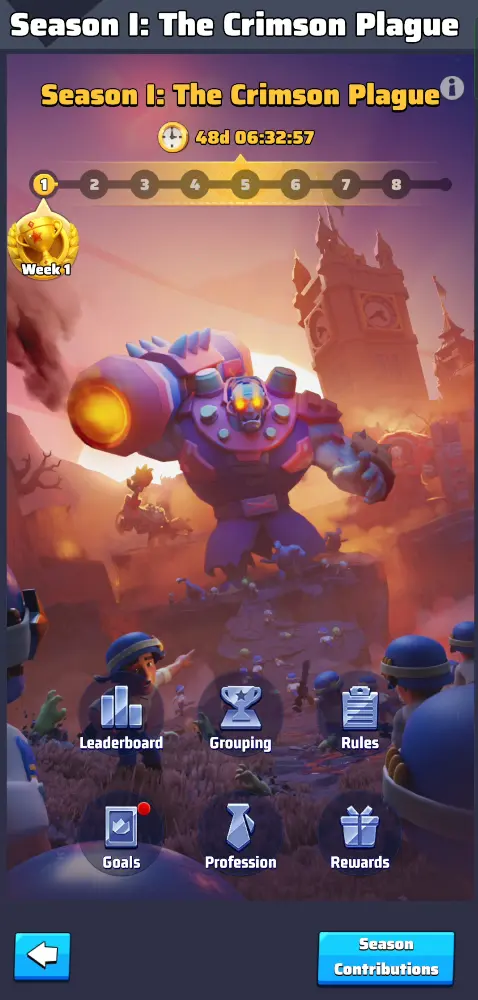
The Crimson Plague replaces normal map progression with an infected seasonal battlefield. Alliances start near the edge of their warzone and rebuild territory by capturing connected Military Strongholds before moving toward Cities and eventually the City of Apocalypse.
| Season 1 System |
What It Does |
| Virus Resistance |
Reduces the seasonal combat penalty against infected targets |
| Immune Protein |
Upgrades the Virus Research Institute and seasonal Military Bases |
| Mutant Crystal |
Upgrades Protein Farms and Military Bases |
| Gene Fragments |
Used for Genetic Recombination and seasonal rewards |
| Protein Farms |
Generate Immune Protein throughout the season |
| Professions |
Unlock Engineer or War Leader skills |
| Military Strongholds |
Form connected alliance territory and routes to Cities |
| Cities |
Provide Influence, buffs, rewards, and strategic territory |
| Hero’s Return |
Provides another recruitment route for selected earlier UR heroes |
| Mason Promotion |
Allows eligible players to promote Mason from SSR to UR |
| Exclusive Weapons |
Add hero-specific weapon skills and milestone bonuses |
Season 1 rewards individual activity, but alliance organization matters just as much. Stronghold routes, City declarations, treatments, Gene Fragment exchanges, and end-of-season Influence rewards all depend on coordinated participation.
Season 1 Timeline
Season 1 begins with a
two-week Pre-Season, followed by eight active seasonal weeks. After active Season 1 ends, the game moves into a Celebration period before the next major season.
| Phase |
Typical Length |
Main Focus |
| Pre-Season |
2 weeks |
Season preview, grouping, Season Boost, Capitol Conquest, and preparation |
| Active Season |
8 weeks |
Virus progression, territory, professions, Cities, hero upgrades, and seasonal warfare |
| Celebration |
Post-season period |
Black Market and other transition events before later seasonal progression |
Your warzone can start at a different time from another server, so use the countdown in the Season interface rather than assuming the active season begins at a normal daily reset.
Season 1 City Unlock Schedule
The documented Crimson Plague schedule progressively unlocks higher City levels:
| Season Day |
City Level |
| Day 4 |
Level 1 |
| Day 7 |
Level 2 |
| Day 11 |
Level 3 |
| Day 14 |
Level 4 |
| Day 18 |
Level 5 |
| Day 21 |
Level 6 |
| Day 28 |
City of Apocalypse |
The alliance controlling the Capitol before the active season continues to have access to government functions until the seasonal Capitol battle becomes available. The
Last War Presidential Titles guide explains how Ministry buffs can reduce construction, research, training, and healing times during the season.
What to Do During the Two-Week Pre-Season
The Pre-Season is primarily a preview and preparation phase. The main Immune Protein, Protein Farm, Virus Research Institute, and territory economy begins when active Season 1 starts.
Use Pre-Season to:
- Check which warzones are grouped with yours.
- Review the season rules, map, and reward previews.
- Participate in the Pre-Season Capitol Conquest when available.
- Decide whether your current alliance is organized enough for Season 1.
- Improve your primary formation.
- Prepare Advanced Teleporters for hive movement and territory operations.
- Save useful stamina and generic speedups rather than spending them without a goal.
- Discuss Stronghold and City routes with alliance leadership.
Can You Get Immune Protein Before Season 1 Starts?
The normal Immune Protein progression loop does
not begin during the two-week preview phase. The Virus Research Institute and Protein Farm unlock as active Season 1 begins, so Pre-Season preparation should focus on your alliance, squads, resources, and seasonal planning rather than trying to farm the full Virus economy early.
Choose Your Alliance Before Territory Expansion
Season 1 is difficult to play efficiently in an inactive alliance. Look for:
- Active R4 and R5 leadership.
- Published Stronghold and City targets.
- Reliable rally leaders.
- Players willing to treat infected allies.
- Cross-warzone diplomacy and battle instructions.
- Members active across enough time zones to cover major objectives.
When the map changes, coordinated hive movement becomes important. Use the
Advanced Teleporter guide before relocating.
Season 1 Resources: Immune Protein, Mutant Crystals, and Gene Fragments
| Resource |
Main Use |
Early Priority |
| Immune Protein |
Virus Research Institute, Military Bases, treatments |
Virus Research Institute first |
| Mutant Crystal |
Protein Farms and Military Bases |
Protein Farms early |
| Gene Fragments |
Genetic Recombination |
Exchange and recombine regularly |
Immune Protein

Immune Protein is the key resource behind Virus Resistance. Your Protein Farms generate it, and you spend it primarily on the Virus Research Institute.
Additional sources can include:
- Season mission and milestone rewards.
- First-time infected-enemy progression.
- Virus Resistance goals.
- Hero’s Return rewards.
- Season passes and related seasonal events.
Immune Protein is also needed for Military Bases and alliance treatments, so there is constant competition for the resource. Early in the season, avoid sacrificing an important Virus Research Institute upgrade just to gain a small combat-stat increase from a Military Base.
Mutant Crystals

Mutant Crystals are used for Protein Farms and the three seasonal Military Bases.
Useful sources include:
- Season Quests.
- First-time zombie progression rewards.
- Virus Resistance goals.
- Genetic Recombination.
- Season passes.
- Hero’s Return.
- Seasonal alliance resource opportunities.
Protein Farm upgrades are particularly valuable early because their extra production continues generating Immune Protein for the rest of the season.
Gene Fragments


Season 1 has six Gene Fragment types. Complete sets can be used in
Genetic Recombination for Mutant Crystals and other seasonal rewards.
Types I, II, and III can come from activities such as:
- Crimson Zombies.
- Infected Zombies.
- Doom Elites.
- Applicable Radar missions.
Types IV, V, and VI are strongly associated with treating infected allies. City-related activities can also provide fragments.
Exchange duplicates with alliance members instead of waiting until the end of the season. Recombination completed early gives you Mutant Crystals while Protein Farm and Military Base upgrades can still provide meaningful value.
Virus Resistance Explained
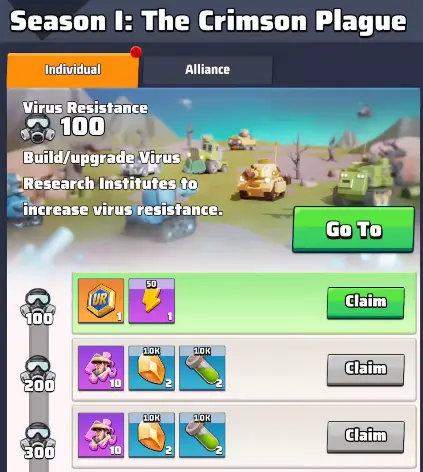
Virus Resistance is the central progression statistic of the Crimson Plague. Infected enemies and seasonal objectives display a Virus requirement or strength.
If your resistance is too low, your squad can suffer a severe damage penalty. You can still technically defeat some targets below the recommended Resistance when your formation is very strong, but the efficiency becomes much worse as the gap increases.
| Situation |
What to Expect |
| Resistance meets the target requirement |
No resistance-based damage penalty |
| Resistance is below the target |
Reduced damage and potentially inefficient troop losses |
| Target has unconditional infection |
You can still gain Virus Stacks even with enough Resistance |
| Acid Rain is active |
Virus Stacks can accumulate regardless of normal Virus Resistance |
How to Increase Virus Resistance
Your main permanent seasonal source is the
Virus Research Institute, upgraded with Immune Protein.
Other seasonal systems can temporarily add Resistance, including certain profession effects, passes, boosts, or limited buffs. These can help you reach an objective sooner, but permanent Institute progression should remain the foundation of your plan.
Check the Target Before Attacking
- Open the infected enemy or objective.
- Read its Virus requirement.
- Compare it with your current Resistance.
- Check for an unconditional infection warning.
- Then compare normal squad strength and vehicle matchup.
Do not rely only on the Power number. A large Resistance deficit can make a formation perform far below what its displayed Power suggests.
!Important: Some Season 1 infection cannot be prevented by raising Virus Resistance. Corruptors and Infected Zombies can infect your troops regardless of Resistance, and official Season 1 weather guidance confirms that Acid Rain also builds Virus Stacks even when your normal Virus Resistance is high.
Infection Stacks and Debuffs
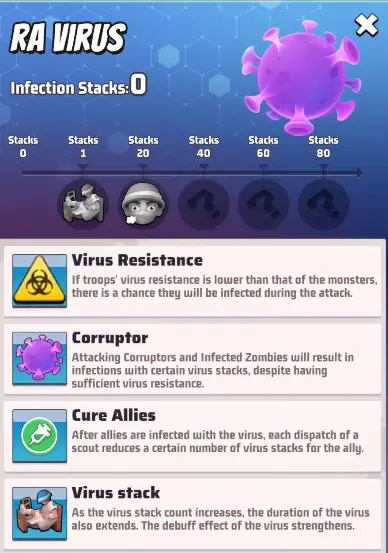
Your base can accumulate up to 100 Infection Stacks. Additional debuffs activate as you cross the main thresholds at 1, 20, 40, 60, and 80 stacks.
| Threshold |
Debuff |
Main Effect |
| 1+ |
Hospital Stay |
Periodically creates seriously injured units |
| 20+ |
Low Morale |
Reduces damage dealt |
| 40+ |
Fatal Virus |
Increases casualty-related pressure |
| 60+ |
Severe Infection |
Your marching troops carry more infection |
| 80+ |
Virus Plague |
Enables stronger infection-spreading effects |
Exact percentages change as the total stack rises. Tap the infection indicator in your current interface to see the debuffs affecting your account.
How Infection Stacks Increase
- Fighting infected enemies above your Resistance.
- Attacking Corruptors.
- Attacking Infected Zombies.
- Fighting marked seasonal World Bosses.
- Receiving infection through enemy troops.
- Remaining in Acid Rain.
- Other objectives explicitly marked with infection mechanics.
How to Remove Infection
Stacks recover naturally, but alliance treatments can clear them much faster.
- Share the infected base location with your alliance.
- An alliance member opens the base.
- They select the treatment option.
- The treatment consumes Immune Protein.
- The infected player’s stack decreases.
Treating allies also helps generate the harder-to-obtain Gene Fragment types used in Genetic Recombination.
Keep enough Hospital and Emergency Center capacity for seasonal warfare. The
Hospital guide and
Emergency Center guide explain the permanent recovery systems.
Season 1 Weather: Acid Rain and Wind
Current Season 1 weather adds another layer to Virus management and PvP planning.
Acid Rain
Acid Rain can continuously increase Virus Stacks. This accumulation is different from attacking an enemy whose Resistance requirement is too high.
Increasing Virus Resistance through the Virus Research Institute does
not stop weather-driven Acid Rain stacks. The Pumpkin Cauldron’s Virus-related benefits also do not provide immunity from this weather effect.
During Acid Rain:
- Monitor your Infection Stack more frequently.
- Coordinate alliance treatments.
- Avoid allowing the stack to remain above major debuff thresholds.
- Expect opponents to use infection strategically during PvP.
Windy Weather
Windy conditions can reduce march speed, making long reinforcements, rallies, and last-second defensive movements less reliable. Check the live weather status before committing to long-distance PvP operations.
Season 1 Buildings
| Building |
Purpose |
Upgrade Resource |
| Virus Research Institute |
Raises Virus Resistance |
Immune Protein |
| Protein Farm |
Generates Immune Protein |
Mutant Crystals |
| Tank Military Base |
Improves Tank hero combat stats |
Immune Protein + Mutant Crystals |
| Aircraft Military Base |
Improves Aircraft hero combat stats |
Immune Protein + Mutant Crystals |
| Missile Military Base |
Improves Missile hero combat stats |
Immune Protein + Mutant Crystals |
Virus Research Institute
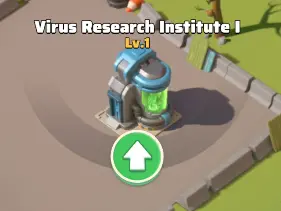
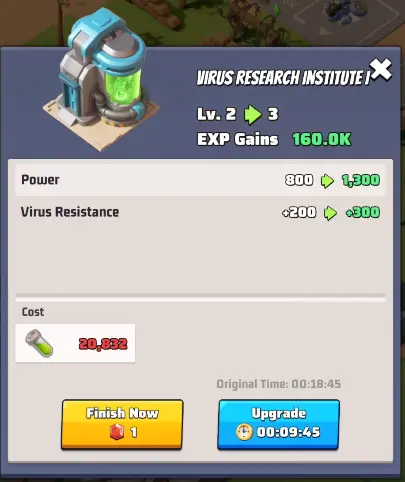
The Virus Research Institute is the most important seasonal building when Resistance is limiting your progression. It can be upgraded independently of your normal Headquarters building cap.
Prioritize another Institute level when:
- The next infected zombie has a large Resistance gap.
- Your alliance is approaching a higher Stronghold.
- A City siege has a Resistance requirement you cannot meet efficiently.
- Normal squads are strong enough but seasonal penalties are blocking progress.
Protein Farms
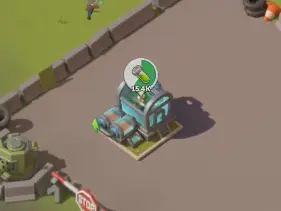
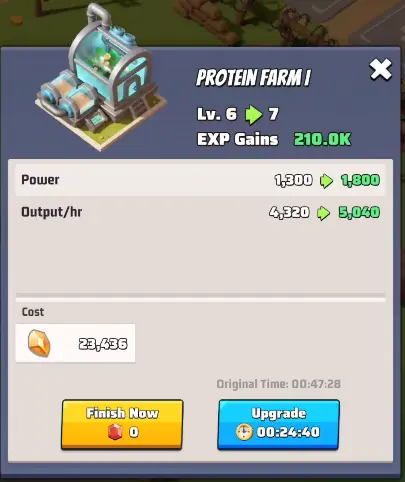
Protein Farms generate the Immune Protein needed by the Virus Research Institute.
The documented progression is:
- The first Protein Farm is available at the beginning of active Season 1 progression.
- Reaching level 5 on the first Farm unlocks another.
- Later regular Farms unlock by bringing the preceding Farm to level 10.
- Four regular Protein Farms are available through normal progression.
- An active Weekly Pass provides a temporary fifth Protein Farm.
Upgrade your Farms early enough for the additional hourly production to matter. Spending Mutant Crystals on production near the end of Week 8 has much less time to pay back.
Military Bases
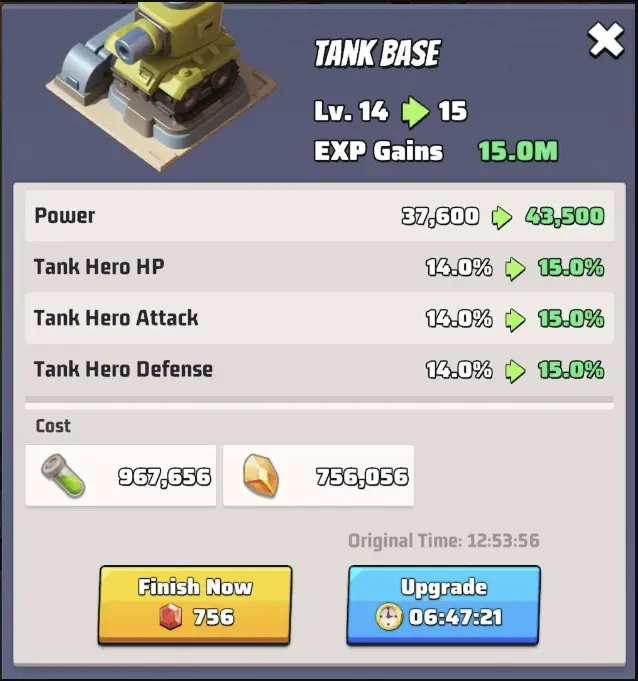
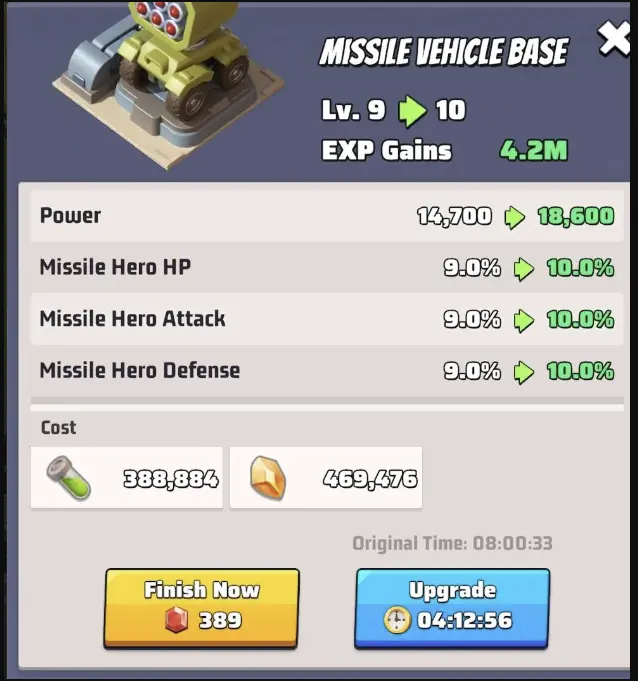
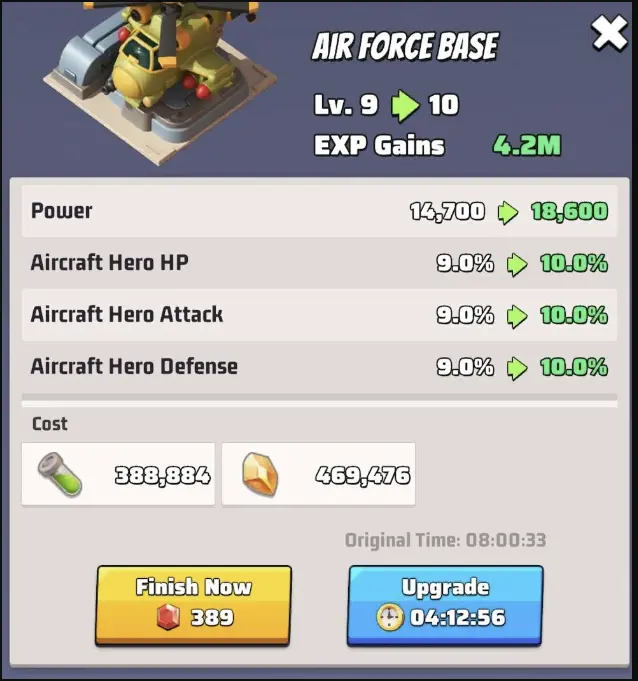
Tank, Aircraft, and Missile Military Bases unlock in Week 3. Each level of the corresponding Base adds Hero HP, Attack, and Defense to that vehicle type.
Focus on the building for your primary formation:
For most F2P and low-spending players, upgrading all three evenly is inefficient. Develop the vehicle type used by your strongest formation first.
✓Recommendation: Seasonal Military Bases disappear when Season 1 ends. Treat them as tools for winning the current season, not permanent account stats. Do not starve your Virus Research Institute or permanent hero progression simply to raise every seasonal Base.
Engineer vs. War Leader Profession
Season 1 introduces two available profession paths:
Engineer and
War Leader. Profession EXP comes from seasonal progression such as monsters, Cities, and seasonal building upgrades.
The Season 1 profession level cap is
40. Season-specific profession skills reset when the season ends, with the points used on those seasonal skills returned.
| Profession |
Focus |
Best Fit |
| Engineer |
Resources, development, construction, research, and efficiency |
F2P, low spenders, and accounts still developing core systems |
| War Leader |
Troops, healing, combat, rallies, and warfare utility |
Rally leaders and heavily PvP-focused players |
Engineer is generally the safer opening choice when account development remains your main bottleneck. War Leader becomes more compelling when your role revolves around City battles, rallies, and cross-warzone combat.
A Profession Change Certificate can be used when switching paths is worth the cost. Do not copy a high-spending rally leader’s War Leader build if your own account still gains more from construction and research efficiency.
Season 1 Map and Alliance Territory
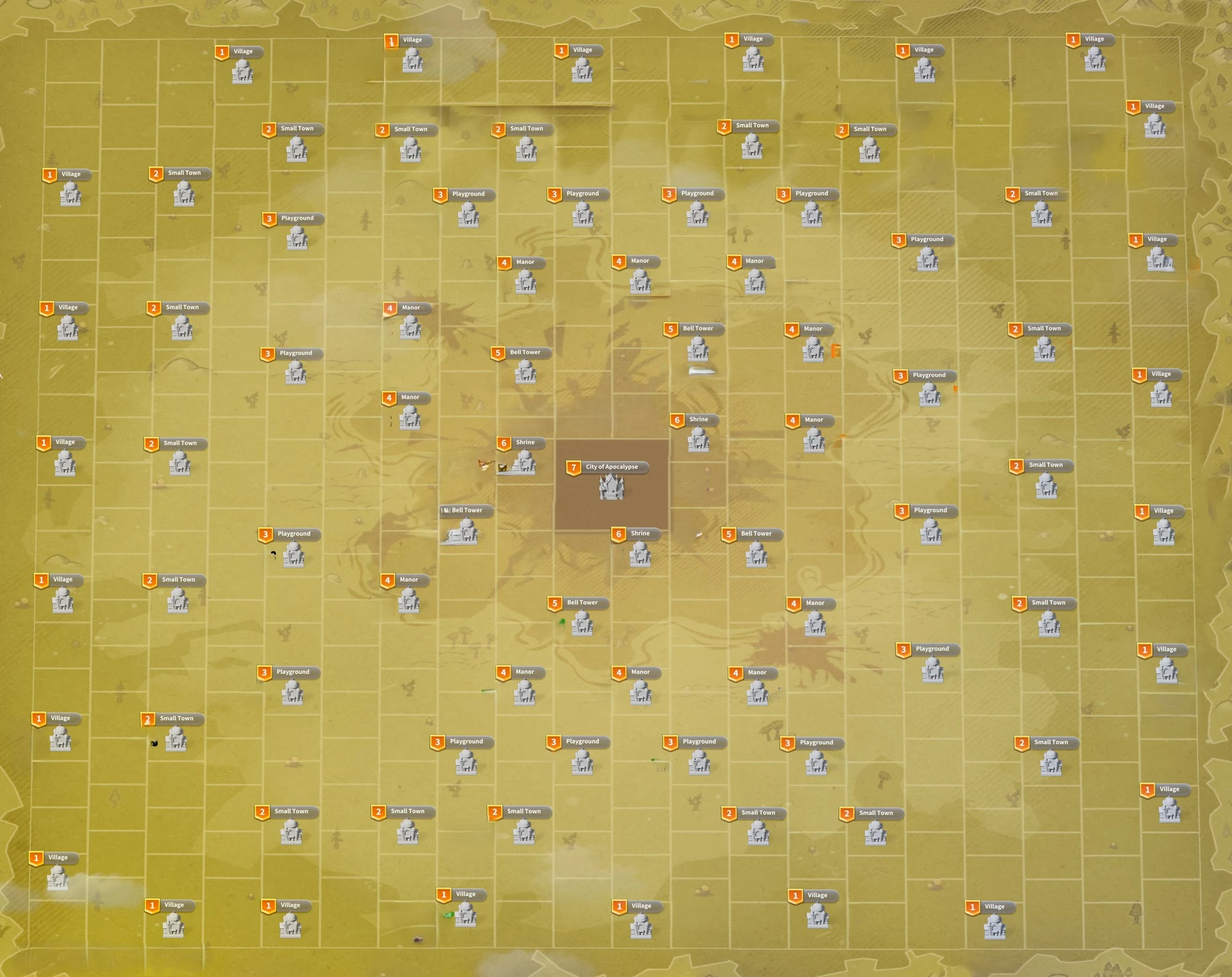
At the start of active Season 1, alliances are moved toward the edge of the map and begin without their former City territory.
The basic expansion loop is:
- Capture a level 1 Military Stronghold.
- Capture connected Strongholds.
- Reach an adjacent City.
- Declare and capture the City after its level unlocks.
- Use the additional territory and Stronghold capacity to continue inward.
Physical proximity is not enough. Your alliance needs a valid connected route.
Military Strongholds, Infected Zombies, and Crimson Bosses
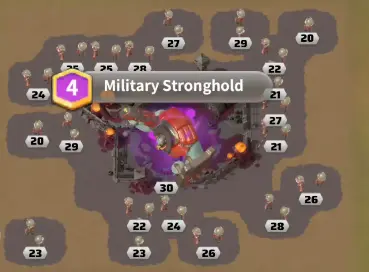
Military Strongholds create the territory network required to reach Cities.
| Rule |
Documented Season 1 Detail |
| First Stronghold |
Must begin with a level 1 Stronghold in the home warzone |
| Daily captures |
Up to 2 Strongholds per day |
| Starting ownership limit |
3 Strongholds |
| Level 1-5 City bonus |
Each owned City adds 1 Stronghold slot |
| Level 6 City bonus |
Each owned level 6 City adds 2 Stronghold slots |
| Protection after capture |
36 hours |
| Abandon time |
About 1 hour |
Why Does the Game Say to Kill Infected Zombies Near the Stronghold?
Before an alliance captures a Crimson Legion Stronghold for the first time, the objective is protected by seasonal enemies. These include
Infected Zombies and a stronger Crimson boss/Corruptor encounter.
Your alliance must clear the required defenders before completing the initial capture. Because these targets can apply infection regardless of normal Virus Resistance, players should not blindly join every rally.
Members with insufficient Resistance can also suffer a large damage penalty. Check the target panel and follow your alliance’s designated rally leaders.
What Are Crimson Doctor and Crimson Colossus?
Names such as
Crimson Doctor and
Crimson Colossus are used for Crimson Legion boss variants associated with higher seasonal Stronghold encounters in current community-maintained Season 1 data.
The boss, level, and Virus Resistance requirement depend on the Stronghold you are attacking. Because these requirements can be adjusted, use the live Stronghold enemy panel rather than relying on an old fixed Resistance chart.
Do Not Capture Strongholds Randomly
The two-per-day limit makes every route choice important. Before declaring an objective, leaders should consider:
- The next City’s unlock date.
- Territory connectivity.
- Current Stronghold ownership limit.
- Required Virus Resistance.
- Enemy alliance routes.
- Cross-warzone plans.
- Whether a low-value Stronghold should eventually be abandoned.
City Capture Rules
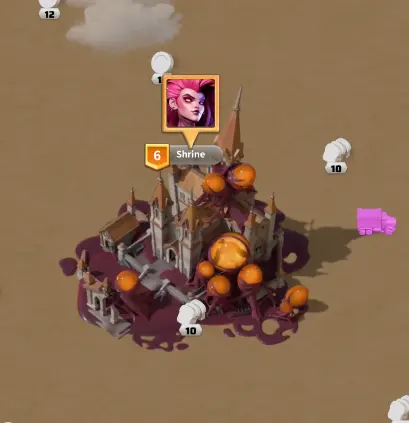
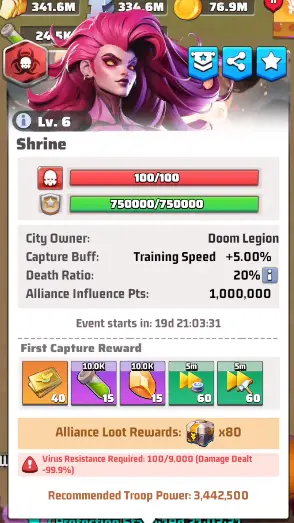
Cities provide buffs, Alliance Influence, capture rewards, and strategically valuable territory.
| Rule |
Documented Detail |
| City declarations |
Up to 2 per eligible day |
| Concurrent City wars |
One at a time |
| Declaration window |
1 hour |
| Requirement |
Connected adjacent alliance territory through a Military Stronghold |
| Home-warzone limit |
Up to 4 Cities |
| Foreign-warzone limit |
Up to 4 Cities total outside the home warzone |
| Maximum documented total |
8 Cities |
Stronghold and City capture limits are separate. An organized alliance can progress both systems on the same eligible day when the required routes, timers, and objectives are available.
Alliance Influence
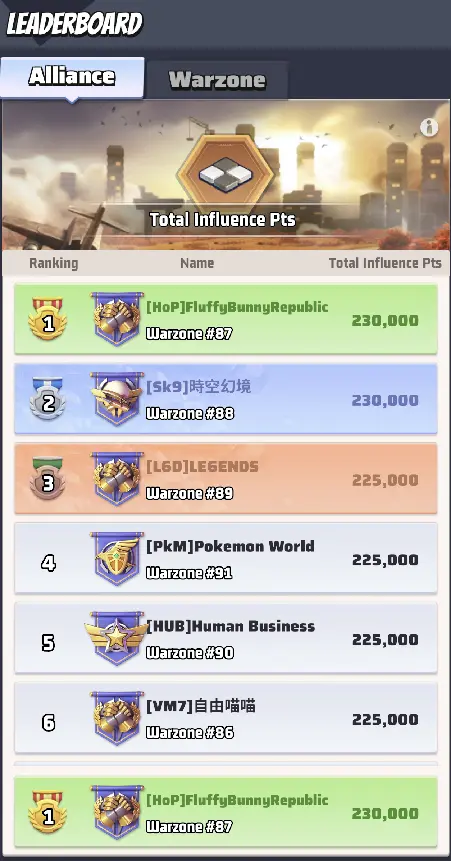
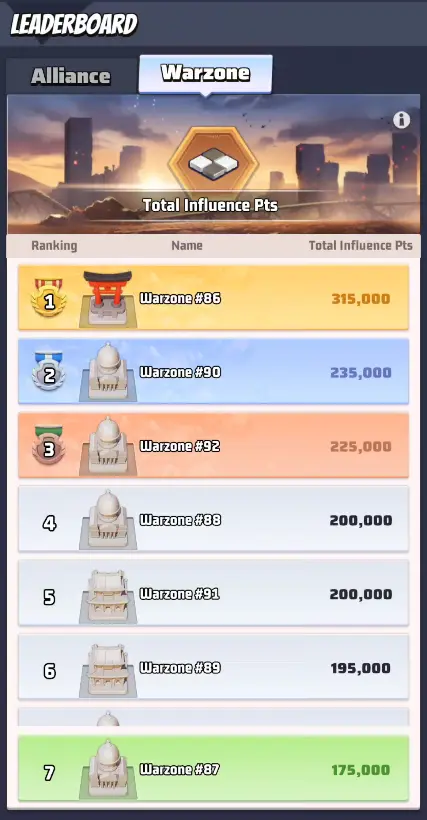
Cities are the main source of Alliance Influence, and higher levels are substantially more valuable.
| City Level |
Influence |
| Level 1 |
100,000 |
| Level 2 |
200,000 |
| Level 3 |
300,000 |
| Level 4 |
400,000 |
| Level 5 |
500,000 |
| Level 6 |
1,000,000 |
Do not select a City by Influence alone. A slightly lower-level City that your alliance can capture and defend may contribute more to settlement than a high-value target that cannot be held.
Cross-Warzone Expansion
Later in Season 1, alliances gain access to other warzones and can establish foreign territory through the seasonal expansion system.
Successful expansion requires:
- A viable outpost position.
- Connected foreign Strongholds.
- Enough Virus Resistance for the objective.
- Reliable rally leaders.
- Diplomacy with other alliances.
- A plan for defending captured Cities.
The foreign City cap applies across other warzones in total rather than giving a full allocation in every server.
Hero’s Return
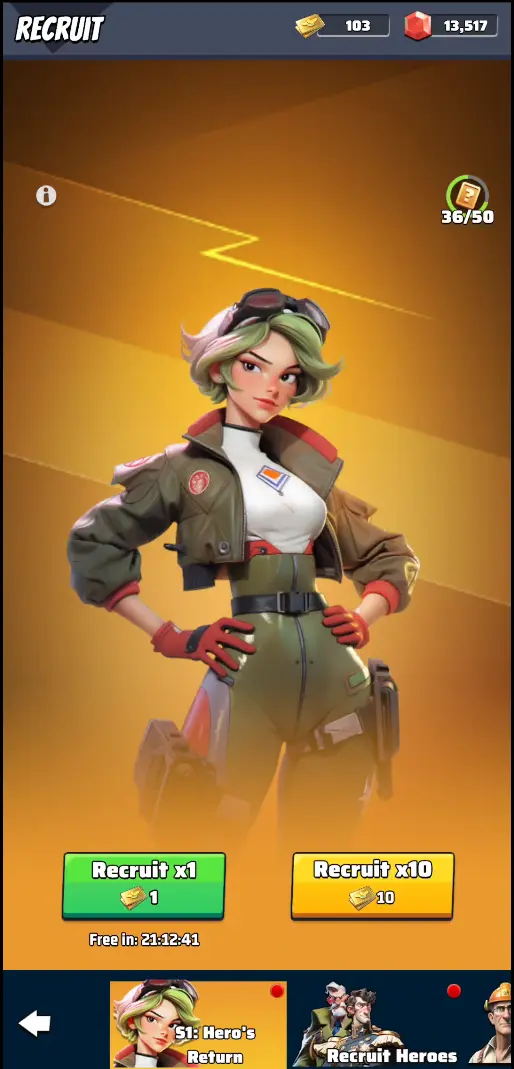
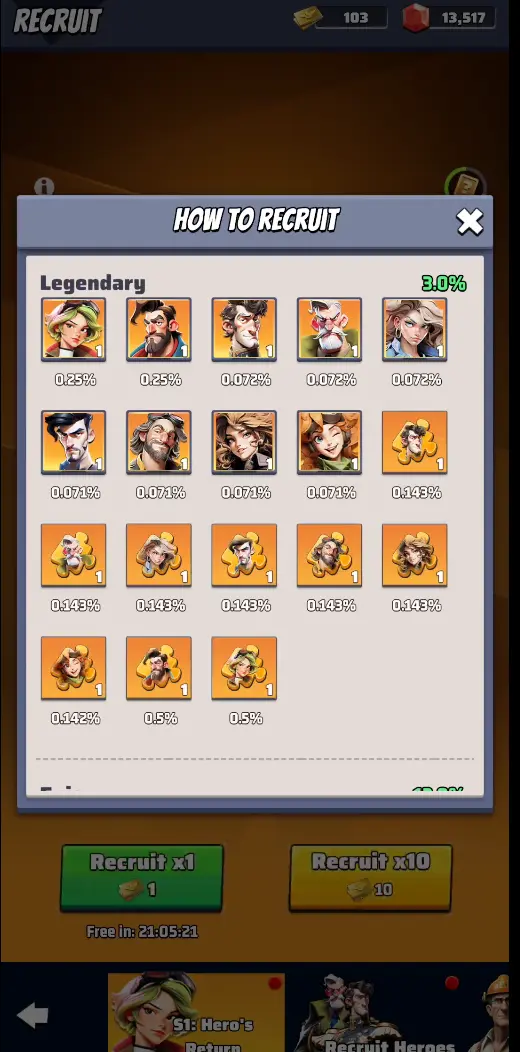
Hero’s Return provides another recruitment route for selected UR heroes released before Season 1. It can help players fill gaps in an existing Tank, Aircraft, or Missile formation rather than starting a completely new team.
Before spending tickets:
- Check the current hero selection.
- Decide whether the hero belongs in your long-term main formation.
- Compare an unlock with another star on an existing carry.
- Check whether recruitment also helps an active event.
The
Hero Shards guide can help you prioritize long-term hero development.
Mason UR Promotion
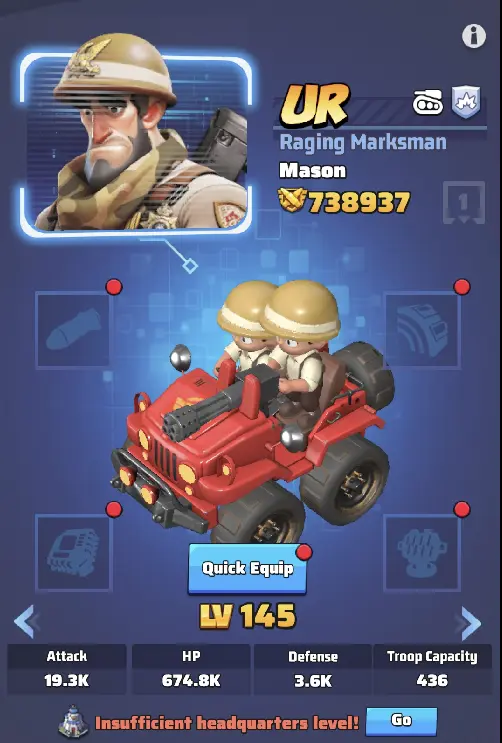
Week 2 introduces the Hero Promotion event that allows eligible players to promote
Mason from SSR to UR.
Before confirming the promotion, read the event’s current conversion and refund details. Systems such as existing stars, skills, and Wall of Honor investment can interact with the promotion process, and you should understand what is returned or converted before spending additional resources.
Mason can remain useful for players who already invested heavily in him, but UR promotion does not automatically make him a higher priority than a fully developed main-squad carry.
Season 1 Exclusive Weapons
Season 1 introduces Exclusive Weapons for Kimberly, DVA, and Tesla. The weapon must first be activated with the hero’s named Exclusive Weapon Shards.
Activation generally requires:
- The hero at 5 stars.
- 50 named Exclusive Weapon Shards for that hero.
Universal Exclusive Weapon Shards can be used after activation for further weapon development; they do not replace the named shards required for the initial unlock.
Kimberly
Kimberly’s Rocket Shadow is the first Season 1 Exclusive Weapon release. It makes the most sense when Kimberly is already a 5-star core Tank carry rather than a lightly developed secondary hero.
DVA
DVA’s weapon follows in Week 3 and is particularly relevant to Aircraft-focused accounts. Prioritize it when DVA is already one of your primary damage dealers.
Tesla
Tesla’s Exclusive Weapon arrives later in Season 1, giving Missile players time to prepare the required hero and weapon resources.
Do Not Level Every Weapon Equally
Exclusive Weapon shards are scarce. A useful order is:
- Activate the weapon of a permanent main carry.
- Reach an important functional milestone.
- Prioritize team-wide bonuses that benefit the whole formation.
- Only chase high weapon levels after the core squad is already developed.
Weapons complement rather than replace
Skill Medals, Hero Shards, and
gear progression.
Pumpkin Cauldron in Season 1
The Pumpkin Cauldron is a Legendary base skin with permanent combat holding attributes and special Crimson Plague utility.
Its Season 1 effects include Virus-related functionality, but it should not be treated as immunity from the season’s infection systems. In particular, current official weather guidance states that the Pumpkin Cauldron does not prevent Virus Stacks generated by Acid Rain.
See the
Last War Pumpkin Cauldron guide for its equipped, holding, gift, and seasonal effects.
Season Quests, Goals, and Daily Priorities
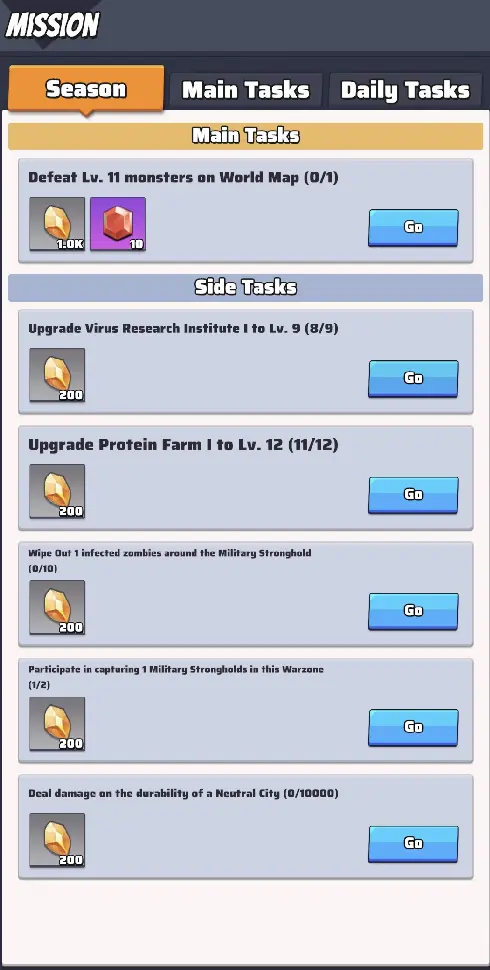
Season Quests and Goals provide important progression resources and should be checked every day.
Your routine should include:
- Season Quests.
- Virus Resistance goals.
- First-time infected enemy kills.
- Useful Radar tasks.
- Genetic Recombination.
- Gene Fragment exchanges.
- Alliance Stronghold and City objectives.
- Season pass claims when applicable.
Coordinate large upgrades with other events when possible. The
Last War Event Hub guide and
Alliance Duel guide can help you avoid spending valuable actions just before a matching scoring phase.
Season 1 Passes
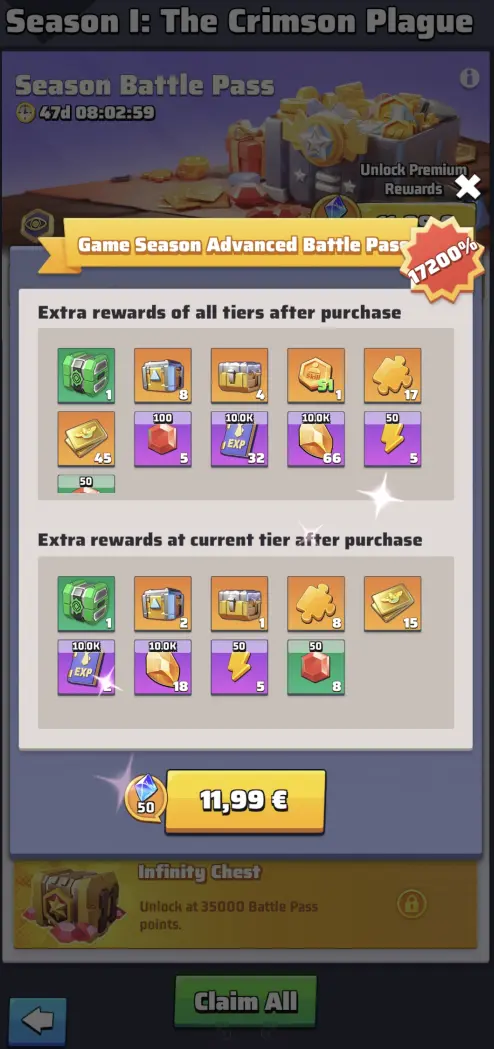
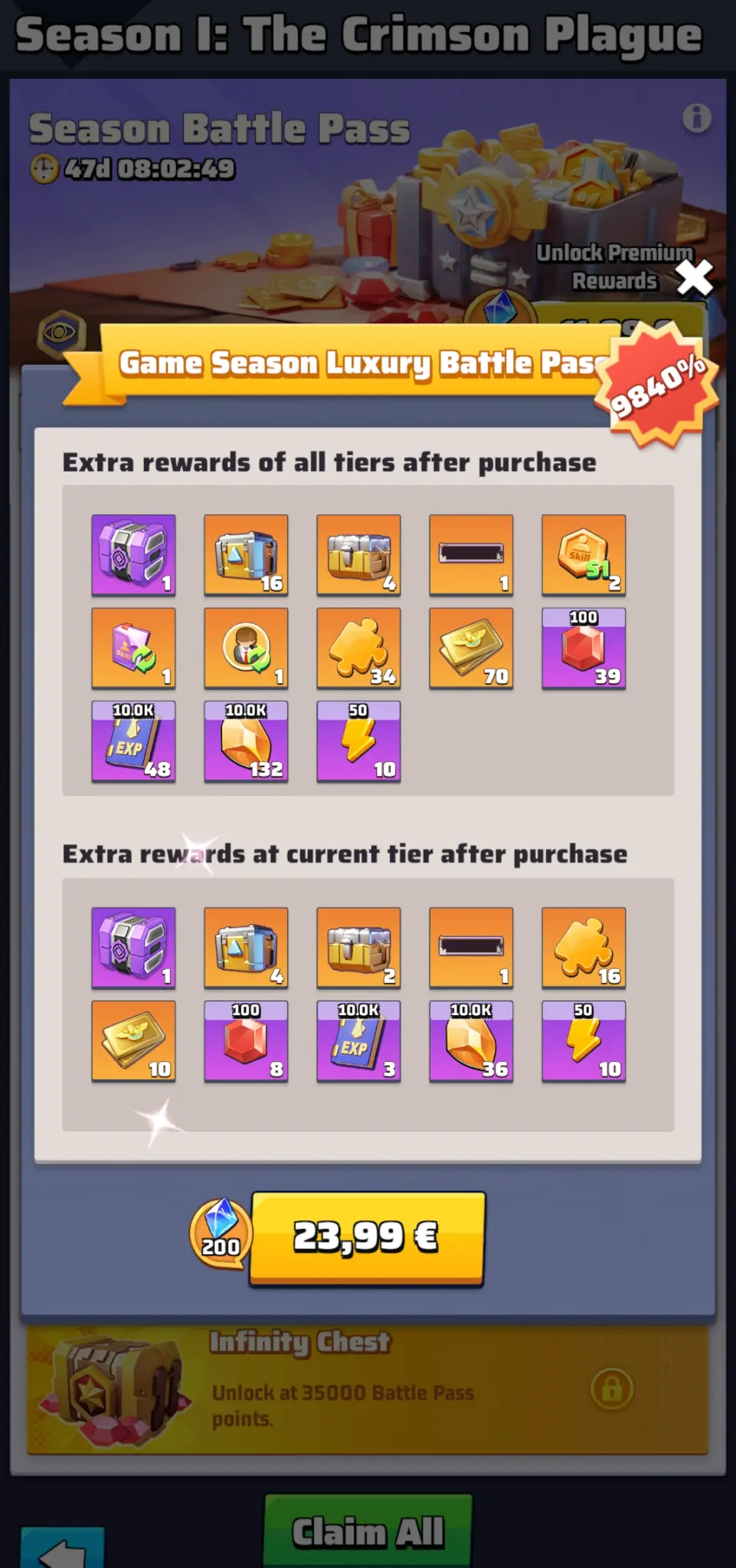
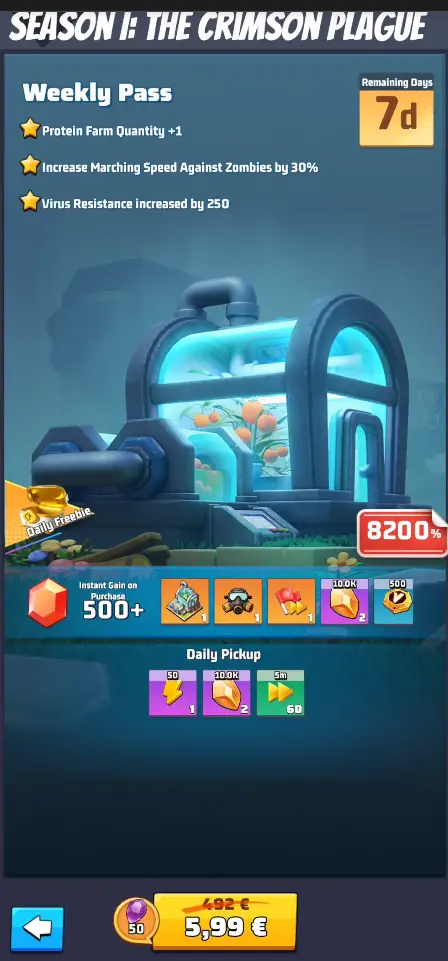
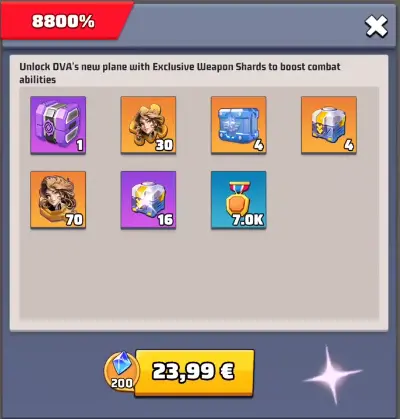
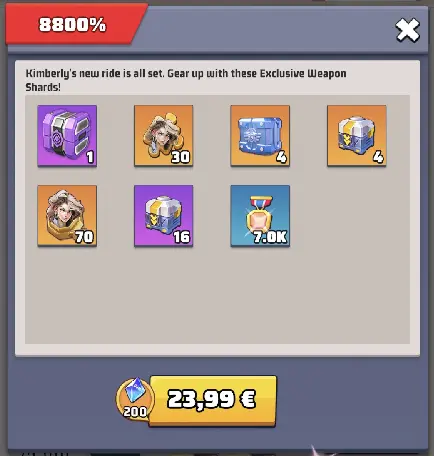
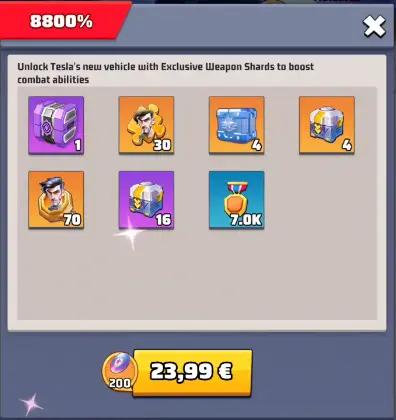
Season 1 can offer the main Season Battle Pass, a renewable Weekly Pass, and temporary Exclusive Weapon passes.
| Pass |
Primary Value |
| Season Battle Pass |
Mutant Crystals, profession progression, tickets, speedups, and seasonal resources |
| Weekly Pass |
Temporary fifth Protein Farm, temporary Resistance, Mutant Crystals, stamina, and speedups |
| Exclusive Weapon Pass |
Named weapon shards for the featured hero |
Is the Weekly Pass Worth It?
Its strongest value is early in the season, when a temporary fifth Protein Farm has more time to generate Immune Protein.
However, both the extra Farm and temporary Resistance disappear when the pass expires. Evaluate the pass as an accelerator rather than permanent progression.
Should You Buy a Weapon Pass?
A hero-specific weapon pass is most useful when:
- The hero is already 5 stars.
- The hero has a permanent place in your main squad.
- The purchase unlocks the weapon or reaches a meaningful milestone.
- You are not neglecting the rest of the formation.
Season 1 Rewards
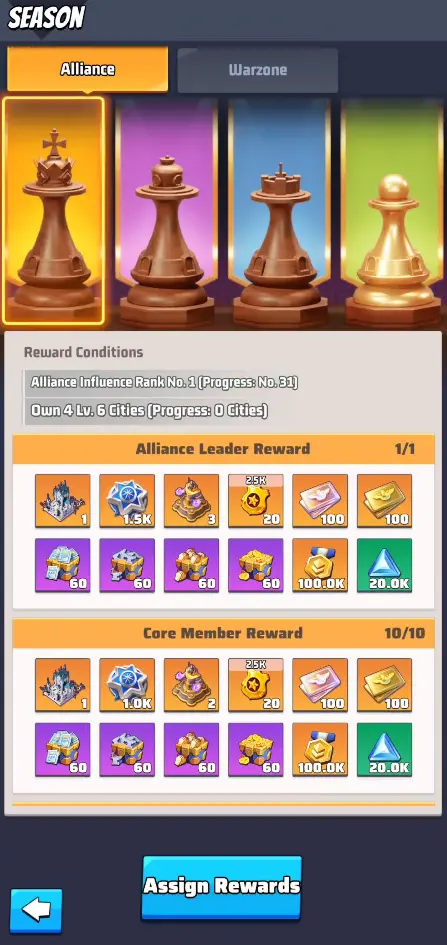
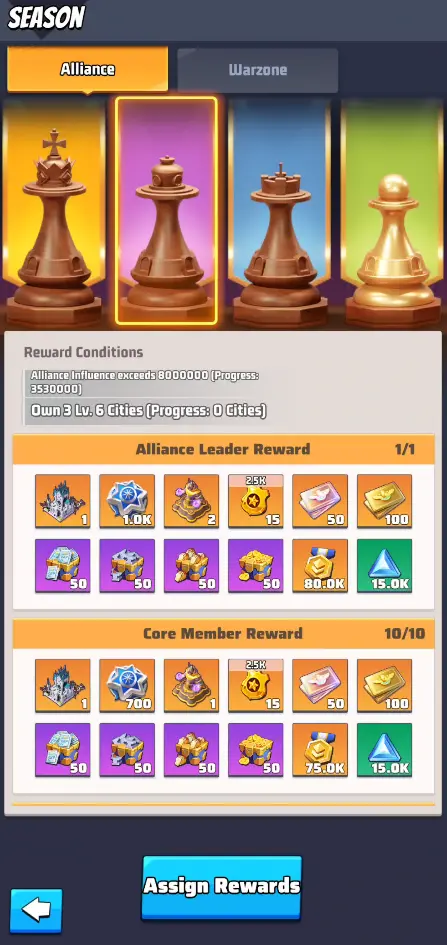
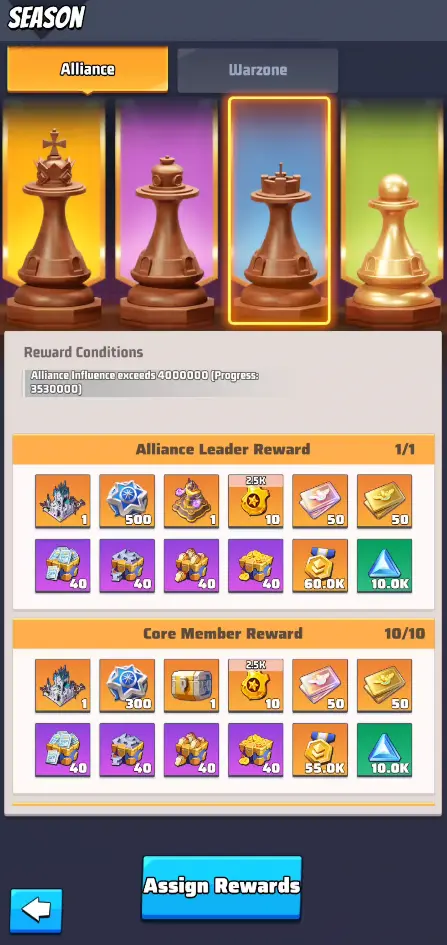
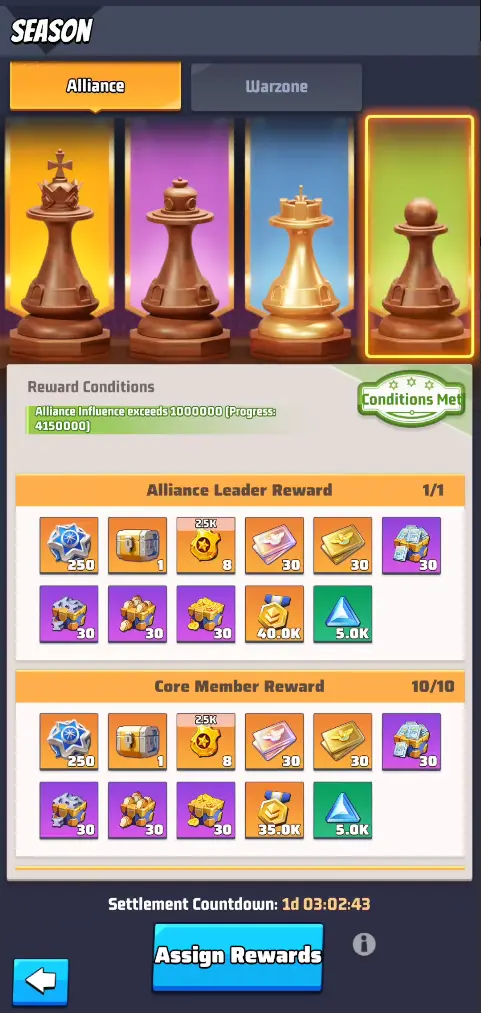
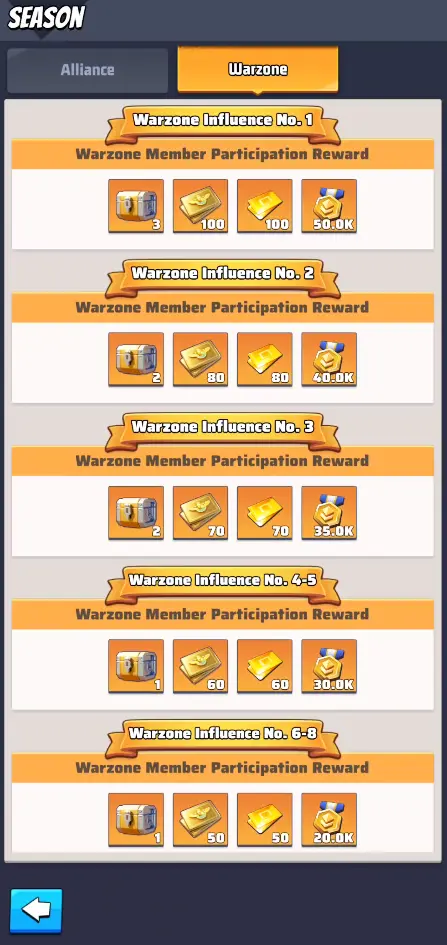
Season 1 rewards come from several layers rather than one final leaderboard.
| Reward Type |
Based On |
| Individual |
Personal goals, Virus progress, quests, and activity |
| Alliance |
Influence, territory, and alliance ranking |
| Warzone |
Overall warzone seasonal performance |
| Capture Participation |
Taking part in eligible Stronghold and City objectives |
| Distribution |
Seasonal ranking and leadership distribution mechanics |
Capturing a City once is not enough to guarantee its settlement value. Territory that is later lost no longer contributes the same Influence to your final position.
Best F2P Season 1 Strategy
Free-to-play players can still make strong progress because much of Season 1 rewards consistency and alliance participation.
- Join an active alliance. Territory and treatment coordination are too important to ignore.
- Choose Engineer when development is your bottleneck. Do not select a PvP profession solely because top spenders use it.
- Upgrade regular Protein Farms early. Recurring Immune Protein is one of your most valuable free resources.
- Keep Virus Resistance near alliance requirements. Do not waste stamina fighting through massive damage penalties.
- Develop one Military Base first. Match it to your primary formation.
- Treat allies. This supports the alliance and helps with Gene Fragment sets.
- Recombine fragments regularly. Early Mutant Crystals have more time to generate value.
- Save Exclusive Weapon resources. Invest in a hero you expect to keep using.
- Participate in territory battles. You do not need to be the rally leader to contribute and earn eligible rewards.
Best Seasonal Resource Priority
| Priority |
Investment |
Why |
| 1 |
Virus Research Institute |
Removes the main seasonal progression bottleneck |
| 2 |
Protein Farms |
Generates more Immune Protein over time |
| 3 |
Season Quests and Genetic Recombination |
Feeds Mutant Crystal and other progression |
| 4 |
Main-type Military Base |
Strengthens your primary formation |
| 5 |
Main-carry Exclusive Weapon |
Provides permanent hero-specific progression |
| 6 |
Secondary seasonal combat upgrades |
Useful after the main bottlenecks are covered |
The order is flexible. A major rally leader may need more immediate combat investment, while another player may urgently need the next Resistance breakpoint for an alliance objective.
Common Season 1 Mistakes
- Ignoring Virus Resistance: Normal Power cannot cancel a large seasonal damage penalty.
- Spending Immune Protein evenly: Military Base upgrades can delay essential Virus Research.
- Upgrading Protein Farms too late: Late production has less time to repay its cost.
- Assuming high Resistance prevents every infection: Corruptors, Infected Zombies, and Acid Rain can bypass that assumption.
- Joining every auto-rally: An infected seasonal target can increase your stacks while you are not paying attention.
- Capturing random Strongholds: Daily captures should advance a planned City route.
- Ignoring Stronghold capacity: Your alliance can become unable to expand until it gains capacity or abandons territory.
- Spreading Military Base resources: One strong vehicle type is usually more useful than three weak ones.
- Leveling every Exclusive Weapon: Reach important milestones on core heroes first.
- Staying in an inactive alliance: Season 1 progression is heavily tied to shared territory.
- Expecting seasonal buildings to be permanent: Military Bases and other Season 1 buildings disappear at season settlement.
Players who prefer to start with an already-developed roster can also browse
Last War accounts for sale as an optional progression route. Compare the warzone age, current season, heroes, troop tier, gear, Exclusive Weapons, VIP progress, and alliance situation before choosing an account.
What Happens at the End of Season 1?
Week 8 transitions into settlement. Territory capture stops and the season’s temporary progression systems begin shutting down.
At season end:
- Season 1 Protein Farms disappear.
- The Virus Research Institute disappears.
- Tank, Aircraft, and Missile seasonal Military Bases disappear.
- The temporary stats from those seasonal buildings are lost.
- Immune Protein, Mutant Crystals, and Gene Fragments are cleared and converted according to the settlement rules.
- Season-specific profession skills are disabled and their Skill Points are refunded.
- Normal zombies and Doom Elites return.
- Cross-warzone Season 1 territory access closes.
- Exclusive Weapons you unlocked remain permanent.
- Hero’s Return tickets can remain available for later applicable use rather than needing to be spent simply because Season 1 is ending.
Before settlement, use seasonal resources that would otherwise be converted and avoid pouring permanent resources into a temporary building without a clear remaining-season benefit.
Then prepare for the next seasonal mechanics with the
Last War Season 2 Polar Storm guide.
FAQs
What should I prioritize first in Last War Season 1 Crimson Plague?
Join an active alliance, develop Protein Farms, raise the Virus Research Institute enough for upcoming infected targets, and concentrate permanent combat resources on one primary formation.
Can you get Immune Protein during the Season 1 Pre-Season?
The normal Immune Protein and Protein Farm progression loop begins with active Season 1. Use the two-week Pre-Season to prepare your alliance, squads, resources, teleports, and territory strategy instead.
Why do I need to kill Infected Zombies near a Military Stronghold?
Unclaimed Season 1 Strongholds are defended by Crimson Legion enemies. Your alliance must clear the required Infected Zombies and associated boss defenders before completing the first capture. These enemies can infect troops regardless of normal Virus Resistance.
What are Crimson Doctor and Crimson Colossus in Last War?
They are names used for Crimson Legion boss variants associated with seasonal Stronghold encounters in current community-maintained Season 1 data. The boss and Virus requirement depend on the Stronghold, so check the live objective panel before starting a rally.
Does Virus Resistance stop all Infection Stacks?
No. Virus Resistance protects against resistance-based penalties, but some enemies apply infection regardless of your Resistance. Acid Rain can also continuously add Virus Stacks and cannot be prevented simply by upgrading the Virus Research Institute.
What Season 1 progress remains after Crimson Plague ends?
Seasonal buildings and their temporary stats are removed, and seasonal resources are cleared or converted under settlement rules. Permanent systems such as unlocked Exclusive Weapons remain, while Season 1 Celebration provides the transition toward later progression.
Conclusion
Last War Season 1 Crimson Plague is built around three connected goals:
keep Virus Resistance high enough for the next objective, build a sustainable Immune Protein economy, and help your alliance create a strong territory route. Normal heroes, gear,
troops, and research still matter, but they work alongside rather than replace the season’s Virus mechanics.
Upgrade Protein Farms early, use Immune Protein carefully, monitor Infection Stacks and weather, concentrate Military Base and Exclusive Weapon investment on your main formation, and follow alliance Stronghold and City plans. For more seasonal strategies, hero builds, and progression guides, browse the
Heaven Guardian Last War Survival guides.