

Whiteout Survival KO Ranking shows how many enemy troops you have defeated through player-versus-player combat. It is commonly called your kill ranking and is one of the statistics players use to compare combat activity within their state.
However, KO Ranking is not the same as battle wins, Chief Power, or points earned during a kill event. A player can win a battle without gaining many KOs, while a losing march may still add KOs if it defeats some enemy troops.
This guide explains what KO Ranking means, where to find it, how to increase it, and how to avoid wasting troops simply to move higher on the leaderboard.
What Is KO Ranking in Whiteout Survival?
KO stands for knockout or, more simply in this context, your kill total. Whiteout Survival uses the KO Ranking to compare how many enemy troops players have defeated in PvP battles on the world map.
The ranking does not show how many individual battles you have won. Instead, it focuses on the number of opposing troops defeated during qualifying combat.
Key distinction: KO Ranking is a combat statistic. Event points, rewards, and temporary event leaderboards are separate systems that may use different scoring rules.
A high KO total can indicate that a player has participated in many wars, gathering-tile battles, city attacks, or other PvP encounters. Nevertheless, it does not automatically prove that the player has stronger heroes, better equipment, or superior battle strategy.
Where to Check Your Whiteout Survival KO Ranking
You can normally find the ranking through the alliance interface:
- Open the Alliance menu.
- Select Power Rankings.
- Look for the KO Ranking or kill-ranking category.
- Compare your total with other Chiefs shown on the leaderboard.
Interface labels can change after game updates, localization changes, or menu redesigns. If the option is not immediately visible, check the available ranking tabs inside the Alliance menu.
How Does KO Ranking Work?
Your KO total increases when your side defeats enemy troops in an eligible PvP battle. The final amount depends on what happened during the fight, not simply whether the result screen says victory or defeat.
| Activity | Can It Increase KO? | Important Detail |
|---|---|---|
| Defeating troops on an occupied resource tile | Yes | Only enemy troops actually defeated during the battle contribute. |
| Attacking an enemy city with troops inside | Yes | City attacks carry a greater risk of troop losses and retaliation. |
| Losing a PvP battle | Possibly | A loss may still add KOs if your troops defeated part of the enemy force. |
| Scouting another player | No | Scouting provides information but does not defeat troops. |
| Defeating beasts or other PvE enemies | No | KO Ranking concerns enemy player troops rather than standard PvE targets. |
| Training or promoting troops | No | These activities increase army strength but do not add kills. |
Important: Merely participating in combat does not guarantee a higher KO Ranking. Your battle report must show that enemy troops were defeated.
How to Increase KO Ranking in Whiteout Survival
The most reliable approach is to participate in permitted PvP battles while controlling your own casualty risk. Chasing kills without scouting or coordinating can cost far more troops than the ranking increase is worth.
1. Attack Occupied Resource Tiles
Attacking gathering troops is one of the simplest ways to increase KO Ranking because the battle is limited to the march stationed on the resource tile. You do not need to fight every troop owned by the player.
To attack an occupied tile:
- Search the world map for a resource tile occupied by another player.
- Check the gathering player’s name, alliance, and state.
- Confirm that attacking the player does not violate your state’s rules.
- Scout when the option is available or compare visible information carefully.
- Send a march strong enough to defeat the gathering troops.
- Review the battle report to see the enemy casualties and your own losses.
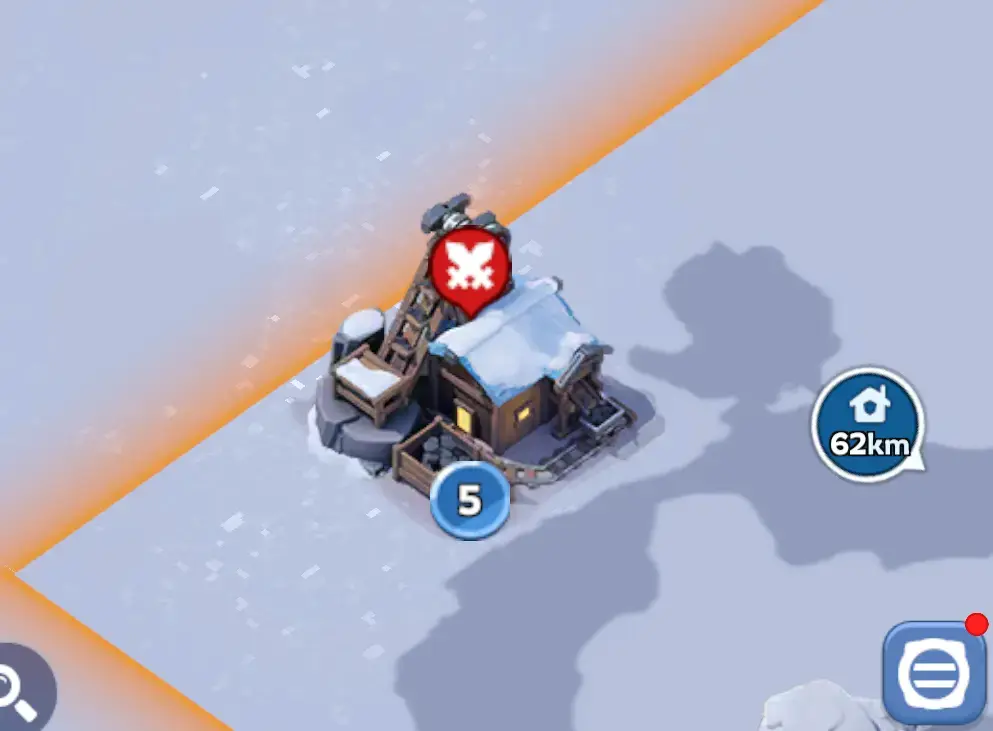 Do not assume that every occupied tile is a safe target. The gathering player may belong to a protected alliance, have stronger statistics than expected, or receive support from allies after the attack.
2. Attack Enemy Cities Carefully
Enemy cities can contain far more troops than gathering marches, creating the potential for larger KO gains. They also carry substantially greater risk.
Before attacking a city, evaluate:
- Scout information: Check troop quantity, troop tier, heroes, reinforcements, and available defensive information.
- Player activity: An active opponent can reinforce, counterattack, shield, or request alliance support.
- Alliance strength: Attacking one city can trigger a response from the player’s entire alliance.
- Your infirmary capacity: Entering repeated battles with a nearly full infirmary increases the danger of serious losses.
- Available buffs: Chief Gear, Charms, research, pets, heroes, and temporary bonuses can make visible Power misleading.
A lower Furnace level does not guarantee that a city is weak. Some players have highly developed combat statistics, large troop reserves, or reinforcements despite having a lower Furnace than the attacker.
Warning: Never launch a city attack based only on Furnace level or total Power. Scout first and consider using a coordinated rally when the target is too strong for a safe solo attack.
3. Join Coordinated Alliance Attacks
Alliance coordination can help you fight more efficiently. Rally leaders can combine multiple marches, while alliance officers can identify acceptable targets and prevent members from breaking diplomatic agreements.
Before joining a rally, check:
- Who is leading the rally.
- Which heroes or joiner bonuses your alliance requests.
- How many troops you should send.
- Whether the target is reinforced.
- Whether the attack complies with state and alliance rules.
A coordinated attack can reduce unnecessary losses, but it does not guarantee victory. Always read the rally report before repeating the same attack.
4. Use Approved PvP Windows
Combat events can create more opportunities to fight because state leaders may temporarily allow attacks that are normally restricted. However, every state can establish different NAP agreements, tile rules, protected alliances, and city-attack limits.
Before fighting during Brothers in Arms, State of Power, Sunfire Castle, or another combat period, read:
- The current in-game event description.
- Your alliance announcements.
- State chat notices.
- Instructions from R4 and R5 officers.
- Any published NAP or protected-alliance rules.
Do not assume that the appearance of a kill event makes every city a legal target.
KO Ranking vs. Brothers in Arms Event Points
Players often confuse KO Ranking with Brothers in Arms because both involve fighting enemy troops. They are related, but they are not identical.
| Feature | KO Ranking | Brothers in Arms |
|---|---|---|
| Purpose | Compares accumulated enemy troop defeats. | Awards temporary event points for qualifying combat. |
| Scoring | Based on enemy troops defeated. | May award different point values according to troop tier and current event rules. |
| Rewards | Do not assume the permanent ranking itself provides rewards. | Can include milestone and leaderboard rewards shown in the event panel. |
| Duration | Functions as a broader account combat statistic. | Runs for a limited event period. |
Event requirements and rewards can change according to state progression, event rotation, or game updates. Check the active event panel before committing troops or resources.
How to Read a Battle Report for KO Gains
Battle reports are more useful than the victory or defeat label. After every PvP fight, open the report and check what actually happened to both armies.
Focus on the following details:
- Enemy casualties: Confirm that opposing troops were defeated rather than assuming participation added KOs.
- Your casualties: Compare the KO gain with your wounded and permanently lost troops.
- Troop performance: Review which troop types dealt damage and absorbed attacks.
- Stat comparison: Look at attack, defense, health, lethality, hero, and equipment differences.
- Reinforcements: Check whether another player contributed troops or statistics to the defense.
If a battle produces poor results, do not immediately repeat the same march. Adjust your formation, rally size, heroes, target selection, or timing first.
Best KO Strategy for Different Players
Beginners
New players should not prioritize KO Ranking over normal account development. Training troops, upgrading research, improving heroes, and joining a stable alliance provide more long-term value than risking an early army for leaderboard position.
Participate only in alliance-approved fights and avoid attacking cities without understanding the casualty system.
Developing and Free-to-Play Players
Use selective gathering-tile battles, alliance rallies, and controlled event participation. Set a casualty limit before fighting and stop when healing costs begin consuming resources needed for important upgrades.
A smaller number of efficient battles is usually better than repeatedly sending weak marches into stronger opponents.
Competitive Players
Competitive players can pursue larger KO gains through coordinated rallies, state wars, and planned city attacks. Even then, target quality matters more than attacking constantly.
Monitor infirmary space, enlistment recovery, healing speed, teleport availability, reinforcements, and possible counterattacks throughout the combat period.
Common KO Ranking Mistakes
- Assuming every battle increases KO: You need to defeat enemy troops.
- Attacking based only on Furnace level: Research, Chief Gear, heroes, pets, and reinforcements can overturn the apparent advantage.
- Ignoring state rules: An unauthorized attack can create conflict for your entire alliance.
- Confusing KOs with event points: The two systems may count combat differently.
- Overfilling the infirmary: Continuing to fight without recovery capacity can make later losses more damaging.
- Repeating a bad matchup: Read the first report before launching another attack.
- Chasing inactive cities blindly: A city may contain few troops, hidden reinforcements, or an owner who returns during the attack.
- Ignoring retaliation: A small KO gain may not justify becoming the target of a stronger alliance.
Comparing Progression Options in an Established State
Some players who want to join friends in an older state compare normal progression, state transfer, and an established account. Anyone reviewing a wos account for sale should examine the state number, Furnace level, heroes, Chief Gear, transfer eligibility, account binding, and security arrangements rather than judging the account by KO Ranking alone.
FAQ
What does KO mean in Whiteout Survival?
KO refers to your kill ranking. It represents the number of enemy player troops you have defeated through qualifying PvP combat.
How do I check my KO Ranking in Whiteout Survival?
Open the Alliance menu, select Power Rankings, and find the KO or kill-ranking category. Menu names may differ slightly after interface or localization updates.
How do I increase KO Ranking in Whiteout Survival?
Defeat enemy troops in PvP battles. Common methods include attacking occupied resource tiles, attacking enemy cities, and joining alliance-coordinated combat.
Does losing a battle increase KO Ranking?
A loss can still increase your KO total when your march defeats some enemy troops. Simply losing or participating does not add KOs unless the battle report shows enemy troop defeats.
Do beasts and Polar Terrors count toward KO Ranking?
No. Standard beasts, Polar Terrors, and similar PvE enemies are not enemy player troops and should not be treated as KO targets.
Does a high KO Ranking give rewards?
Do not assume that the permanent KO Ranking provides direct rewards. Combat events may offer milestone or leaderboard rewards, but those rewards belong to the active event and use its current scoring rules.
What is considered a good KO Ranking?
There is no universal target. A meaningful KO total depends on state age, the number of wars fought, account age, alliance role, and how active the state is during PvP events.
Why did my KO Ranking not increase after a battle?
Check the battle report to confirm that enemy troops were actually defeated. Also verify that the fight involved player troops and was not a PvE activity or a battle mode with separate scoring.
Conclusion
Whiteout Survival KO Ranking measures enemy troops defeated through PvP combat. It is a kill statistic rather than a direct measurement of Power, battle wins, or temporary event points.
Occupied resource tiles can provide controlled KO opportunities, while city attacks and rallies offer greater potential at a much higher risk. Whatever method you use, confirm your state’s rules and inspect the target before sending troops.
The best strategy is to prioritize efficient battles instead of chasing every possible kill. Review each battle report, protect your infirmary capacity, and stop when the likely KO gain no longer justifies your casualties.
For more combat tactics, event planning, and account-progression advice, explore our collection of more Whiteout Survival strategies.