
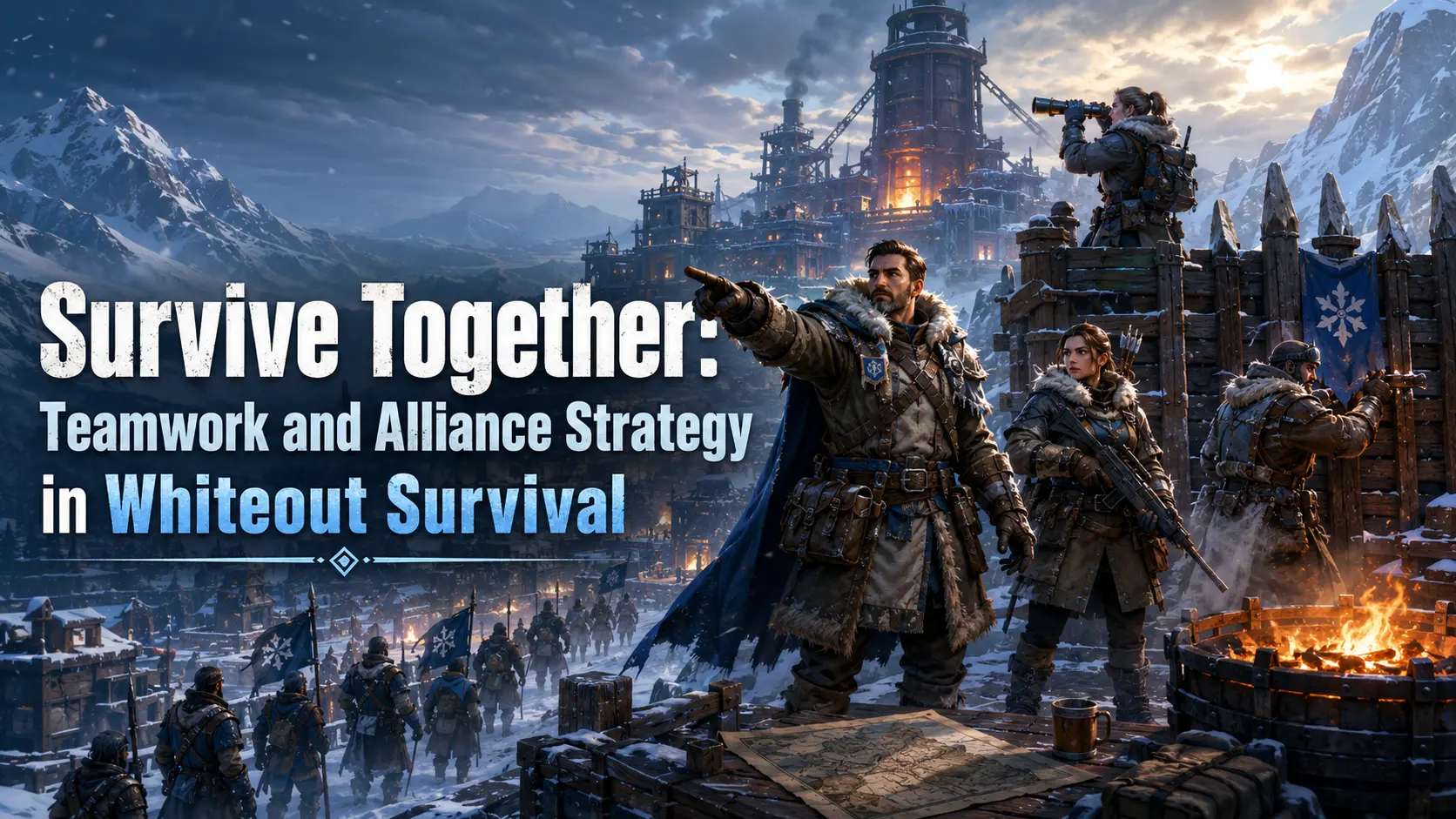
Join an active alliance as soon as the feature becomes available. Contribute to recommended Alliance Tech, use Alliance Help, participate in rallies and events, stay near your alliance territory, read leadership instructions, and remain active even if you are not one of the strongest members.
When Do You Unlock Alliances in Whiteout Survival?
The Alliance feature becomes available once your Furnace reaches Level 7. At that point, you can join an existing alliance or begin exploring the alliance system. For most new players, however, joining an established and active alliance is usually more practical than trying to create and manage a new one immediately. An established group may already have developed Alliance Tech, active leadership, territory, regular event schedules, experienced rally leaders, and members who can answer progression questions.Why Joining an Alliance Matters
An alliance is much more than a chat group. It adds another progression layer on top of your individual city. Depending on the alliance’s development and activity, membership can give you access to:- Alliance Help for construction and research.
- Alliance Tech bonuses that benefit members.
- Coordinated rallies.
- Alliance territory and its associated benefits.
- Competition for Facilities and other strategic objectives.
- Alliance-specific and cooperative events.
- Alliance Gifts and other activity rewards.
- Experienced players who can help with progression decisions.
- Faster defensive responses when enemies become active.
How to Choose a Good Alliance
Not every alliance offers the same experience. A group may have impressive total power but still perform poorly if many members are inactive or leadership rarely organizes events. Therefore, look beyond the alliance’s power number.1. Look for Active Members
Activity is one of the most valuable characteristics of an alliance. Active members regularly use Alliance Help, contribute to technology, join rallies, participate in events, and respond when coordination is required. A smaller but active alliance can sometimes provide a better experience than a larger group where much of the roster rarely logs in.2. Check Event Participation
Look at whether members regularly participate in alliance activities and cooperative events. If rallies consistently struggle to fill or scheduled events have poor attendance, progression and rewards may suffer. Meanwhile, an alliance that announces event times and consistently gets members online is usually much easier to grow with.3. Pay Attention to Leadership
Good R4 and R5 leaders do more than hold a rank. They help organize territory, communicate event times, recommend Alliance Tech, coordinate rallies, manage diplomacy, and give members clear instructions. Leadership becomes particularly important during competitive situations. Random decisions by individual members can affect an entire alliance.4. Check Communication
Alliance chat should not be completely silent. Competitive alliances may also use Discord or another communication channel for schedules and detailed planning. Clear communication is useful for:- Event schedules
- Rally instructions
- Territory planning
- Facility battles
- Enemy movement warnings
- Reinforcement requests
- Alliance Tech priorities
- State diplomacy
5. Consider Your Own Play Schedule
The highest-power alliance is not automatically the best alliance for every player. An excellent group that runs its major events while you are asleep may be less useful than a slightly lower-ranked alliance whose schedule matches your availability. Therefore, consider both alliance quality and event timing before choosing where to stay.Understanding Alliance Help
Alliance Help is one of the easiest benefits for new players to use. When eligible construction or research is underway, alliance members can provide help that reduces the remaining timer. One individual help may appear small, but frequent assistance becomes valuable when members consistently respond to help requests.Make Alliance Help Part of Your Routine
Whenever the Help option appears, assist your alliance members. It requires very little effort while contributing to a faster progression environment for everyone. Additionally, Alliance Tech contains upgrades that can improve the Alliance Help system. This is one reason active technology contributions matter even to players who primarily focus on their own city.Beginner tip: Do not treat Alliance Help as something only stronger players provide. New accounts can press the Help button just as easily, so activity lets you contribute even when your combat power is still low.
Alliance Technology provides long-term improvements for the alliance and its members. Instead of researching whatever you personally prefer, contributions go toward technologies selected within the alliance system. Alliance Tech generally covers different areas of alliance development, including growth, territory, and battle-related improvements.
Why Alliance Tech Contributions Matter
Contributing to Alliance Tech is important for two major reasons. First, it helps develop technologies that benefit the alliance. Second, Alliance Tech contributions are one of the ways your alliance earns Alliance XP. Daily Missions also contribute Alliance XP, which makes consistent member activity important for overall alliance development.Follow the Recommended Technology
Most organized alliances establish a research priority. Instead of spreading contributions across unrelated technologies, members should normally contribute to the technology marked or requested by leadership. Following one research direction helps the alliance complete important upgrades faster. If you want a more detailed explanation of contributions, read our Whiteout Survival Alliance Contribution guide.How Alliance Territory Works
Alliance territory is another major part of the system. Alliances establish territory on the world map through their alliance buildings and expansion. Territory is important because it affects strategic positioning, alliance resources, expansion opportunities, and access to objectives. Well-planned territory allows an alliance to place members close together and expand toward useful locations rather than building randomly across the map.Why You Should Stay Near Your Alliance
Being positioned near other alliance members makes cooperative gameplay easier. Reinforcement travel can be shorter, rallies can fill more efficiently, and alliance members can react more quickly when nearby cities or objectives are threatened. For that reason, alliance leaders often encourage members to relocate near the main alliance cluster or “hive.”Alliance Resources
Alliance resources are separate from the standard resources stored in your personal city. They support alliance-level development such as territory construction and Alliance Technology. This distinction is important because joining an alliance does not simply create a system where members freely transfer all personal Meat, Wood, Coal, and Iron to each other. Instead, the alliance has its own cooperative resource and development systems.Facilities and Territory Bonuses
Facilities located on the map can provide valuable bonuses to members of the alliance controlling them. However, controlling strategic locations requires planning. Alliance territory must be developed toward important objectives, which is why random banner placement can hurt long-term expansion. For leaders, good territory management involves balancing:- Alliance resource access
- Facility access
- Member positioning
- Future expansion paths
- Event locations
- Defensive positioning
Whiteout Survival Rally Strategy
A rally is a coordinated multiplayer attack in which one player starts the rally and other alliance members contribute troops to the combined march. Rallies are a fundamental part of cooperative Whiteout Survival gameplay. They allow multiple players to combine strength against targets that may be inefficient or impossible for one player to handle alone.Rally Leaders
During important combat situations, the rally leader matters because the leader’s development can influence the strength and capacity of the rally. For serious objectives, alliances usually benefit from allowing appropriately developed players to lead rather than having every member independently start a rally.Rally Joiners
You do not need to be a top-power player to contribute. Rally joiners help by filling available slots quickly and following the requested troop or hero instructions. This is one of the easiest ways for lower-power members to contribute to a stronger alliance.Do Not Ignore Rally Instructions
Different events and combat situations may use different strategies. Therefore, avoid assuming that one troop formation or hero setup is ideal everywhere. If leadership requests a particular formation, troop composition, joining hero, or rally timing, follow the current plan instead of sending a random march.Do Not Start Unnecessary Solo Attacks
One of the quickest ways to create problems for an alliance is attacking a serious target without understanding the political or tactical situation. Before attacking an enemy city, alliance, or contested objective, consider:- Is the target protected by a state agreement?
- Has leadership approved the attack?
- Have you scouted the target?
- Could reinforcements arrive?
- Would a rally be more appropriate?
- Could retaliation affect weaker alliance members?
Alliance Defense and Reinforcements
Alliance teamwork is just as important defensively as it is offensively. When enemy activity increases, an organized group can share warnings, reinforce targeted members, coordinate relocation, and decide whether fighting is actually worthwhile.Reinforce Carefully
Reinforcing another player can help defend against an attack, but do not send troops blindly into a losing situation. Follow leadership instructions during serious conflicts.Use Shields Before Trouble Arrives
If you know you cannot participate during a dangerous period, using protection before logging off may prevent unnecessary troop and resource losses. Waiting until an enemy march is already approaching can reduce your available options.Stay Close Enough to Receive Support
A city located far from the main alliance group is more difficult to reinforce quickly. Unless there is a specific reason to be elsewhere, follow your alliance’s positioning instructions.Communication Is an Alliance Advantage
Raw power matters, but coordination determines how efficiently that power is used. During important events or wars, members should share useful information rather than filling chat with unnecessary messages.Report Important Enemy Activity
If you notice suspicious enemy movement, scouting, relocations, or rallies, tell your alliance. Early information gives leaders more time to react.Know the Event Schedule
Many alliance activities work best when members participate at the same time. Check alliance notices, chat, markers, and any external communication channel your group uses.Ask Before Making High-Risk Decisions
If you are uncertain whether you should attack, relocate, reinforce, or start a rally, asking first is usually better than guessing. That habit is particularly useful for newer players who are still learning state politics and event mechanics.How Lower-Power Players Can Help an Alliance
You do not need the strongest heroes or highest Furnace level to be valuable. Active lower-power members can still contribute by:- Using Alliance Help frequently.
- Making regular Alliance Tech contributions.
- Joining rallies on time.
- Participating in available events.
- Following troop and hero instructions.
- Keeping their city near the alliance group.
- Reading alliance announcements.
- Gathering and progressing consistently.
- Avoiding unnecessary conflicts.
Prepare Before Alliance Events
Event preparation is another area where teamwork makes a major difference. Before a scheduled activity, check whether you need:- Available marches
- Healthy troops
- Stamina
- Specific heroes
- Saved resources
- Speedups
- Teleports
- Shields
- A particular troop formation
When Should You Leave an Alliance?
Staying loyal to a good community can be worthwhile, but remaining indefinitely in an inactive alliance can slow your development. You may want to consider another alliance when:- Most members are consistently inactive.
- Rallies rarely fill.
- Alliance Tech progresses extremely slowly.
- Important events repeatedly have poor attendance.
- Leadership is absent for long periods.
- There is no useful communication or organization.
- Your normal play schedule does not match alliance events.
Alliance Progression and Account Development
Alliance performance is closely connected to individual account development. Better heroes, troop tiers, research, Furnace progression, Chief equipment, and march capacity can eventually allow a member to contribute in more demanding roles. That does not mean every player needs to rush progression. Instead, develop your account consistently while contributing according to your current strength.Players comparing different stages of progression can also review a wos account for sale to see how developed accounts can differ in Furnace progress, heroes, troops, equipment, and overall account development.
Best Alliance Strategy for Beginners
If you have recently unlocked alliances, there is no need to understand every advanced strategy immediately. Focus on a few habits first.Step 1: Join an Active Alliance
Look for an alliance with regular activity, event participation, visible leadership, and a schedule that works for you.Step 2: Relocate Near the Alliance
If leadership asks you to move near alliance territory or the main cluster, do so when practical. Proper positioning helps with rallies, events, and defense.Step 3: Use Alliance Help
Help other members whenever requests appear and request assistance with eligible construction and research.Step 4: Contribute to Alliance Tech
Donate consistently and follow the technology recommended by your alliance rather than choosing randomly.Step 5: Join Rallies
You do not need to lead. Start by learning how your alliance organizes rallies and follow instructions when joining them.Step 6: Participate in Events
Show up when possible. Regular participation helps you learn mechanics and makes you more useful to the group.Step 7: Read Before You Attack
Do not assume every enemy-looking player is a valid target. State diplomacy and alliance agreements may restrict attacks.Step 8: Ask Questions
Experienced members often know which upgrades, heroes, events, and resources deserve priority. Use that knowledge instead of learning every lesson through expensive mistakes.Simple Daily Alliance Routine
A consistent routine is often more useful than occasional bursts of activity.| Activity | Why It Matters | Priority |
|---|---|---|
| Alliance Help | Supports member construction and research | High |
| Alliance Tech Contribution | Supports shared technology and Alliance XP | High |
| Check announcements | Prevents missed schedules and instructions | High |
| Join useful rallies | Supports cooperative activity and rewards | High |
| Complete Daily Missions | Supports personal growth and Alliance XP | High |
| Check events | Helps coordinate resources and activity | High |
| Check alliance positioning | Keeps your city aligned with territory plans | As needed |