
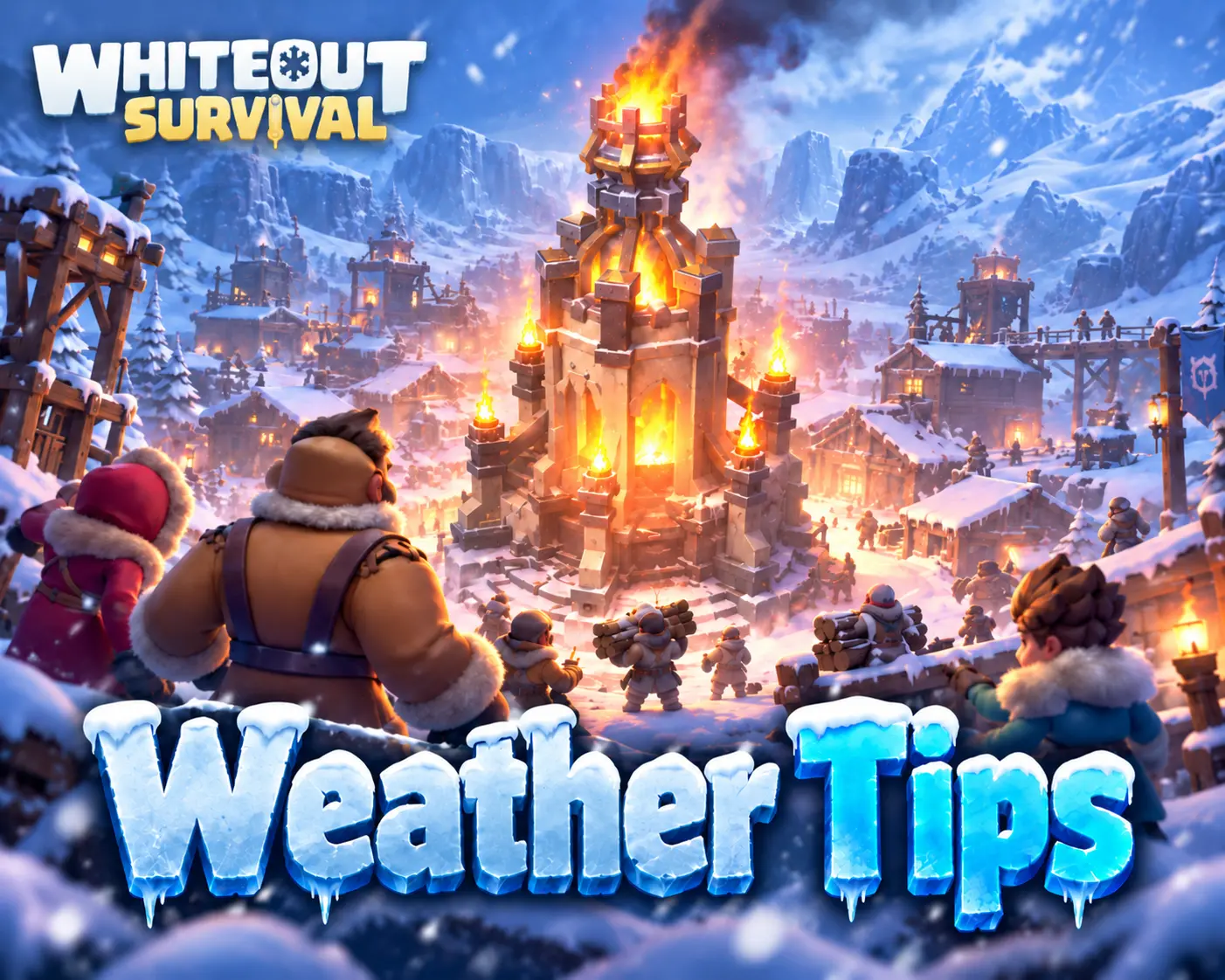
 Whiteout Survival weather is mainly a city-management mechanic that affects your Survivors. Cold nights and snowstorms increase the importance of Furnace heat, while inadequate warmth can make Survivors sick and remove them from their workstations until they recover.
The solution is not simply to leave the Furnace at maximum output forever. Early-game weather management means balancing heat and fuel while also maintaining Shelters, Cookhouse nutrition, and Clinic treatment. A city can have a warm Furnace and still suffer sickness if its food or living conditions are poor.
Whiteout Survival weather is mainly a city-management mechanic that affects your Survivors. Cold nights and snowstorms increase the importance of Furnace heat, while inadequate warmth can make Survivors sick and remove them from their workstations until they recover.
The solution is not simply to leave the Furnace at maximum output forever. Early-game weather management means balancing heat and fuel while also maintaining Shelters, Cookhouse nutrition, and Clinic treatment. A city can have a warm Furnace and still suffer sickness if its food or living conditions are poor.
During early snowstorms, keep the Furnace running and use Max Power when the city becomes too cold. Maintain enough fuel, upgrade Shelter warmth, keep the Cookhouse supplied with adequate food, and treat sick Survivors in the Clinic. If Survivors stay sick even when the city is warm, investigate nutrition and living conditions instead of assuming the Furnace is the only problem.
How Weather Works in Whiteout Survival
The core weather system is simpler than the survival mechanics suggested by the game’s frozen setting. You do not need separate clothing, cold-resistant troop formations, or manually crafted heating equipment. The main cycle involves outside temperature changing between daytime, nighttime, and snowstorms. The Furnace produces city heat, and colder conditions require more attention to your Survivors’ warmth.| Weather or City Mechanic | What It Means |
|---|---|
| Daytime | Usually easier to keep Survivors warm, allowing early players to reduce Furnace output when extra heat is unnecessary. |
| Nighttime | Colder conditions can make Max Power useful. |
| Snowstorms | Temperature falls and inadequate warmth can lead to Survivor sickness. |
| Furnace | Provides city heat and becomes more effective as it is upgraded. |
| Max Power | Raises Furnace heat output but also increases fuel consumption. |
| Survivor sickness | Sick Survivors cannot work until they recover. |
How the Furnace Controls City Temperature
The Furnace is both your main city progression building and your settlement’s heat source. Upgrading it raises its heat output while also controlling the maximum level and availability of many other buildings. The Furnace has two important controls:- On/Off: Determines whether the Furnace is actively operating and consuming fuel.
- Max Power: Produces more heat but consumes fuel faster.
What Fuel Does the Furnace Use?
The Furnace does not use only coal throughout the entire game. During the earliest progression it can consume wood, while later Furnace operation uses coal. This distinction matters because new players sometimes save coal while overlooking their immediate wood supply, or assume the Furnace will always consume the same resource.Do Not Let Furnace Fuel Reach Zero
Running out of Furnace fuel removes your main source of city heat. Survivors can become sick quickly when the settlement is left cold, which means fewer workers remain available for resource production. The game’s building guidance warns players to maintain a fuel reserve instead of waiting until the low-fuel warning appears.If a storm starts and your Survivors are getting cold, first confirm that the Furnace is on, then activate Max Power if necessary, check your remaining fuel, and review Survivor warmth. Do not spend the last of your wood or coal on an upgrade while the Furnace is close to running dry.
How to Maintain Enough Coal
Once coal becomes the Furnace’s main fuel, maintaining a reserve becomes part of normal city management. Reliable ways to maintain coal include:- Keeping the Coal Mine upgraded and staffed.
- Gathering coal on the world map.
- Completing missions and participating in events that award resources.
- Using resource supply items when necessary.
- Improving Coal Output and Coal Gathering through relevant research.
Should You Leave Max Power On All the Time?
For an early account, usually not. Max Power consumes more fuel, so toggling it on when temperatures are low and reducing output when extra heat is unnecessary can conserve resources. As your city develops and resource production becomes much stronger, the additional consumption becomes less important and constant Max Power becomes easier to sustain.Upgrade the Furnace, but Do Not Ignore Survivor Buildings
Furnace upgrades are central to progression because they unlock and gate most of the settlement. They also increase the amount of heat the Furnace can produce. However, weather problems are not solved by Furnace level alone. Your Survivors also depend on:- Shelter warmth and living conditions.
- Cookhouse nutrition and meat supply.
- Clinic treatment when they become sick.
Upgrade Shelters and Their Furniture
Shelters house your Survivors and affect several welfare statistics, including:- Warmth
- Comfort
- Mood
- Sleep Quality
Why Shelter Warmth Matters During Snowstorms
The Furnace provides settlement heat, but Shelter development improves the quality of the Survivors’ living environment. The two systems work together rather than replacing one another. This is why a city can still have unhappy or unhealthy Survivors even if the Furnace is not completely off.Cookhouse Food Quality Can Also Cause Sickness
Not every sick Survivor is suffering from cold. The Cookhouse feeds your Survivors and uses meat supplied through your city’s food economy, including production from the Hunter’s Hut. Poor nutrition can lower Survivor health and happiness and can contribute to sickness. If Survivors are getting sick despite adequate warmth, check:- Whether the Cookhouse has enough meat.
- Whether the selected meal quality is adequate.
- Whether the Hunter’s Hut is producing enough meat.
- Whether relevant Cookhouse upgrades are being neglected.
If the Furnace is hot but Survivors remain sick, stop increasing heat blindly. Check Cookhouse food quality, meat supply, Shelter Warmth and Comfort, and Clinic treatment. Weather is only one part of Survivor health.
Use the Clinic for Sick Survivors
The Clinic is where sick Survivors recover once it has been built. While a Survivor is sick and receiving treatment, that worker is unavailable for normal production. Upgrading the Clinic and its furniture improves treatment performance, including recovery time and wellness restoration. If many Survivors become sick at the same time, treatment alone is not enough. Identify why they became sick or the problem may simply repeat after they recover.Use Comprehensive Care in an Emergency
The Chief’s House also provides an Edict called Comprehensive Care. It immediately heals all sick Survivors in the city. The current listed requirement is:| Comprehensive Care | Current Effect |
|---|---|
| Effect | Immediately heals all sick Survivors |
| Cost | 150,000 Contentment |
| Cooldown | 4 hours real time |
Why Are My Survivors Sick?
Use the following checklist instead of assuming every illness comes from a snowstorm.| Problem | What to Check |
|---|---|
| Survivors are cold | Furnace status, Max Power, fuel reserves, Furnace level, Shelter Warmth |
| Sickness begins during a snowstorm | Furnace heat and fuel first |
| Sickness continues while city is warm | Cookhouse meal quality, meat supply, Shelter conditions |
| Many Survivors are unavailable | Clinic treatment and Comprehensive Care |
| Production falls | Check whether workers are sick, resting, or missing from workstations |
Does Weather Affect Troops, Gathering, or Heroes?
The standard Furnace weather system is documented as a Survivor and city-health mechanic. When your settlement experiences a normal snowstorm, you do not need to change your PvP formation, select weather-resistant Heroes, or rebuild your gathering marches simply because city temperature has fallen. Combat, marches, gathering, and Hero formations use their own systems. Separate limited-time events can introduce their own snow, storm, or temperature-themed rules. Those event mechanics should be treated separately from the normal Furnace and Survivor system.Are Some Heroes Resistant to Cold?
Hero stories may reference snow, ice, or cold environments, but the standard city weather mechanic is not managed by assigning a particular Hero to protect your Survivors. For normal city weather, focus on the Furnace, fuel, Shelters, Cookhouse, and Clinic.Does an Alliance Protect You From Snowstorms?
Joining an alliance does not replace your Furnace or directly keep your Survivors warm. An active alliance can still make city progression easier through:- Alliance Help
- Alliance technology
- Alliance event rewards
- Rallies and progression rewards
- Territory benefits
Can Alliance Members Send You Coal?
Do not confuse personal city resources with Alliance Resources. The Alliance Resources Exchange converts resource types owned by the alliance for alliance development. It is not a player-to-player system for sending your personal coal, wood, meat, or iron directly to another member’s city.Does Weather Still Matter in the Late Game?
Weather remains part of the settlement simulation, but it becomes much easier to manage once production and resource reserves are established. For a new account, a fuel shortage can disrupt several workstations. For a developed account with stronger resource production, weather management is usually less demanding than Hero development, research, troops, Chief Gear, Charms, and other combat systems. If you are comparing established progression rather than developing another city from the beginning, viewing a wos account for sale is an optional route. Compare Furnace progression, Heroes, research, troops, state age, and transfer eligibility rather than judging an account only by total Power. For developer announcements and current game information, you can also check the official Whiteout Survival website.Common Whiteout Survival Weather Mistakes
Assuming the Furnace Always Uses Coal
The earliest Furnace progression uses wood for fuel before coal becomes the later fuel source. Watch the resource the Furnace is actually consuming.Ignoring Fuel Until the Furnace Stops
Keep an emergency reserve. Losing your heat source during a cold period can quickly remove workers from production through sickness.Leaving Max Power Off During a Cold Snowstorm
If your Survivors are becoming too cold, the increased heat from Max Power can be more important than conserving a small amount of fuel.Leaving Max Power On Without Watching Fuel
Max Power consumes additional resources. Early players should balance extra heat against limited fuel reserves.Assuming Every Sick Survivor Is Cold
Cookhouse nutrition and Shelter conditions also matter. A warm Furnace does not guarantee perfect Survivor health.Ignoring Shelter Furniture
Shelter furniture contributes to living-condition progression. Keeping only the main building upgraded can leave important welfare improvements behind.Using Comprehensive Care Without Fixing the Cause
The Edict heals sick Survivors immediately, but it cannot solve inadequate Furnace heat, poor nutrition, or underdeveloped living conditions.Confusing City Weather With Event Weather
A special event can have snowstorm mechanics unrelated to your normal city temperature. Follow that event’s rules rather than applying ordinary Furnace logic to every snow-themed activity.FAQs
How do you survive a snowstorm in Whiteout Survival?
Keep the Furnace operating, activate Max Power when additional heat is needed, maintain enough fuel, and keep Shelter Warmth adequately developed. If Survivors become sick, treat them in the Clinic and check whether food quality is contributing to the problem.What fuel does the Furnace use?
The Furnace uses wood in the earliest stages and coal later in progression. Max Power increases heat but also increases fuel consumption.Should I keep Max Power on all the time?
Early in the game, not necessarily. Use it when the settlement needs more heat, particularly during colder periods and snowstorms, then reduce output when conditions allow if you need to conserve fuel. Developed cities can sustain Max Power more easily.Why are my Survivors sick even though the Furnace is warm?
Check Cookhouse food quality, meat supply, Shelter Warmth and Comfort, and Clinic treatment. Poor nutrition and living conditions can also contribute to sickness.Does weather affect troop speed or gathering?
The standard city weather system centers on Furnace heat and Survivor welfare rather than requiring changes to normal troop, Hero, or gathering formations. Separate events may have their own weather-related mechanics.Can alliance members give me coal during a snowstorm?
The game has Alliance Resources and an Alliance Resources Exchange, but that system is for alliance-owned resources. It is not a direct transfer of one player’s personal coal into another player’s city.Conclusion
Whiteout Survival weather is mainly about keeping your Survivors healthy enough to keep the city running. Maintain Furnace fuel, use Max Power when extra heat is necessary, improve Shelter living conditions, provide adequate Cookhouse meals, and treat sickness before it removes too much of your workforce. Once you understand that cold is only one cause of Survivor problems, snowstorms become much easier to manage. For more city progression, Hero, event, and strategy advice, explore our Whiteout Survival guides.Lifetime Warranty – The Guardian protects you against any problems with your order. Visit this page to read more about our Lifetime Warranty