
State of Power, commonly called SvS, is one of the largest competitive events in Whiteout Survival. It matches two states against each other through several days of preparation tasks, followed by a cross-state Sunfire Castle battle.
Success in SvS depends on more than having strong players. States must save resources, coordinate scoring days, protect weaker cities, organize castle rallies, and complete Field Triage after the battle.
This Whiteout Survival State of Power guide explains every phase of SvS, including preparation tasks, state contribution rules, battle mechanics, rewards, troop revival, and the State Power Shop.
Note: Event times, scoring requirements, reward quantities, and shop items may change depending on state age, progression, and future game updates.
What Is State of Power in Whiteout Survival?
State of Power is a cross-state event that tests the overall strength, activity, resource management, and coordination of two states.
The event has four main phases:
| Phase | Approximate Duration | Main Purpose |
|---|---|---|
| Matchmaking Phase | 2 days | Find a state with similar power |
| Preparation Phase | 6 days | Earn points through upgrades and resource use |
| Battle Phase | 1 battle period | Fight for control of Sunfire Castle |
| Field Triage Phase | After the battle | Revive troops lost during SvS |
The state that wins the Preparation Phase gains an important advantage: the Sunfire Castle battle takes place in the losing state.
State of Power Matchmaking Phase
The Matchmaking Phase normally takes place over Saturday and Sunday.
Matchmaking Day 1
The game evaluates your state and searches for a suitable opponent.
Matchmaking is based on factors such as:
- Troop Power of the top 100 chiefs
- Previous state battle results
- Overall state activity
- Similarity between the total strength of both states
Matchmaking is not based only on the single strongest player. The combined development of the state’s leading chiefs has a major effect.
Matchmaking Day 2
The opposing state is revealed on the second day.
Once the opponent is known, state leaders should examine:
- Strongest players and alliances
- Furnace and Fire Crystal levels
- Previous Sunfire Castle experience
- Likely rally leaders
- State activity during common battle times
- Number of active combat alliances
This information helps leaders decide whether to push aggressively during preparation or manage resources more carefully.
State of Power Preparation Phase
The Preparation Phase lasts six days. The first five days contain scoring tasks, while the result is normally announced on the sixth day.
Players earn three types of points:
| Point Type | How It Works |
|---|---|
| Personal Points | Added to your individual event score |
| Alliance Points | Added to your alliance’s ranking |
| State Points | Added to the total score used against the opposing state |
Personal and alliance scores receive the full value of completed tasks. However, the amount added to the state score may depend on Furnace or Fire Crystal level.
State Point Contribution Ratio
| Furnace Level | State Point Contribution |
|---|---|
| Fire Crystal 4 or higher | 100% |
| Fire Crystal 2 to Fire Crystal 3 | 50% |
| Furnace 16 to Fire Crystal 1 | 0% |
These thresholds may be adjusted as the state becomes older.
This means a developing player may still earn personal and alliance rewards even when their actions contribute less—or nothing—to the state’s competitive total. Stronger accounts should therefore handle a large share of major upgrades when the state is trying to win.
State of Power Preparation Tasks by Day
The available tasks rotate each day. Spending an item on the wrong day can result in losing a large amount of potential SvS points.
Preparation Day 1 Tasks
| Task Category | Scoring Actions |
|---|---|
| Chief Charm | Increase Chief Charm score |
| Fire Crystal Development | Use Fire Crystals, Refined Fire Crystals, and Fire Crystal Shards |
| Speedups | Use construction, research, and troop training speedups |
| Expert Progression | Use Expert Skill learning speedups |
Day 1 is suitable for planned building and research upgrades, especially for high-level players whose spending contributes fully to the state score.
Preparation Day 2 Tasks
| Task Category | Scoring Actions |
|---|---|
| Fire Crystal Development | Use Fire Crystals, Refined Fire Crystals, and Fire Crystal Shards |
| Speedups | Use construction, research, and troop training speedups |
| Lucky Wheel | Use Lucky Wheel spins |
| Hero Development | Use hero-specific shards |
| Gathering | Gather resources in the wilderness |
| Expert Progression | Use Expert Skill speedups, qualifying Expert Sigils, and Books of Knowledge |
General Hero Shards do not count for the hero shard task. Confirm the task description before spending any shards.
Start gathering before the daily reset when possible. Marches that finish after the new scoring day begins may provide an early point advantage.
Preparation Day 3 Tasks
| Task Category | Scoring Actions |
|---|---|
| Pets | Increase Pet Advancement score and perform Pet Refinement |
| Chief Charm | Increase Chief Charm score |
| Lucky Wheel | Use Lucky Wheel spins |
| Hero Development | Use hero-specific shards |
| PvE Combat | Defeat Beasts and rally Polar Terrors |
| Expert Progression | Use qualifying Expert Sigils and Books of Knowledge |
Day 3 rewards active participation. Players with limited premium resources can still contribute through Beast hunting, Polar Terror rallies, and saved pet materials.
Preparation Day 4 Tasks
| Task Category | Scoring Actions |
|---|---|
| Chief Charm | Increase Chief Charm score |
| Hero Gear | Use Essence Stones and Exclusive Gear Widgets |
| Advanced Materials | Use Mithril |
| Troops | Train or promote troops |
Troop promotion is often more efficient than continuously creating lower-tier troops. Promotions increase troop quality while allowing players to use previously trained units.
Preparation Day 5 Tasks
| Task Category | Scoring Actions |
|---|---|
| Pets | Increase Pet Advancement score and perform Pet Refinement |
| Chief Gear | Increase Chief Gear score, excluding Charm |
| Hero Gear | Use Essence Stones, Exclusive Gear Widgets, and Mithril |
| Fire Crystal Development | Use Fire Crystals, Refined Fire Crystals, and Fire Crystal Shards |
| Speedups | Use construction, research, troop training, and Expert Skill speedups |
Day 5 combines several expensive upgrade categories. States should monitor the score difference before players use all their saved materials.
If victory is already secure, unnecessary spending can reduce preparation for the next SvS cycle.
Preparation Phase Rewards
The Preparation Phase contains several reward groups.
| Reward Category | How to Qualify |
|---|---|
| Daily Personal Ranking | Earn personal points during each scoring day |
| Daily Alliance Ranking | Help your alliance place in the daily rankings |
| Preparation Winner Reward | Belong to the state that wins preparation |
| Preparation Runner-Up Reward | Participate on the state that loses preparation |
| Matchmaking Bye Reward | Receive compensation when no opponent is assigned |
| Individual Total Ranking | Accumulate personal points across all preparation days |
| Alliance Total Ranking | Help your alliance rank across the complete phase |
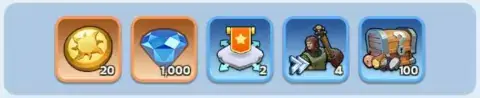
Preparation rewards can include Gems, speedups, resource items, event currency, upgrade materials, hero-related rewards, and cosmetic items.
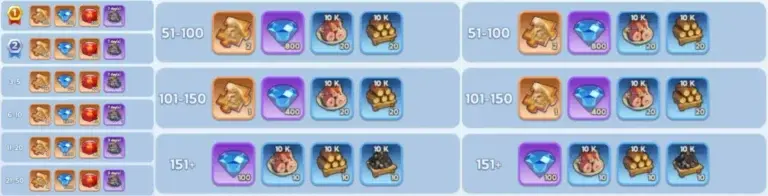
Players who finish within the top 150 of the total individual ranking may receive shards for a hero connected to the state’s current generation or season. Higher ranks receive larger quantities and additional rewards.
Alliance rewards are distributed to qualifying alliance members. Leaving the alliance before rewards are finalized may make a player ineligible, so avoid switching alliances near the end of the Preparation Phase.

State of Power Battle Phase
The Battle Phase begins after the Preparation Phase result is confirmed.
The cross-state portal commonly opens at 10:00 UTC, allowing players to enter the opposing state. The Sunfire Castle battle commonly begins at 12:00 UTC and lasts approximately five hours.
Players who will not be online when the portal opens should activate a shield in advance. Unshielded cities can be attacked as soon as cross-state travel becomes available.
Where Does the SvS Battle Take Place?
The battle takes place in the state that lost the Preparation Phase.
The winning state becomes the attacking state. Its own Sunfire Castle is protected and cannot be attacked during that SvS battle.
Both states can use Cross-State Teleporters to travel. Players may:
- Attack enemy cities
- Reinforce allies
- Join Sunfire Castle rallies
- Fight for control of turrets
- Hunt enemy marches
- Defend important positions
Furnace Attack Restrictions
Players can normally attack cities within three Furnace levels of their own.
For example, a Furnace Level 27 player may attack cities between Furnace Level 24 and Furnace Level 30.
The permitted range helps prevent extreme differences between city levels, although strong hero, troop, gear, and research differences can still make an apparently equal-level fight one-sided.
Alliance Buildings During SvS
Players cannot attack opposing alliance buildings such as:
- Alliance Headquarters
- Alliance banners
When shields are limited, players may send troops into their alliance HQ or banners for additional protection.
This does not make the city itself safe. Resources and troops left inside an unshielded city may still be exposed.
Sunfire Castle and Turret Rules
If the Sunfire Castle and its turrets are controlled by alliances from the same state, the turrets will not fire on the castle.
Although alliances from the same state may compete for occupation, SvS is designed around state-wide cooperation. Internal fighting makes it easier for the opposing state to gain control.
State leaders should decide in advance:
- Which alliance holds the castle
- Which alliances control each turret
- Who leads offensive rallies
- Who reinforces and replaces injured troops
- When control should be transferred
- Which voice or text channel is used for commands
Supreme President Rules
If the attacking state captures the defending state’s Sunfire Castle, the alliance controlling the castle at the end can appoint a Supreme President who governs both states.
The former president of the losing state is removed. That state must wait until a later Sunfire Castle battle before it can appoint a new president.
If the defending state successfully holds its Sunfire Castle, the presidents of both states remain unchanged.
How Battle Phase Scoring Works
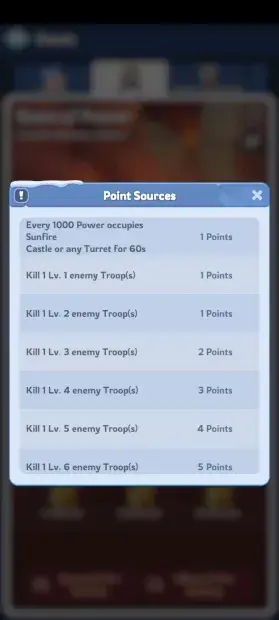
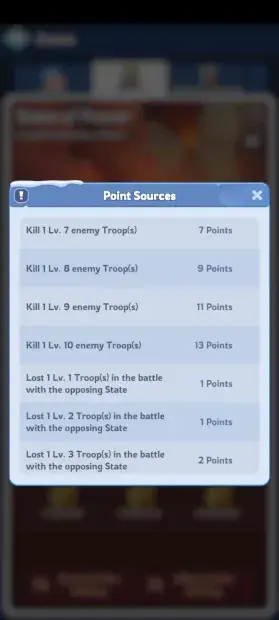
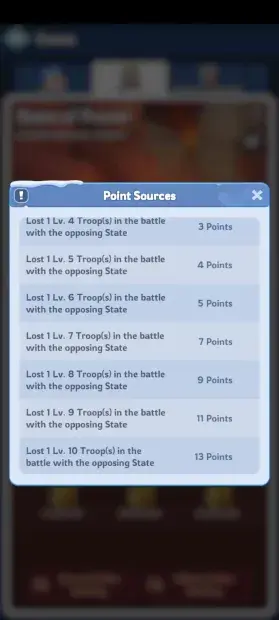
Battle points are generally earned through activities such as:
- Occupying Sunfire Castle or its turrets
- Killing troops belonging to the opposing state
- Losing troops while fighting the opposing state
- Participating in eligible cross-state battles
Higher-tier troops provide more points than lower-tier troops. However, intentionally taking poor fights simply to gain points can cause unnecessary losses.
The best scoring comes from useful battles that also support the state’s main objective.
Battle Phase Rewards
| Reward Category | Requirement |
|---|---|
| Battle Winner Rewards | Win the State of Power battle |
| Battle Runner-Up Rewards | Participate but lose the final battle |
| Personal Ranking Rewards | Earn individual battle points |
| Alliance Ranking Rewards | Help your alliance place in the rankings |
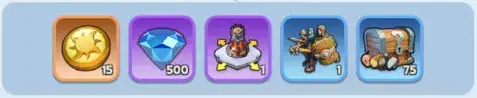
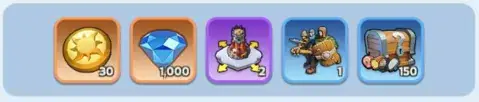
Battle rewards may include State Power currency, Gems, hero shards, upgrade materials, resources, alliance items, and speedups. The winner receives significantly stronger state-result rewards than the runner-up.
Players who finish within the top 50 of the personal battle ranking may receive a limited-duration luxury city skin. Lower ranking tiers still receive useful progression rewards.
Field Triage and Troop Revival
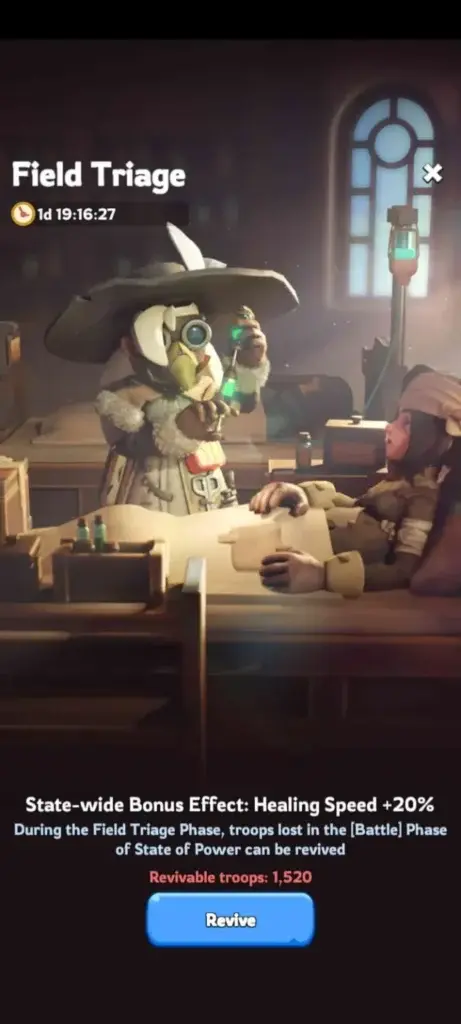
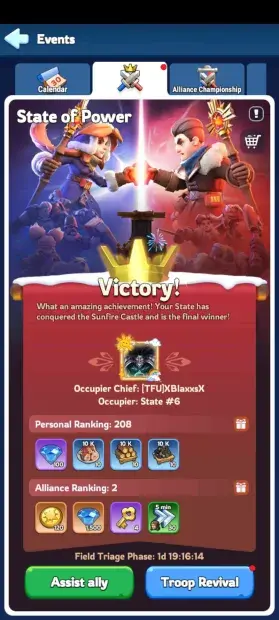
Field Triage begins after the Battle Phase ends. It allows players to revive a portion of troops lost during eligible SvS battles.
The final recovery rate can normally range from approximately 30% to 90%.
Field Triage Recovery Sources
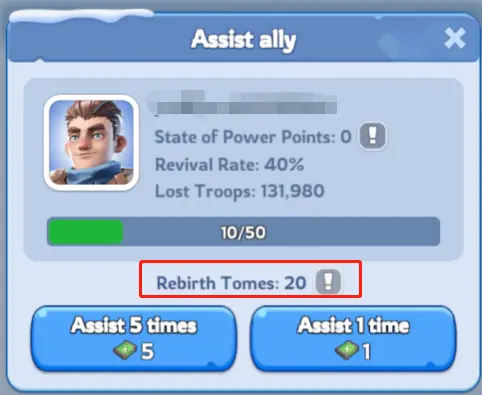
| Recovery Source | Possible Contribution |
|---|---|
| Base Revival | Approximately 30% |
| Alliance Rebirth Tome Assistance | Up to approximately 50% |
| Revival Potions or Gem Assistance | Up to approximately 10% |
| Maximum Total | Approximately 90% |
Each player receives 20 Rebirth Tomes. These Tomes are used to assist alliance members rather than directly reviving the owner’s troops.
Each successful assistance increases the recipient’s revival rate by approximately 1%. A player may need assistance from many alliance members to reach the maximum Tome contribution.
Revival Potions can provide another 1% per use, up to 10%. Purchasing all available revival increases may cost around 2,250 Gems in total, although costs can change.
Best Field Triage Strategy
- Send all 20 Rebirth Tomes to active alliance members.
- Post revival requests in alliance chat.
- Prioritize players with the largest eligible troop losses.
- Check Field Triage before the timer expires.
- Decide whether the final Gem-based recovery is worth the troop value.
- Do not assume all battle losses can be revived.
Ignoring Field Triage can turn recoverable losses into permanent losses.
State Power Shop
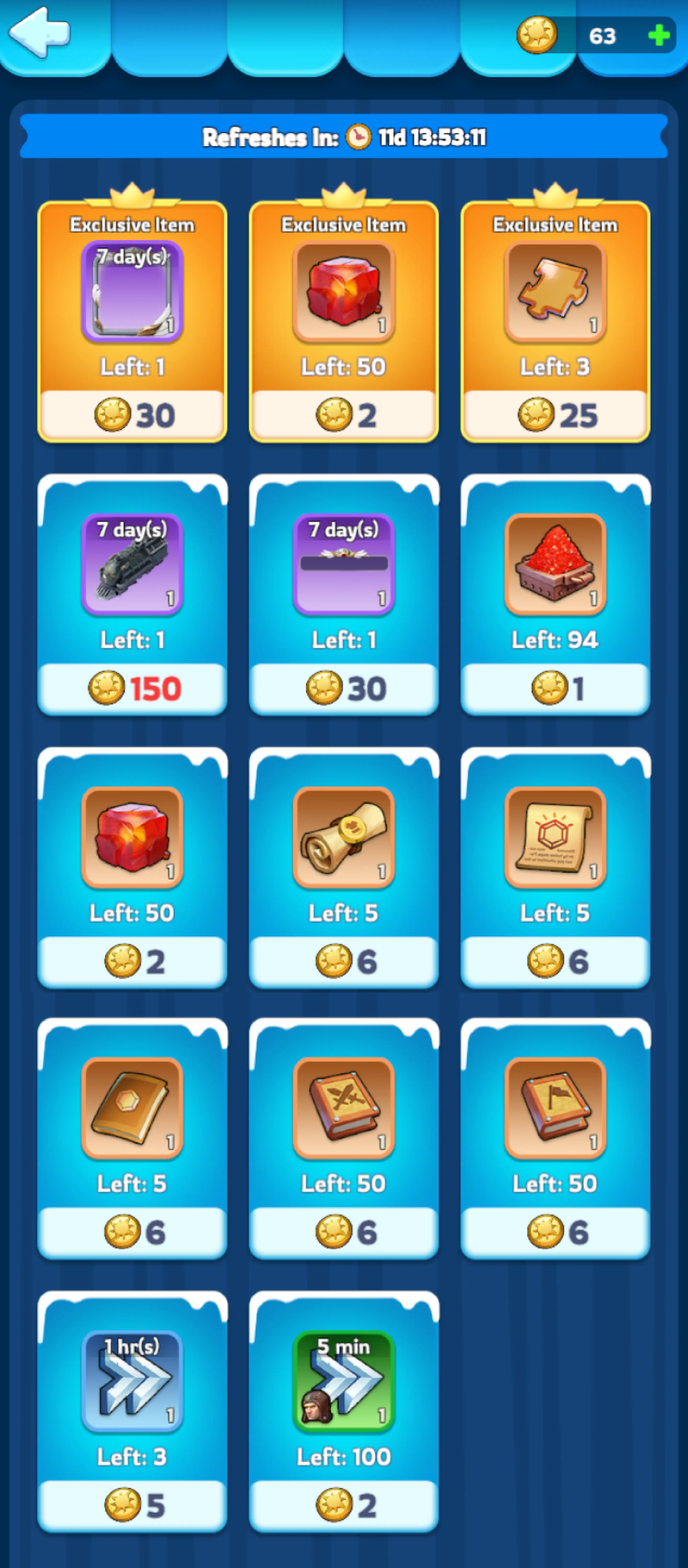
State of Power provides access to the State Power Shop, where event currency can be exchanged for progression items and cosmetics.
The available inventory may improve or change as the state becomes older.
Possible shop items include:
- Fire Crystal-related materials
- Hero and gear development items
- Research or progression materials
- Speedups
- Resource items
- Avatar frames
- Nameplates
- March skins
- City cosmetics
Some exclusive shop items may only become available after winning State of Power.
Cosmetic items shown in the shop may have a seven-day activation period rather than being permanent. Always check the duration before spending event currency.
State Power Shop Priority
| Priority | Recommended Purchase |
|---|---|
| High | Rare permanent upgrade materials |
| High | Materials blocking an important upgrade |
| Medium | Fire Crystal and hero progression items |
| Medium | Discounted speedups |
| Low to Medium | Temporary cosmetics |
| Low | Common resources that are easy to obtain elsewhere |
Temporary skins can be useful for their bonuses, but they are usually less valuable than rare permanent progression materials for developing accounts.
Best State of Power Strategy
Save Resources Between SvS Events
Avoid using valuable materials immediately after obtaining them. Save them until the correct preparation day whenever possible.
Important resources to save include:
- Fire Crystals and Refined Fire Crystals
- Fire Crystal Shards
- Chief Gear and Charm materials
- Pet advancement and refinement items
- Hero-specific shards
- Essence Stones
- Exclusive Gear Widgets
- Mithril
- Speedups
- Expert Sigils and Books of Knowledge
Follow State Instructions
Strong SvS states often publish spending targets for each preparation day.
These instructions may ask players to:
- Reach a minimum point target
- Stop spending after reaching milestones
- Save large upgrades until leaders request them
- Push only when the score difference is close
- Hold resources when victory is already secure
Protect Your City
Before the cross-state portal opens:
- Activate a shield if you will be offline.
- Remove excess troops from exposed gathering tiles.
- Avoid keeping more resources than your Storehouse protects.
- Place troops in safe alliance buildings when appropriate.
- Keep teleporters available.
- Check hospital capacity.
Coordinate With Your Entire State
During SvS, players from the same state should act as one team.
Check the state marker before attacking a city or march. Attacking friendly-state players wastes stamina, troops, healing resources, and time that should be used against the opponent.
Use an SvS Calculator or Tracking Sheet
A calculator or shared spreadsheet can help estimate:
- Points available from saved resources
- Daily alliance targets
- Expected state contribution
- Required score to reach ranking milestones
- Whether additional spending is worthwhile
This is especially useful during the final hours of Preparation Day 5.
State of Power Mistakes to Avoid
- Spending materials on the wrong day: Always verify the active task list before upgrading.
- Using General Hero Shards: The hero shard task may require hero-specific shards.
- Ignoring the state contribution ratio: Lower-level players may earn personal points without increasing the state score.
- Leaving the alliance before rewards: This can remove eligibility for alliance ranking rewards.
- Being unshielded when the portal opens: Enemy players may attack immediately.
- Fighting players from your own state: Internal conflict weakens the entire state.
- Overfilling the hospital: Additional losses may become more difficult to manage.
- Skipping Field Triage: A large portion of eligible troop losses can be recovered.
- Buying temporary cosmetics without checking duration: Many State Power Shop skins last only seven days.
- Using every saved resource unnecessarily: Stop when extra spending no longer provides meaningful value.
FAQs
How long does State of Power last in Whiteout Survival?
SvS includes two matchmaking days, six preparation days, the cross-state battle, and the Field Triage period. The complete cycle lasts longer than the five active preparation scoring days.
Where does the SvS Sunfire Castle battle take place?
The battle takes place in the state that loses the Preparation Phase. The preparation winner attacks that state’s Sunfire Castle.
Do General Hero Shards count during SvS preparation?
General Hero Shards may not count for the hero shard task. Players normally need to use shards assigned to specific heroes.
Can lower-level players help during State of Power?
Yes. Lower-level players can earn personal and alliance points, gather resources, defeat Beasts, join Polar Terror rallies, assist with Field Triage, shield their cities, and support state coordination. However, their actions may contribute less to the official state score.
How many troops can be revived after SvS?
Field Triage can potentially recover approximately 30% to 90% of eligible troop losses. The final percentage depends on base recovery, Rebirth Tome assistance, and additional revival increases.
What happens if the attacking state wins the castle battle?
The alliance controlling the defending state’s Sunfire Castle at the end can appoint a Supreme President to govern both states. The losing state’s previous president is removed.
Conclusion
State of Power is one of the most demanding events in Whiteout Survival because it combines resource management, state-wide preparation, PvP combat, castle coordination, and troop recovery.
Save valuable materials for the correct preparation day, follow state instructions, shield before the cross-state portal opens, and work with other alliances during the Sunfire Castle battle. After combat ends, use every available Rebirth Tome and complete Field Triage before the timer expires.
For more event strategies, progression advice, hero information, and resource-saving tips, explore our Whiteout Survival guides on Heaven Guardian.