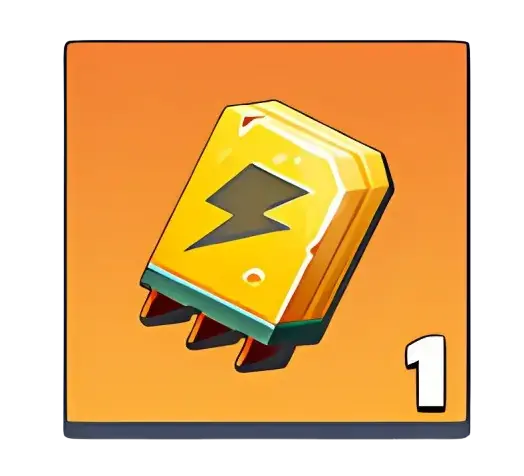
Dielectric Ceramic in Last War: Survival is the highest tier in the standard gear-material merge chain. Its two main uses are crafting Legendary gear and promoting level 40 Legendary gear through star levels.
The most reliable way to make it is simple: 4 Synthetic Resin = 1 Dielectric Ceramic. You can also obtain Ceramic through stores and rotating events. Once your account reaches advanced gear promotion, demand becomes substantial: promoting a single level 40 Legendary gear piece from 0★ through 5★ requires 6,000 Dielectric Ceramic.
Merge lower gear materials steadily, use the Campaign and Alliance Stores when Ceramic is genuinely your bottleneck, and reserve large Ceramic stockpiles for permanent main-squad gear. Gear Factory level 10 unlocks Legendary crafting, while level 20 unlocks promotion beyond Legendary gear level 40.
What Is Dielectric Ceramic Used For?
Dielectric Ceramic is a Legendary-tier gear material handled through the Gear Factory. It has two distinct stages of importance.
Crafting Legendary Gear
Gear Factory level 10 unlocks Legendary gear crafting. Current gear references consistently list 750 Dielectric Ceramic as the material requirement for crafting one Legendary gear piece.
This is normally the first major Ceramic sink. Legendary gear is the long-term equipment tier for your important heroes, so players should avoid wasting large quantities of gear materials crafting lower-rarity equipment once Legendary crafting is realistically available.
Promoting Level 40 Legendary Gear
Legendary gear can normally be leveled to 40 with Coins and Upgrade Ore. Once your Gear Factory reaches level 20, the Gear Promotion system becomes available and level 40 Legendary equipment can progress through five additional stars.
Those promotions require:
- Dielectric Ceramic
- Upgrade Ore
- Coins
- Legendary Gear Blueprints for Stars 1–4
- Mythic Gear Blueprints for Star 5
At this stage, Ceramic stops being only a crafting resource and becomes a repeated long-term upgrade requirement.
Gear Factory Levels You Need to Know
The Gear Factory unlocks when your Headquarters reaches level 9, but its most important gear functions arrive at specific building levels.
| Gear Factory Level | Unlock | Why It Matters |
|---|---|---|
| 1 | Rare Gear | Beginning of Gear Factory crafting |
| 5 | Epic Gear | Allows purple gear crafting |
| 10 | Legendary Gear | Unlocks gold Legendary gear crafting |
| 20 | Gear Promotion | Allows level 40 Legendary gear to progress through star promotion |
For the complete building progression, read the Last War Gear Factory guide.
How to Make Dielectric Ceramic
The Gear Factory’s Merge system combines four materials of one tier into one material of the next tier.
| Merge | Result | Screw Equivalent |
|---|---|---|
| 4 Screws | 1 Refined Iron Module | 4 Screws |
| 4 Refined Iron Modules | 1 Superalloy | 16 Screws |
| 4 Superalloy | 1 Synthetic Resin | 64 Screws |
| 4 Synthetic Resin | 1 Dielectric Ceramic | 256 Screws |
That means every Dielectric Ceramic represents the equivalent of 256 Screws if you create it entirely through the merge chain.
At the commonly listed 750-Ceramic crafting cost for one Legendary gear piece, that is equivalent to:
- 750 Dielectric Ceramic
- 3,000 Synthetic Resin
- 12,000 Superalloy
- 48,000 Refined Iron Modules
- 192,000 Screws
You do not have to create every Ceramic from raw Screws because the game provides higher-tier gear materials through other activities. The conversion illustrates why Legendary gear becomes a significant long-term material project.
Can You Turn Dielectric Ceramic Back Into Synthetic Resin?
Yes. The Gear Factory also has a Disintegrate function that works in reverse. Current gear references document:
- 1 Dielectric Ceramic = 4 Synthetic Resin
The same reverse relationship applies farther down the material chain. This means merging Resin upward is not necessarily a permanent loss of flexibility if you later need a lower-tier material.
However, once Ceramic is consumed to craft or promote gear, those materials have been committed to that equipment progression.
For more on the tier below Ceramic, use the Last War Synthetic Resin guide.
How Much Dielectric Ceramic Is Needed for Gear Promotion?
Every Legendary gear star contains five upgrade steps. Four advance the progress bar through 25%, 50%, 75%, and 100%, while the fifth completes the star with the required Blueprint.
The Ceramic cost rises with each star:
| Target Star | Ceramic per Step | Total Ceramic | Blueprint to Complete Star |
|---|---|---|---|
| 1★ | 150 | 750 | 5 Legendary Gear Blueprints |
| 2★ | 195 | 975 | 10 Legendary Gear Blueprints |
| 3★ | 240 | 1,200 | 15 Legendary Gear Blueprints |
| 4★ | 285 | 1,425 | 20 Legendary Gear Blueprints |
| 5★ | 330 | 1,650 | 10 Mythic Gear Blueprints |
| Total | – | 6,000 | 50 Legendary + 10 Mythic |
So a player who wants to take one already-crafted, level 40 Legendary item all the way to 5★ needs 6,000 additional Dielectric Ceramic.
At the 4:1 Resin conversion rate, those 6,000 Ceramic represent 24,000 Synthetic Resin. If everything were created from the bottom of the merge chain, the same promotion would represent 1,536,000 Screw equivalents.
Seeing “150 Ceramic” on the first promotion screen can be misleading. Completing 1★ requires five 150-Ceramic steps for 750 total. The full 5★ path consumes 6,000 Ceramic, so spreading partial promotions across many gear pieces can leave several items unfinished.
The Last War gear upgrade charts provide the matching Upgrade Ore, Coin, and Blueprint requirements.
Where to Get Dielectric Ceramic
There is no single source large enough to support late-game promotion by itself. The fastest sustainable approach is to combine material merging with recurring stores and event rewards.
1. Merge Synthetic Resin
This is the most predictable source because the ratio never depends on a random drop:
4 Synthetic Resin = 1 Dielectric Ceramic.
Synthetic Resin itself can be created from Superalloy, earned through gear-related rewards, or recovered by dismantling appropriate lower-rarity gear.
2. Campaign Store
The Campaign Store is one of the strongest recurring Ceramic sources. Current 2026 store data lists Dielectric Ceramic with a weekly purchase limit, making Campaign Medals useful for steadily building a promotion stockpile.
Do not automatically spend every Campaign Medal on Ceramic, however. Upgrade Ore, Drone Parts, Exclusive Weapon resources, Campaign Chests, and other account needs compete for the same currency.
3. Alliance Store
Dielectric Ceramic is also available through Alliance Points. Current store references list a limited weekly quantity.
This can be useful for active players with a healthy Alliance Point income, but shields, teleporters, speed-ups, transfer tickets, and other alliance-store necessities may take priority depending on your account.
4. VIP Store
The Dielectric Ceramic item becomes available through the VIP Store after the required VIP progression; community item references place its unlock at VIP 9.
The VIP Store uses Diamonds, so Ceramic is usually most attractive when you already have your essential Diamond expenses covered and are actively pushing Legendary gear.
5. Honor Store
Dielectric Ceramic is available in the Honor Store, but buying it there is often a poor priority for developing accounts.
Legendary Gear Blueprints compete for the same Honor Points and become a severe star-promotion bottleneck. If your Blueprint supply is behind, spending scarce Honor Points on Ceramic can leave you with plenty of material but no way to complete the next star.
For most F2P and low-spend players, protect Honor Points for Legendary Gear Blueprints before using them on Dielectric Ceramic. Ceramic has several alternative acquisition routes; Blueprints are much harder to replace when star promotion becomes your main gear bottleneck.
6. Glittering Market
Dielectric Ceramic appears in the rotating Glittering Market. Current market data includes both limited offers and event-stock Ceramic bundles.
Because Glittering Coins can also purchase Gear Blueprints, hero resources, Drone items, and other rare progression materials, compare the full market before buying Ceramic.
7. Black Market
Current post-season Black Market rotations also include Dielectric Ceramic, sometimes with a discounted offer. This gives older servers another way to supplement the normal merge-and-store cycle.
Availability depends on the active event window, so do not treat the Black Market as a permanent weekly source.
8. Ammo Bonanza and Other Events
Dielectric Ceramic can appear as a target reward in Bullseye Loot during Ammo Bonanza. Other events and reward tracks can also provide Ceramic directly or indirectly through gear materials.
Event rewards change, so inspect the current reward table before committing limited event currency specifically for Ceramic.
9. Paid Packs
Gear-focused packs can contain Dielectric Ceramic alongside Upgrade Ore, Blueprints, or other materials. Evaluate a pack according to the complete promotion requirement rather than the visible Ceramic quantity.
For example, buying enough Ceramic to finish 2★ has little immediate value if you still lack the 10 Legendary Blueprints required to complete that star.
Dielectric Ceramic Sources at a Glance
| Source | Availability | Best Use |
|---|---|---|
| Synthetic Resin merge | Permanent after Gear Factory access | Core predictable source |
| Campaign Store | Recurring weekly stock | Strong regular source when Campaign Medals are available |
| Alliance Store | Recurring weekly stock | Useful for active alliances with spare points |
| VIP Store | Requires VIP progression | Diamond-based supplemental source |
| Honor Store | Recurring monthly stock | Usually secondary to Legendary Gear Blueprints |
| Glittering Market | Limited-time rotation | Compare with Blueprints and other rare rewards |
| Black Market | Limited post-season event | Supplemental discounted/event source |
| Ammo Bonanza / events | Event-dependent | Useful bonus Ceramic without using permanent store currency |
| Packs | Paid | Fastest route for spenders |
How to Farm Dielectric Ceramic as F2P
F2P players should think in terms of the entire gear-material chain rather than waiting for direct Ceramic drops.
- Keep Material Workshop production running: Screws eventually merge all the way into Ceramic.
- Collect gear-material rewards: Gear Material Chests and similar rewards can skip parts of the merge chain.
- Use unwanted gear: Dismantle equipment you no longer need to recover the appropriate crafting material.
- Merge upward: convert Refined Iron Modules to Superalloy, Superalloy to Synthetic Resin, and Resin to Ceramic.
- Use Campaign Store stock: buy Ceramic when gear progression is a stronger priority than competing items.
- Use Alliance Store selectively: active alliances provide a recurring source of shop currency.
- Complete gear-related events: take direct Ceramic when it offers better value than other event choices.
- Save Honor Points for Blueprints: avoid solving the Ceramic bottleneck by creating an even worse Blueprint bottleneck.
This approach is slower than buying packs, but gear promotion is permanent progression. There is no need to rush every piece simultaneously.
Which Gear Should Get Dielectric Ceramic First?
Once Gear Promotion begins, spreading Ceramic evenly across 15–20 gear pieces is usually inefficient. Concentrate resources on the heroes and slots that matter most to your main formation.
Main Damage Dealer: Offensive Gear First
For an attacker, the Gun/Cannon is usually the highest-impact first promotion because it directly supports damage output. An offensive Chip can follow depending on the hero and your current gear distribution.
Examples of long-term carries include heroes such as Kimberly for Tank, DVA for Aircraft, or Tesla for Missile, but the correct choice is whichever hero is actually carrying your developed main squad.
Main Defender: Defensive Gear First
Front-row defenders usually gain more practical value from Radar and Armor progression. If your squad loses because the frontline collapses too quickly, defensive promotion may produce more real combat value than adding another star to a secondary attacker’s weapon.
Finish Important Pieces Before Spreading Out
The Ceramic cost rises with each star, but partially promoting many pieces can leave you without enough Blueprints or Upgrade Ore to complete the upgrades that matter.
A more focused path is:
- Choose your main squad.
- Identify its primary damage dealer.
- Promote that hero’s most important offensive gear.
- Strengthen the main frontline defender.
- Return to the secondary damage and defensive pieces afterward.
Dielectric Ceramic vs Gear Blueprints: Which Is the Real Bottleneck?
Early in Legendary gear development, Ceramic may feel like the limiting resource because crafting one piece consumes a large amount. Once star promotion is established, many players eventually become more constrained by Blueprints.
A single gear piece needs:
- 50 Legendary Gear Blueprints for Stars 1–4.
- 10 Mythic Gear Blueprints for Star 5.
- 6,000 Dielectric Ceramic across all five stars.
Ceramic can be made continuously from lower materials and bought from several stores. Blueprints have fewer efficient acquisition routes, so do not evaluate Ceramic in isolation.
The Last War Mythic Gear Blueprint guide explains the final-star bottleneck and why Mythic Blueprints should be reserved for permanent equipment.
Should You Merge Synthetic Resin Immediately?
You do not need to fear merging Synthetic Resin upward because the Gear Factory can disintegrate one Dielectric Ceramic back into four Synthetic Resin.
However, there is still no reason to spend the resulting Ceramic immediately.
Merge when:
- You need Ceramic for Legendary crafting.
- You are preparing a specific star promotion.
- You want to simplify a large stockpile of lower-tier materials.
Hold the Ceramic itself when:
- You have not decided which Legendary piece to promote.
- Your Gear Factory has not reached level 20.
- Your Blueprints or Upgrade Ore are far behind.
- You are still changing your main formation.
The important distinction is between merging materials and spending materials. Merging is reversible through Disintegrate; consuming Ceramic on a gear upgrade commits it to that progression.
When Should You Buy Dielectric Ceramic?
Before using Diamonds, Campaign Medals, Alliance Points, Honor Points, or event currency, calculate whether Ceramic is truly preventing the next upgrade.
| Situation | Recommendation |
|---|---|
| You have the Blueprints and Ore but lack 50–200 Ceramic | Buying Ceramic can make sense if it completes the star. |
| You have thousands of Ceramic but no Blueprints | Do not buy more Ceramic. |
| You are still crafting your first Legendary set | Direct Ceramic and Resin can have high immediate value. |
| Your main squad is already fully Legendary | Compare Ceramic purchases with Blueprint and Upgrade Ore needs. |
| You are spending Honor Points | Prioritize Legendary Gear Blueprints for most accounts. |
| You are buying an event bundle | Calculate whether it completes an actual promotion milestone. |
Dielectric Ceramic Strategy for F2P vs Spenders
F2P and Low-Spend Players
- Build Ceramic primarily through the merge chain.
- Use recurring Campaign and Alliance Store stock selectively.
- Keep your Gear Factory moving toward level 20 if star promotion is approaching.
- Protect Honor Points for Legendary Gear Blueprints.
- Focus Ceramic on your main squad rather than secondary formations.
- Expect gear promotion to be a long-term project rather than a one-event upgrade.
Spenders
Paid Ceramic can shorten the material grind, but buying Ceramic alone does not solve the entire gear system. Check Upgrade Ore, Legendary Blueprints, Mythic Blueprints, and Coins before buying a large pack.
Players who prefer to begin with an established equipment setup can optionally compare Last War accounts for sale, but inspect the actual main-squad gear levels, gear stars, Legendary and Mythic Blueprints, hero progression, research, and troop tier rather than judging an account by total Power alone.
Common Dielectric Ceramic Mistakes
Thinking Gear Factory Level 9 Unlocks Legendary Crafting
Headquarters level 9 unlocks the Gear Factory itself. Legendary gear crafting is a Gear Factory level 10 unlock.
Trying to Promote Gear Before Gear Factory Level 20
Level 40 Legendary equipment cannot enter the star-promotion system until the Gear Factory reaches level 20.
Calculating Only One Promotion Step
The 150 Ceramic shown at the first 1★ step is not the total cost. Five steps are required, making the complete first star cost 750 Ceramic.
Spreading Ceramic Across Too Many Gear Pieces
Partially promoted secondary equipment can consume thousands of Ceramic without creating the focused strength of a well-developed main carry or defender.
Buying Ceramic With Honor Points Before Blueprints
Legendary Gear Blueprints are usually the stronger Honor Store priority because promotion eventually stops completely without them.
Ignoring the Merge Chain
You do not need every Ceramic to drop directly. Screws, Refined Iron Modules, Superalloy, and Synthetic Resin can all become Ceramic through merging.
Assuming Merging Resin Is Irreversible
The Gear Factory can disintegrate one Ceramic back into four Synthetic Resin. The irreversible decision is spending the Ceramic on gear, not simply merging it.
Promoting Gear for Temporary Heroes
Advanced Ceramic and Blueprint investment should follow your long-term squad plan. Avoid heavy star progression on equipment that is unlikely to remain part of your important formations.
FAQs
How do you get Dielectric Ceramic in Last War?
The most predictable method is merging four Synthetic Resin into one Dielectric Ceramic in the Gear Factory. Ceramic is also available from recurring stores such as the Campaign, Alliance, VIP, and Honor Stores, plus rotating markets, events, and paid offers.
What is Dielectric Ceramic used for?
It is used to craft Legendary gear and to promote level 40 Legendary gear through star levels after Gear Promotion is unlocked.
How many Synthetic Resin make one Dielectric Ceramic?
Four Synthetic Resin merge into one Dielectric Ceramic. One Ceramic can also be disintegrated back into four Synthetic Resin.
How much Dielectric Ceramic is needed to craft Legendary gear?
Current gear references consistently list 750 Dielectric Ceramic for one Legendary gear craft. Legendary crafting becomes available at Gear Factory level 10.
How much Dielectric Ceramic is needed for 5-star gear?
Promoting one level 40 Legendary gear piece from 0★ through 5★ requires 6,000 Dielectric Ceramic: 750 for 1★, 975 for 2★, 1,200 for 3★, 1,425 for 4★, and 1,650 for 5★.
What Gear Factory level is needed for Legendary gear promotion?
Gear Factory level 20 unlocks Gear Promotion. The item itself must first reach Legendary level 40 before it can begin star progression.
Conclusion
Dielectric Ceramic is the bridge between ordinary gear-material farming and advanced Legendary equipment progression. Merge four Synthetic Resin for each Ceramic, use recurring stores selectively, and prepare for 6,000 Ceramic per gear piece if your goal is full 5★ promotion.
The best results come from concentrating Ceramic, Upgrade Ore, and Blueprints on permanent main-squad equipment instead of spreading materials across every hero. For more gear, hero, building, and progression strategies, browse the Heaven Guardian Last War Survival guides.