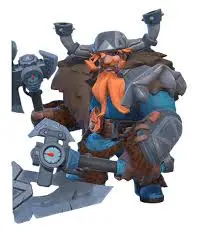
Magnus in Whiteout Survival is a
Generation 9 Legendary Infantry hero with the Combat subclass. His kit combines frontline durability, taunting, Defense reduction, friendly Troop Attack buffs, Infantry protection, and Marksmen damage support.
Magnus is particularly interesting because his value is not limited to one type of battle. His
Exploration skills make him a durable frontline hero for Arena and Exploration, while his Expedition skills can support rallies, garrisons, PvP marches, and other troop-based battles.
His first Expedition skill, Rapacious, also gives him a useful rally-member role because it increases friendly Troop Attack by up to 25%.
This guide covers Magnus’s Generation 9 role, stats, skills, shards, Storm Axe, rally value, skill priority, F2P investment, and how he compares with Fred and Xura.
Magnus is the Generation 9 Infantry hero and a strong choice for players who need a durable frontline hero with useful Expedition support. Rapacious is his standout rally skill, while Frozen Fury and Sunderer make him disruptive in Exploration and Arena. However, Magnus is not the Gen 9 Lucky Wheel hero, so limited-resource players should plan his shard investment carefully.
Magnus Overview
| Magnus information |
Details |
| Generation |
Generation 9 |
| Rarity |
Legendary |
| Class |
Infantry |
| Subclass |
Combat |
| Main roles |
Frontline tank, Expedition support, rally joiner, Arena control, and garrison support |
| Main shard source |
Hall of Heroes |
| Exclusive gear |
Storm Axe |
| Best Expedition feature |
Up to +25% friendly Troop Attack from Rapacious |
| Best Exploration features |
Taunt, repeated damage, wound damage, and Defense reduction |
| General priority |
High for spenders and serious combat players, situational for F2P |
Magnus is designed as more than a traditional defensive Infantry hero. He can absorb pressure while also improving the offensive performance of the rest of the march.
This combination is what separates him from a pure tank. He provides frontline control in Exploration and several percentage-based troop effects in Expedition.
Magnus and the Whiteout Survival Gen 9 Heroes
Generation 9 normally becomes available when a state reaches approximately 600 days of age. It introduces one hero from each troop class:
| Gen 9 hero |
Class |
Main acquisition |
General role |
| Magnus |
Infantry |
Hall of Heroes |
Frontline combat, troop Attack support, Infantry durability |
| Fred |
Lancer |
Lucky Wheel |
Debuffs, Lancer combat, and rally support |
| Xura |
Marksman |
State and ranking events, Daily Deals |
Healing, protection, Marksmen damage, and enemy debuffs |
For free-to-play players, Fred is normally easier to build because he is the Generation 9 Lucky Wheel hero. Magnus requires more deliberate shard planning through Hall of Heroes and other available shard sources.
That does not make Magnus weak. Instead, it means his investment decision depends heavily on whether you already have a strong Infantry hero and whether his rally, Arena, or garrison roles solve an actual weakness in your account.
Is Magnus the Best Gen 9 Hero?
There is no single Gen 9 priority that fits every account.
Magnus provides excellent frontline utility and one of the most universally useful Expedition buffs in the generation. Fred is significantly easier for gem-based players to develop, while Xura brings a very different Marksman support kit.
Therefore, the practical choice depends on three questions:
- Do you already have a strong Infantry hero?
- Can you obtain enough Magnus shards without sacrificing a more important hero?
- Do you need frontline durability, rally-member Attack support, or Arena control?
If the answer to the last question is yes, Magnus becomes much easier to justify.
How to Get Magnus
Magnus becomes available when Generation 9 opens on your state.
His main confirmed acquisition route is
Hall of Heroes. Magnus is not the Generation 9 Lucky Wheel hero, so spinning the Gen 9 Lucky Wheel primarily develops Fred instead.
Some state and shop rotations may also provide additional Magnus shard opportunities. Because availability can change as a state progresses, always check the live Foundry Shop, Daily Deals, event exchanges, and current shard menus before planning a large purchase.
Hall of Heroes and Magnus
Hall of Heroes uses Marks of Valor and changes its generation-specific offerings as your state progresses.
For Magnus, this matters because collecting enough shards for a competitive star level requires considerably more resources than simply unlocking the hero.
A low-spending player should decide on a target star level before exchanging a large number of Marks of Valor.
Magnus Shard Requirements
Magnus follows the standard Legendary hero star progression.
| Star stage |
Tier 1 |
Tier 2 |
Tier 3 |
Tier 4 |
Tier 5 |
Tier 6 |
Stage total |
| 1 Star |
1 |
1 |
2 |
2 |
2 |
2 |
10 |
| 2 Stars |
5 |
5 |
5 |
5 |
5 |
15 |
40 |
| 3 Stars |
15 |
15 |
15 |
15 |
15 |
40 |
115 |
| 4 Stars |
40 |
40 |
40 |
40 |
40 |
100 |
300 |
| 5 Stars |
100 |
100 |
100 |
100 |
100 |
100 |
600 |
| Total across the five ascension stages |
1,065 shards |
The important distinction is that
600 shards is the cost of the 5-star stage itself. It is not the cumulative number of shards used across every previous star stage.
This makes a full Magnus build expensive. Players who are not committed to using him long term should consider an intermediate star target rather than automatically pursuing maximum ascension.
Magnus Stats
Exploration Stats
| Stat |
Listed value |
| Attack |
7,901 |
| Defense |
10,300 |
| Health |
154,511 |
Magnus has much more Health than Attack in his listed Exploration profile, which fits his role as a frontline Infantry hero.
However, his value is not simply surviving. Frozen Fury forces nearby enemies to focus him, while Sunderer can weaken enemy Defense and create better damage opportunities for the rest of the team.
Expedition Stats
| Stat |
Listed value |
| Infantry Attack |
940.75% |
| Infantry Defense |
940.75% |
These Expedition values reflect Magnus’s high-generation Infantry scaling. Actual battle performance still depends on hero star level, skills, Hero Gear,
Chief Gear, Charms, research, pets, troop level, formation, and the other heroes used in the march.
Whiteout Survival Magnus Skills
Magnus has three Exploration skills and three Expedition skills.
| Skill |
Mode |
Maximum effect |
Main role |
| Frozen Fury |
Exploration |
Repeated 84% Attack damage for 3 seconds plus taunt |
Frontline control and area pressure |
| Wind Tomahawk |
Exploration |
140% initial damage plus 70% follow-up damage |
Single-target pressure |
| Sunderer |
Exploration |
30% proc chance, 70% bonus damage, -25% Defense |
Defense shred and sustained pressure |
| Rapacious |
Expedition |
+25% friendly Troop Attack |
General march and rally support |
| Iron Phalanx |
Expedition |
40% chance for Infantry to gain +50% Defense for 1 turn |
Infantry durability |
| Iceman |
Expedition |
-10% damage taken by Infantry and +10% Marksmen damage |
Frontline protection and backline support |
Frozen Fury

Frozen Fury is Magnus’s main Exploration control skill.
Magnus spins his twin axes and taunts nearby enemies, forcing them to attack him while repeatedly dealing damage every 0.5 seconds for three seconds.
| Skill level |
Damage per hit |
| 1 |
Attack × 60% |
| 2 |
Attack × 66% |
| 3 |
Attack × 72% |
| 4 |
Attack × 78% |
| 5 |
Attack × 84% |
The taunt is what makes Frozen Fury especially important. Magnus can draw pressure away from more fragile heroes while continuing to damage nearby targets.
For
Arena and Exploration-focused players, Frozen Fury should be one of the first Magnus skills brought to a useful level.
Wind Tomahawk
Wind Tomahawk is Magnus’s direct single-target Exploration skill.
The initial axe throw reaches Attack × 140% at Level 5. It then applies additional wound damage reaching Attack × 70% for three seconds.
| Skill level |
Initial damage |
Additional damage |
| 1 |
100% |
50% |
| 2 |
110% |
55% |
| 3 |
120% |
60% |
| 4 |
130% |
65% |
| 5 |
140% |
70% |
Wind Tomahawk adds focused damage but does not provide the same control or team utility as Frozen Fury and Sunderer.
Therefore, players with limited Skill Manuals can usually develop Magnus’s control and Expedition utility first.
Sunderer

Sunderer gives Magnus’s normal attacks a 30% chance to deal additional damage and reduce the enemy’s Defense for two seconds.
| Skill level |
Additional damage |
Enemy Defense reduction |
| 1 |
50% |
5% |
| 2 |
55% |
10% |
| 3 |
60% |
15% |
| 4 |
65% |
20% |
| 5 |
70% |
25% |
Sunderer is one of Magnus’s strongest Arena utility skills because reducing Defense can improve the damage dealt by the entire team to the affected target.
The effect is chance-based, so it will not activate on every normal attack.
Rapacious

Rapacious increases friendly Troop Attack.
| Skill level |
Friendly Troop Attack |
| 1 |
+5% |
| 2 |
+10% |
| 3 |
+15% |
| 4 |
+20% |
| 5 |
+25% |
Rapacious is Magnus’s most important general Expedition skill because it benefits the friendly troop formation instead of only one troop class.
It is also Magnus’s first Expedition skill, which gives it additional importance when Magnus is used as the primary hero of a rally-member formation.
Is Magnus Good for Joining Rallies?
Yes. Magnus can be a useful rally joiner because Rapacious is his first Expedition skill.
When joining another player’s rally, the game can activate the first Expedition skill of selected rally members’ primary heroes. Therefore, placing Magnus in the first hero position allows Rapacious to compete for one of those active rally-member skill slots.
At Level 5, Rapacious provides
+25% friendly Troop Attack.
However, the rally only activates a limited number of member skills. A low-level Rapacious may be excluded when stronger qualifying skills are already present.
Before sending Magnus, check your Alliance’s rally rules and the skill levels already being supplied by other members.
Magnus for Bear Hunt
Magnus can also function as a
Bear Hunt rally joiner because Rapacious contributes an Attack buff when it is selected as an active rally-member skill.
He should not automatically replace a proven Bear Hunt rally leader simply because Rapacious is strong. Rally leaders activate a much larger portion of their hero lineup, so the best leader depends on the complete three-hero formation and available generations.
Iron Phalanx

Iron Phalanx gives Infantry under Magnus’s command a 40% chance to gain additional Defense when attacking.
| Skill level |
Defense increase |
| 1 |
+10% |
| 2 |
+20% |
| 3 |
+30% |
| 4 |
+40% |
| 5 |
+50% |
The activation chance remains 40%, while the Defense gained increases with the skill level.
This is especially useful because Infantry usually absorb the first wave of Expedition damage. Keeping them alive longer gives Lancers and Marksmen more time to deal damage.
Iceman

Iceman combines defense and offense in one Expedition skill.
| Skill level |
Infantry damage taken |
Marksmen damage |
| 1 |
-2% |
+2% |
| 2 |
-4% |
+4% |
| 3 |
-6% |
+6% |
| 4 |
-8% |
+8% |
| 5 |
-10% |
+10% |
The Infantry reduction improves frontline survival, while the Marksmen increase supports the troop type that normally provides the highest sustained backline damage.
Iceman is particularly attractive in formations that maintain a healthy Marksmen percentage instead of running an extremely Infantry-heavy march.
Best Magnus Skill Priority
There is no single Magnus skill order for every game mode because Exploration and Expedition use different skill sets.
Best Priority for Expedition and PvP
- Rapacious: Gives up to 25% friendly Troop Attack and also supports rally joining.
- Iron Phalanx: Strengthens Infantry durability with a powerful Defense proc.
- Iceman: Protects Infantry while increasing Marksmen damage.
Players whose main goal is rally joining should place especially high priority on Rapacious because it is the first Expedition skill.
Best Priority for Arena and Exploration
- Frozen Fury: Taunt and repeated area pressure define Magnus’s frontline role.
- Sunderer: Defense reduction increases team pressure when it activates.
- Wind Tomahawk: Adds strong direct and follow-up single-target damage.
Players using Magnus heavily in Arena should still develop all three skills. This order is mainly useful when Skill Manuals are temporarily limited.
Magnus in Arena
Magnus is well suited to a front-row Arena position.
His Exploration profile provides high Health, while Frozen Fury can force nearby enemies to attack him. This helps protect fragile backline heroes.
Sunderer adds another layer of value by reducing enemy Defense when it activates. Meanwhile, Wind Tomahawk gives Magnus a source of focused damage against individual targets.
Magnus performs best when the rest of the Arena formation takes advantage of the time and openings created by his frontline control.
Magnus for Rally Leaders and Garrisons
Magnus has useful Expedition effects for both offensive and defensive troop battles.
Rapacious raises friendly Troop Attack, while
Iron Phalanx and
Iceman improve Infantry durability. Iceman also strengthens friendly Marksmen damage.
This makes Magnus a flexible Infantry option rather than a hero built solely around defense.
However, rally and garrison performance depends on all three heroes, troop formation, overall account statistics, and the opponent. Magnus should be evaluated as part of the complete march rather than in isolation.
Storm Axe Exclusive Gear
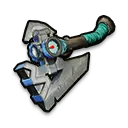
Magnus’s exclusive gear is the
Storm Axe.
At maximum listed gear progression, it provides additional Exploration and Expedition statistics:
| Stat |
Maximum listed bonus |
| Exploration Attack |
+1,600 |
| Exploration Defense |
+2,088 |
| Exploration Health |
+31,319 |
| Expedition Lethality |
+232% |
| Expedition Health |
+232% |
These are Storm Axe progression bonuses, not Magnus’s base hero stats.
Heroic Stock

Heroic Stock is the Exploration effect connected to the Storm Axe.
At Level 5, it reduces incoming damage by
15% and increases Frozen Fury’s Defense-related bonus by
75%.
This directly supports Magnus’s role as a hero who deliberately draws enemy attention.
Valoric Inspiration

Valoric Inspiration is Magnus’s Expedition exclusive-gear effect.
At Level 5, it increases Defender Squads’ Health by
15%.
This is mainly defensive value, so players focused heavily on city defense and garrisons receive more benefit from deep Storm Axe development than players who use Magnus only as an occasional rally joiner.
Is Magnus Worth Building?
Magnus is worth building when his Infantry and support roles solve a real need in your account.
| Player type |
Magnus priority |
Reason |
| F2P player |
Medium |
Strong hero, but harder to develop than Gen 9 Lucky Wheel hero Fred |
| Low spender |
Medium to high |
Useful when you can reach a competitive star and skill level |
| Rally joiner |
High |
Rapacious can contribute up to +25% friendly Troop Attack |
| Arena-focused player |
High |
Taunt, Health, Defense shred, and exclusive gear support his frontline role |
| Garrison-focused spender |
High |
Strong Infantry durability and Defender Squad Health support |
| Player already saving for Gen 10 |
Situational |
Avoid heavy spending if Magnus only provides a temporary upgrade |
Should F2P Players Invest in Magnus?
Free-to-play players should be selective with Magnus.
The main problem is not his skill quality. His kit is strong. The issue is that Fred is available through the Gen 9
Lucky Wheel, which generally provides a more predictable gem-based development path.
A practical F2P approach is:
- Build Fred through the Lucky Wheel if he fills a useful Lancer role.
- Unlock Magnus only when the Hall of Heroes cost fits your gem and Marks of Valor plan.
- Avoid spreading Mythic General Hero Shards across all three Gen 9 heroes.
- Set a realistic Magnus star target before spending universal shards.
- Prioritize Rapacious when rally joining is the main purpose.
- Develop his Exploration skills if he will actually enter your Arena lineup.
- Do not rush Storm Axe unless Magnus is part of your long-term primary march.
- Keep future hero generations in mind before committing to maximum investment.
A weakly developed Magnus may be less useful than an older hero that already has maximum stars, skills, and exclusive gear.
Building a late-generation Magnus requires hero shards, Skill Manuals, Hero Gear, exclusive-gear materials, Chief progression, troop research, and months of state development. Players comparing that investment with an established city may review a wos account for sale, while checking its hero generations, Magnus star level, Storm Axe progress, transferable state range, troop tier, and included resources.
Recommended Magnus Investment Levels
| Account type |
Recommended approach |
Reason |
| F2P without spare universal shards |
Unlock or skip |
Do not weaken several heroes to force a Magnus build |
| F2P with a clear rally-joiner role |
Reach a useful skill level and prioritize Rapacious |
Gets value without demanding a fully maxed Storm Axe |
| Low spender |
Build toward a competitive star breakpoint |
Makes his higher-generation stats more relevant |
| Arena-focused spender |
High stars, Exploration skills, and Storm Axe |
Maximizes his frontline control and durability |
| Main rally or garrison account |
Deep Expedition and exclusive-gear investment |
Uses the largest portion of Magnus’s combat kit |
Magnus Strengths and Weaknesses
| Strengths |
Weaknesses |
| Strong frontline Health and control |
Not the Gen 9 Lucky Wheel hero |
| Up to +25% friendly Troop Attack |
Requires meaningful shard investment to compete with developed heroes |
| Can reduce enemy Defense in Exploration |
Sunderer activation is chance-based |
| Supports both Infantry and Marksmen |
Some value depends on troop composition |
| Useful rally-member first Expedition skill |
Rally member skills compete for a limited number of active slots |
| Strong exclusive-gear defensive effects |
Deep Storm Axe investment consumes scarce materials |
Common Magnus Mistakes
Thinking 600 Shards Is the Full Magnus Cost
The 600-shard figure belongs to the 5-star stage. The complete sequence of star-stage requirements adds up to 1,065 shards.
Assuming Magnus Is the Gen 9 Lucky Wheel Hero
Fred is the Generation 9 Lucky Wheel hero. Magnus’s primary Gen 9 route is Hall of Heroes.
Ignoring Rapacious When Joining Rallies
Rapacious is Magnus’s first Expedition skill and can provide up to 25% friendly Troop Attack when selected among the active rally-member skills.
Putting Magnus Anywhere in a Rally Joiner Formation
If you want Rapacious to be considered as your rally-member skill, Magnus needs to be the primary hero in the joining formation.
Treating Magnus as Only a Tank
His kit also improves Troop Attack, Marksmen damage, and enemy Defense reduction. His value extends beyond simply absorbing damage.
Maxing Storm Axe on a Bench Hero
Exclusive-gear materials are limited. Deep Storm Axe investment makes more sense when Magnus is used regularly in Arena, Expedition, rallies, or garrisons.
Ignoring the Next Hero Generation
Generation transitions arrive as the state ages. Compare Magnus with your current Infantry hero and upcoming replacement options before committing every universal shard.
Spreading Gen 9 Resources Across All Three Heroes
A focused, properly developed hero is usually more useful than three underdeveloped Gen 9 heroes.
FAQ
Who is Magnus in Whiteout Survival?
Magnus is a Generation 9 Legendary Infantry Combat hero built around frontline control, troop support, Infantry durability, and Marksmen support.
What generation is Magnus?
Magnus is a Generation 9 hero. Generation 9 also includes Fred as the Lancer hero and Xura as the Marksman hero.
How do you get Magnus in Whiteout Survival?
Magnus’s main confirmed Gen 9 shard source is Hall of Heroes. Additional shard sources may become available as your state and shop rotations progress.
Is Magnus on the Lucky Wheel?
No. Fred is the Generation 9 Lucky Wheel hero. Magnus is primarily associated with Hall of Heroes.
How many shards does Magnus need?
The five star-stage requirements are 10, 40, 115, 300, and 600 shards, totaling 1,065 shards across the full ascension sequence. The 600 figure is only the final 5-star stage.
Is Magnus good for rally joining?
Yes. His first Expedition skill, Rapacious, increases friendly Troop Attack by up to 25%, making Magnus useful as the primary hero in a rally-member formation.
What is Magnus’s best skill?
For Expedition and rally support, Rapacious is the most broadly useful. For Arena and Exploration, Frozen Fury is especially important because it combines repeated damage with taunt control.
Is Magnus worth building for F2P?
Magnus can be useful for F2P players, but he is harder to develop than Fred because he is not the Gen 9 Lucky Wheel hero. Build him only when his role justifies the shard investment.
Conclusion
Whiteout Survival Magnus is a versatile Generation 9 Infantry hero who combines frontline durability with useful offensive and defensive support.
Frozen Fury lets Magnus taunt nearby enemies while dealing repeated damage. Sunderer can reduce enemy Defense, while Wind Tomahawk provides focused damage against a single target.
His Expedition kit is equally important. Rapacious increases friendly Troop Attack by up to 25%, Iron Phalanx strengthens Infantry Defense, and Iceman reduces Infantry damage taken while improving friendly Marksmen damage.
Magnus can therefore work as an Arena frontline hero, Expedition Infantry option, garrison component, and useful rally joiner. However, his Hall of Heroes acquisition path means free-to-play players should avoid investing blindly simply because he belongs to a newer generation.
Set a clear star and skill target, compare him with your existing Infantry hero, and prioritize the parts of his kit that match the battles you actually play.
Explore the
Whiteout Survival guide category for more hero guides, generation breakdowns, event strategies, and long-term progression advice.
Hero generation timing, shard sources, shop availability, skill effects, and balance can change in future Whiteout Survival updates. Check the current hero, event, Hall of Heroes, and shop screens before spending large amounts of Gems, shards, or exclusive-gear materials.