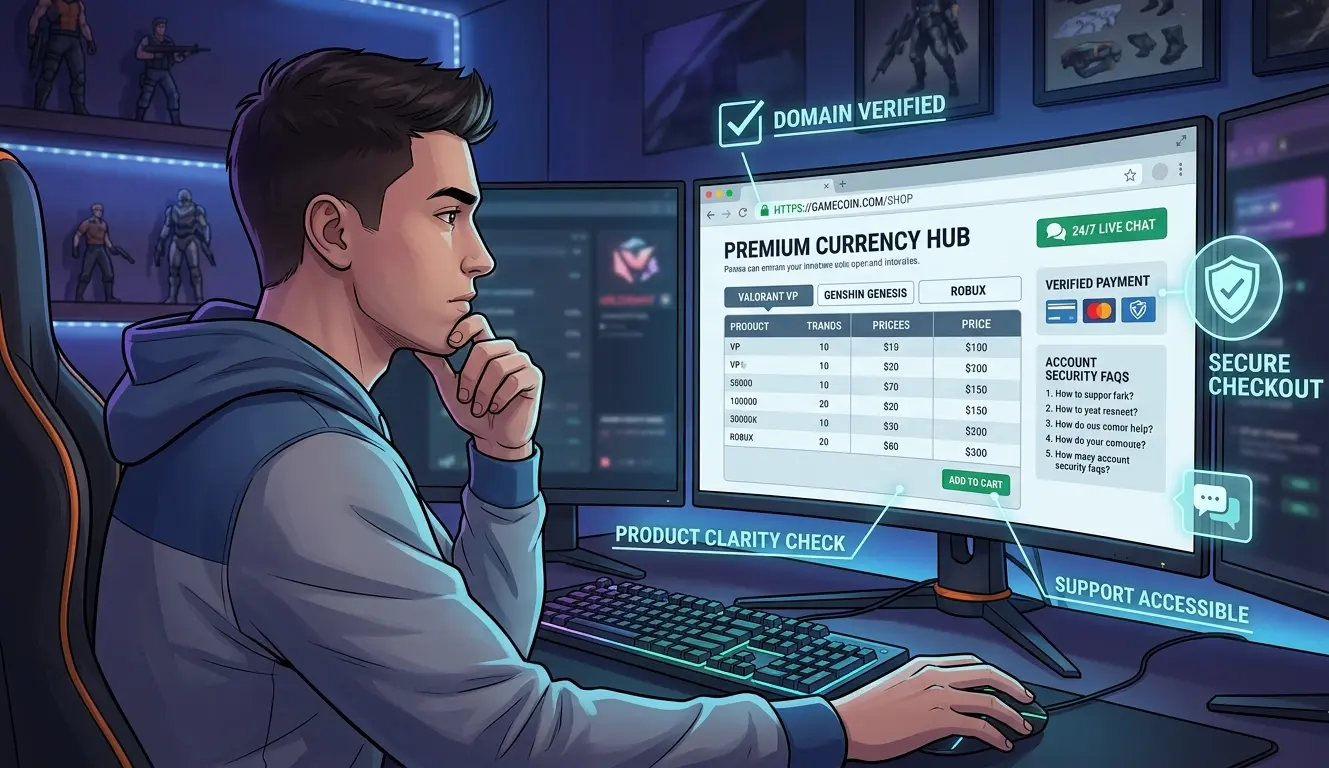
 Trying a new top-up website for the first time deserves more than a quick look at the price. A professional design, HTTPS connection, large discount, or convincing sales page can be reassuring, but none of those things proves that the service behind the website is trustworthy.
Before paying, check whether the website identity, product information, ordering process, payment method, support channels, and account requirements all make sense together. You should also look beyond the website itself for independent signals about the business.
The checks below can help you judge an unfamiliar game top-up provider more carefully without assuming that every service needs to use exactly the same ordering system.
1. Verify the Website Address Before Anything Else
Start with the URL rather than the homepage design. Fake and phishing websites can copy branding, layouts, logos, and product descriptions from real businesses, so appearance alone is weak evidence.
Check for:
- misspellings or extra characters in the domain name
- unexpected subdomains or unusual domain variations
- a domain that does not match the brand you intended to visit
- links received through unsolicited messages or suspicious advertisements
- browser warnings about phishing, malware, or dangerous content
An HTTPS connection is still important because it protects data while it travels between your browser and the website. However, HTTPS does not prove that the business itself is legitimate. Scam websites can also use encrypted connections.
2. Make Sure the Product Information Is Specific
A credible top-up service should make it reasonably clear what you are buying before money changes hands.
Depending on the game and top-up method, check whether the listing or order information explains:
- the correct game
- the currency, pack, bundle, pass, or item you are purchasing
- the quantity or package selected
- whether the server, region, state, kingdom, or character matters
- what account information is required
- how the top-up will be completed
- any important restrictions or conditions
Be especially careful when a page uses vague phrases such as “premium currency package” without telling you what the order actually contains.
The same principle applies to promotional bonuses. If a seller advertises a special bonus, first-purchase reward, or limited bundle, make sure the conditions are explained instead of assuming the bonus applies to every account.
3. Check Whether the Ordering Process Matches What the Service Publishes
Not every legitimate top-up business uses a traditional shopping-cart checkout. Some services use automated player-ID delivery, while others use an assisted ordering process. Therefore, the useful question is not simply, “Does everything happen on the website?”
Instead, check whether the actual process matches the instructions published by the business.
You should understand:
- where an order begins
- who you are communicating with
- how the package and total price are confirmed
- when payment is requested
- what account information is needed
- where private information should be submitted
- how you can contact support if the transaction does not go as expected
A sudden change is more concerning than the use of an alternative ordering channel itself. For example, if a website tells customers to use one official support channel but a stranger contacts you from an unrelated account and asks you to pay somewhere else, stop and verify the request first.
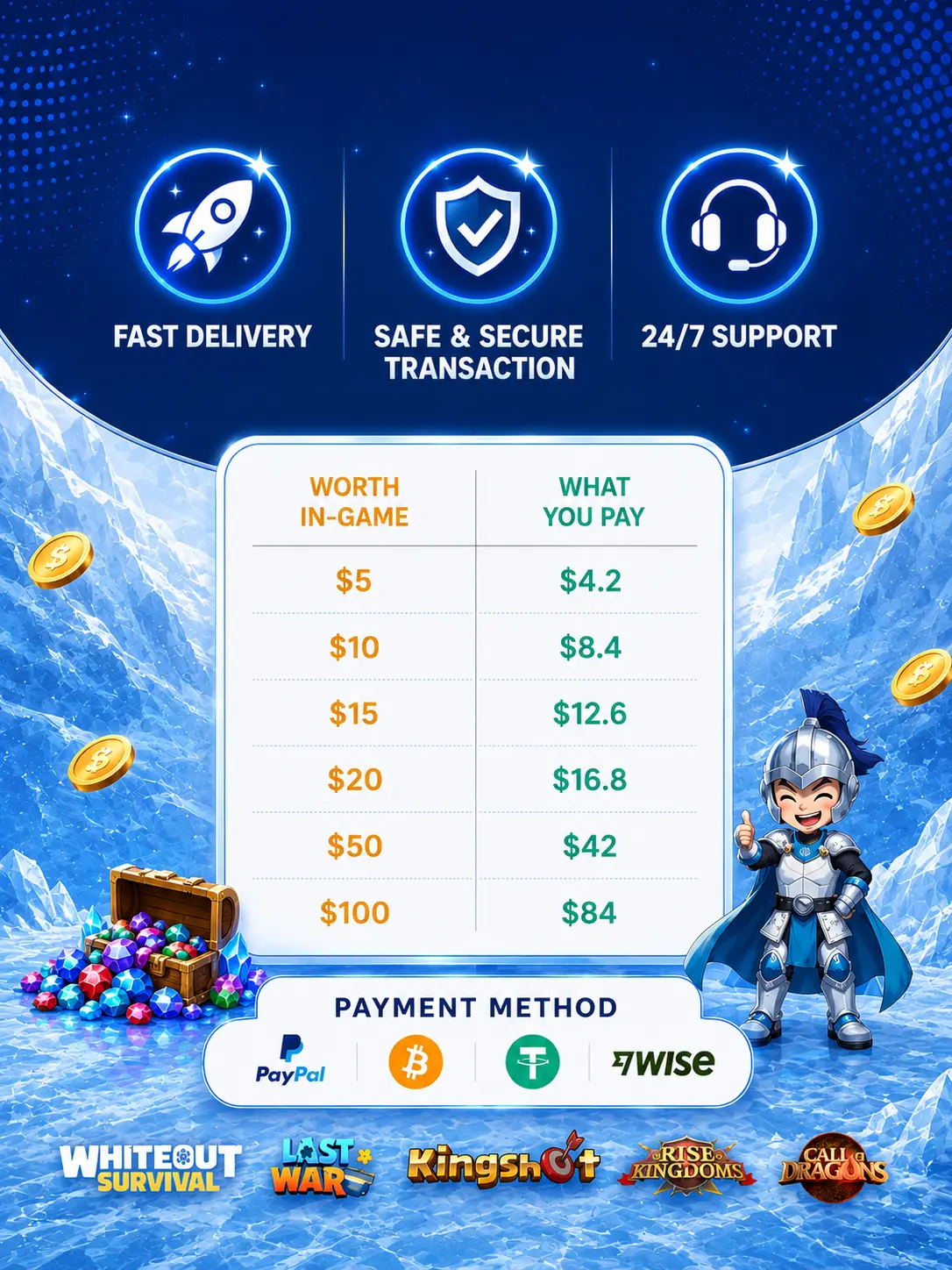
This distinction is important when evaluating an assisted game top up service. Heaven Guardian’s current published process begins through its official Discord top-up ticket system rather than a conventional automated checkout. The broader lesson is to compare the transaction you are being asked to complete with the provider’s own published instructions instead of relying on one universal idea of what a checkout should look like.
4. Check the Payment Method and Understand Its Protections
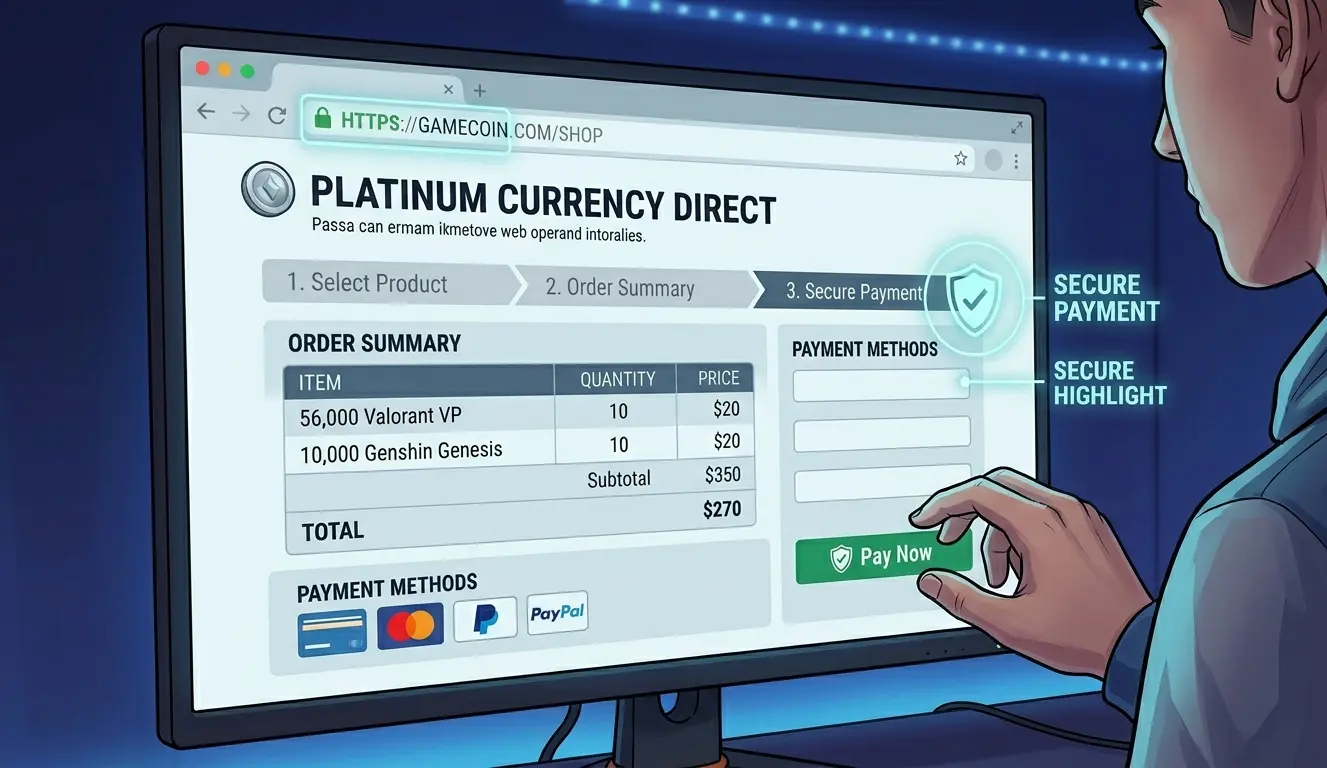 Price matters, but the payment method deserves just as much attention. Before sending money, make sure you know the exact total, payment recipient, payment method, and protections available if something goes wrong.
Good signs include:
- the payment method is disclosed before you commit
- the amount matches the agreed order
- there are no unexplained last-minute fees
- the payment recipient matches the provider’s stated instructions
- the service does not misrepresent the protections offered by the payment method
Be cautious if somebody suddenly changes the payment account, requests an unrelated gift card, adds unexplained charges, or pressures you to use a different method from the one the service officially publishes.
Also understand that different payment types can provide very different levels of recourse. For example, PayPal Friends & Family is a personal-payment method and should not be assumed to provide the same Purchase Protection available to eligible commercial transactions.
Heaven Guardian currently lists Crypto and PayPal Friends & Family for its top-up service. If using either option, confirm the current payment instructions through the official ordering channel and understand the characteristics of that payment method before sending funds.
For a deeper explanation of this topic, see why secure payment matters when buying game currency online.
5. Find Support and Policies Before You Pay
Do not wait until something goes wrong to discover whether the provider has a support channel.
Before ordering, look for clear information about:
- how customers contact support
- where order problems should be reported
- refund or cancellation conditions where applicable
- terms and conditions
- privacy practices
- what happens if an order cannot be completed
A business does not need to provide every possible contact method. What matters is that its actual support method is clearly identified and consistent.
For example, a service that officially handles assistance through a private ticket system does not become suspicious simply because it lacks live chat. What would be more concerning is a site that promises support but gives customers no practical way to reach it.
6. Check What Account Information the Service Requests
Game top-up methods vary. Some services can complete certain purchases using an account identifier, while assisted top-ups may require temporary access to the game account.
Because of that difference, a blanket rule such as “a top-up service should never ask for a game login” is too simplistic. Instead, determine whether the requested access is clearly explained and genuinely connected to the advertised top-up method.
If temporary game-account access is required, check that:
- the requirement is disclosed as part of the service
- you are communicating through the provider’s official private channel
- the access is being requested for the specific order
- you are not being asked to publish credentials in a public channel
- the provider explains how account information is handled
Heaven Guardian’s current top-up information states that some services may require temporary login access and that account information is not stored. When such access is requested, it should be provided only through the official private ordering process rather than posted publicly.
7. Check Independent Signals Outside the Website
A website naturally presents its own service positively. Before trusting a new provider, look for information from outside that website as well.
Search the business name and domain together with terms such as:
- review
- complaint
- scam
- refund
- support
- delivery
Do not judge a business from one star rating or one comment alone. Reviews can be genuine, misleading, manipulated, outdated, or related to a different service entirely.
Instead, look for patterns. Several independent reports describing the same unresolved problem deserve more attention than one isolated complaint. Likewise, unusually repetitive praise across questionable review profiles should not automatically be treated as proof that a seller is trustworthy.
8. Be Careful With Extreme Discounts and Pressure Tactics
A promotion is not automatically suspicious. However, urgency should never prevent you from checking the transaction properly.
Slow down when you see combinations such as:
- an unusually large discount with little explanation
- constant countdown timers that reset
- claims that you must pay immediately
- an unsolicited direct message offering a special private price
- pressure to skip the provider’s normal ordering process
- a price so low that it distracts from obvious inconsistencies elsewhere
Ask yourself a useful question: Would I still consider this website credible if the discount disappeared?
If the answer is no, investigate further before paying. You can also review common top-up scams and how to avoid them for additional warning signs.
9. Keep a Record of the Order
Even when a service appears legitimate, keep basic transaction records until the top-up has been completed and checked.
Useful records can include:
- the package or item ordered
- the agreed price
- the date of the transaction
- payment confirmation
- the provider’s relevant order instructions
- private support messages related to the transaction
- the refund or cancellation terms that applied when you ordered
After completion, verify that the expected currency, package, pass, or item reached the correct account. If something is missing or incorrect, contact the provider through the same verified support channel rather than responding to an unexpected third-party message.
A Simple Checklist Before Using Any New Top-Up Website
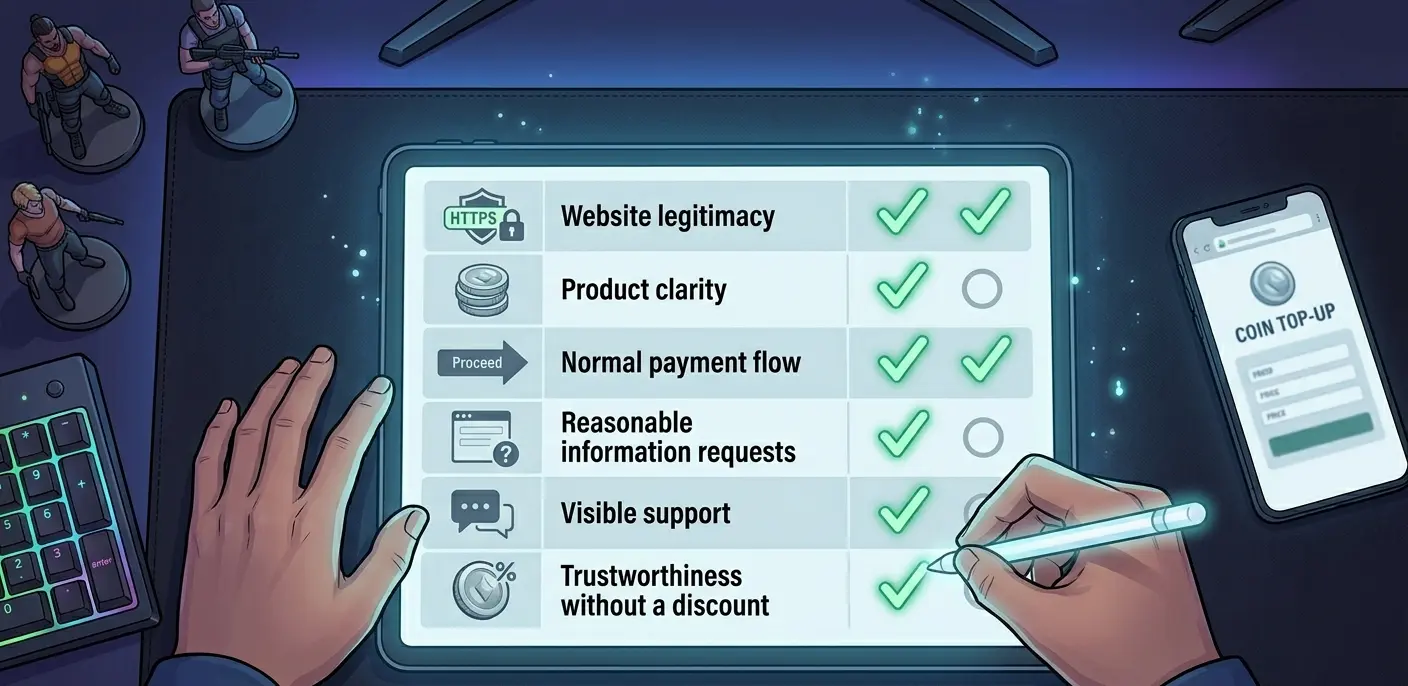 Before placing an order with an unfamiliar provider, run through this checklist:
- URL: Does the domain exactly match the business you intended to visit?
- Browser: Are there any security, phishing, or dangerous-site warnings?
- Product: Do you know exactly what currency, pack, bundle, or item you are buying?
- Process: Does the actual ordering process match the provider’s published instructions?
- Payment: Is the total clear, and do you understand the payment method and its protections?
- Support: Do you know how to contact the provider if something goes wrong?
- Account access: Is every requested piece of information necessary and explained?
- Reputation: Have you checked independent reviews and recurring complaints?
- Pressure: Are you making the decision because the service checks out, rather than because a timer or discount is rushing you?
FAQ
What should I check before using a new top-up website?
Check the exact URL, product information, ordering process, payment method, support channel, account-access requirements, policies, and independent reputation. Do not rely on the site’s appearance or discount alone.
Does HTTPS mean a top-up website is legitimate?
No. HTTPS means the connection between your browser and the website is encrypted, which is important, but it does not verify that the business operating the website is trustworthy. A fraudulent website can also use HTTPS.
How can I verify a top-up website before paying?
Confirm the domain carefully, search the company and domain for independent reviews or complaints, inspect its support and policies, and make sure the payment and ordering instructions you receive match the information published by the provider.
Is paying outside a top-up website always unsafe?
No. Some legitimate assisted services use a clearly documented private ordering or payment process instead of an automated website checkout. The warning sign is an unexplained or unauthorized change, such as being redirected to an unrelated person or payment account that does not match the provider’s published instructions.
Should a game top-up website ask for my password?
It depends on how the service performs the top-up. Some assisted top-up methods may require temporary game-account access. If that is the stated method, verify the provider and use only its official private ordering channel. Never publish login details publicly or provide unrelated financial, email, recovery, or cryptocurrency credentials.
Is a very cheap top-up automatically a scam?
No, but an unusually low price is not evidence that a website is trustworthy either. Compare the price with the rest of the transaction and look more carefully when extreme discounts are combined with pressure, unclear policies, unusual payment demands, or inconsistent information.
Can online reviews prove that a top-up website is safe?
No single review source can prove that. Check several sources and look for consistent patterns. Be cautious with both unusually repetitive praise and repeated unresolved complaints.
What should I do if the payment instructions suddenly change?
Do not send another payment immediately. Return to the provider’s verified website or official support channel and confirm the change independently. Unexpected recipient changes, extra fees, or requests from unrelated accounts deserve additional verification.
Conclusion
Before using a new top-up website, look beyond the discount and homepage design. Verify the domain, understand exactly what you are buying, check how the order works, and make sure the payment and support instructions are consistent.
Account-access requests also need context. Some assisted services may legitimately require temporary game access, while unrelated requests for financial credentials, recovery information, or public sharing of passwords should raise immediate concerns.
Most importantly, avoid relying on one signal. HTTPS, positive reviews, a professional design, or a low price cannot establish trust on their own. Comparing several independent checks gives you a much better basis for deciding whether to proceed.
For additional practical advice on evaluating services, payments, account safety, and common buying mistakes, explore our game top-up guides.