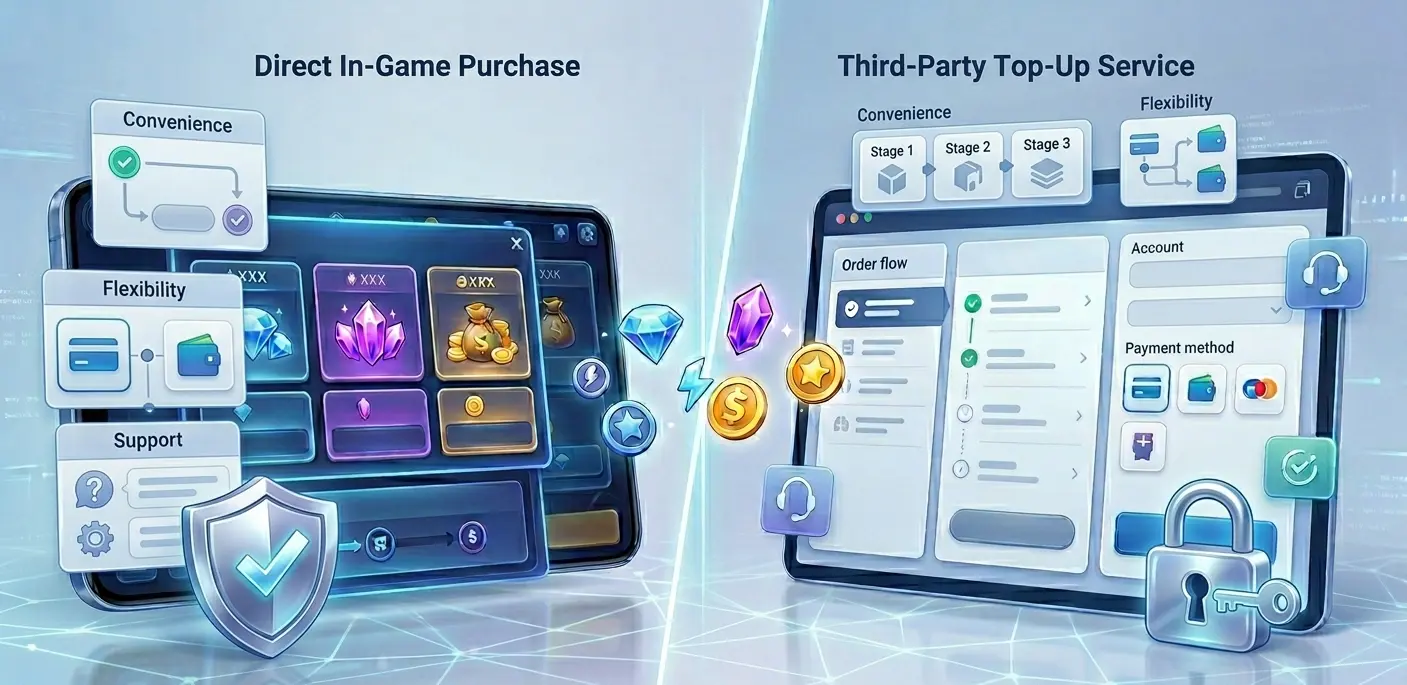
 When you want to buy game currency, packs, bundles, or other premium content, you will often have two options: purchase directly through the game or use an external top-up provider.
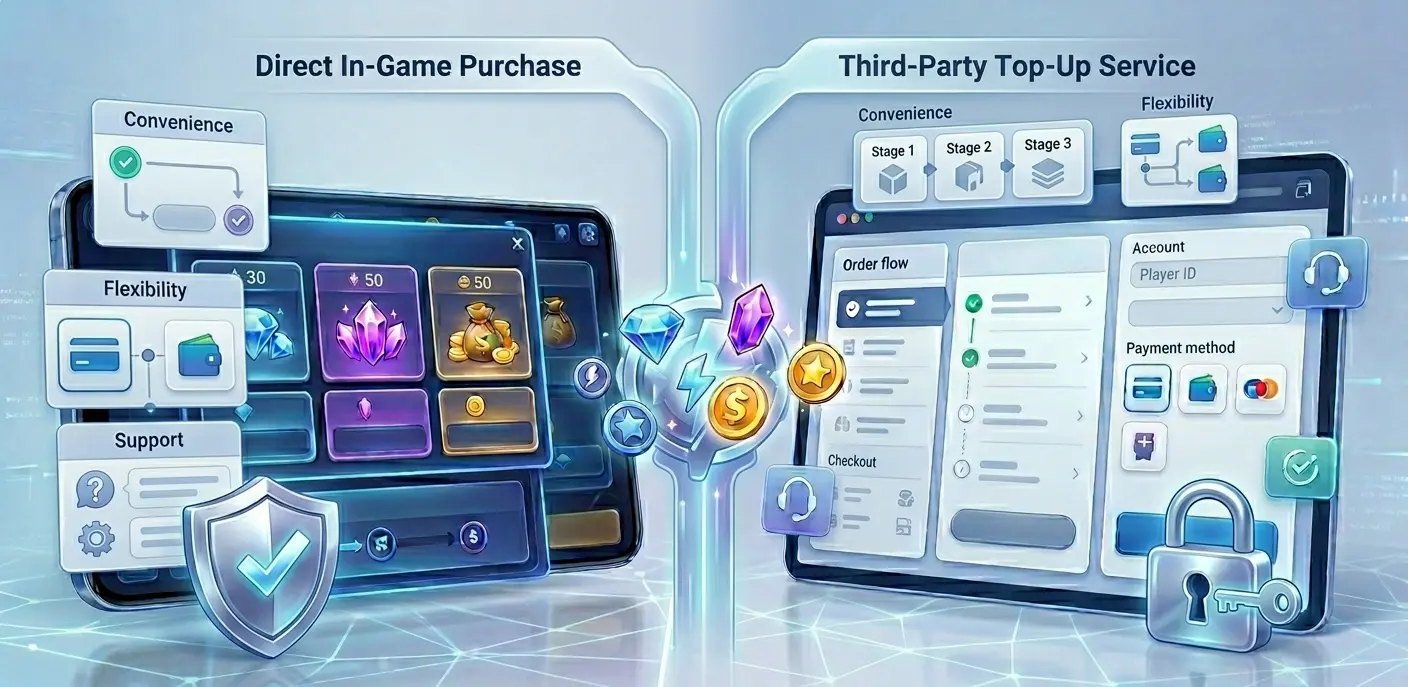
The third-party top up service vs in-game purchase comparison is not as simple as saying one option is always better. Direct purchases offer a familiar platform-controlled checkout, while third-party services can provide a different selection of payment, ordering, and support options.
The better choice depends on the game, your region, the provider you are considering, the payment method, and whether you are comfortable with the provider’s account-access requirements. This guide compares the major differences so you can make that decision more carefully.
Third-Party Top Up Service vs In-Game Purchase: Quick Comparison
| Factor | Direct In-Game Purchase | Third-Party Top Up Service |
|---|---|---|
| Checkout | Usually completed inside the game or its platform billing flow | Completed through an external provider’s ordering process |
| Payment options | Depend on the app store, platform, account, and region | Depend on the individual provider |
| Account access | Normally handled while you are signed into your own game account | May require a player ID or temporary account access, depending on the service |
| Support | May involve the game developer, publisher, Apple, Google, or another platform | Usually handled directly by the external provider |
| Processing | Often reflected immediately, although transaction problems can occur | May be instant, automated, or manually processed depending on the provider |
| Main consideration | Convenience and platform-integrated purchasing | Provider legitimacy, terms, payment handling, and order requirements |
What Is a Direct In-Game Purchase?
A direct in-game purchase is a transaction started through the game itself. Depending on the platform and title, you select an item, currency package, bundle, subscription, or other digital content and complete payment through the available billing system.
On mobile devices, this commonly involves systems such as Apple In-App Purchase or Google Play billing. Game currency such as coins or gems is generally treated as consumable digital content, meaning it is purchased when needed rather than permanently restored like some non-consumable purchases.
Advantages of Buying Directly In-Game
- Simple access: You can usually purchase without leaving the game.
- Familiar checkout: Payment is completed through the platform or game interface you already use.
- Clear item selection: You see the packages currently offered to your account directly in the game.
- Platform purchase records: Supported purchases can appear in the relevant platform’s transaction history.
- Platform support features: Depending on the transaction, refund requests, purchase verification, parental controls, or purchase troubleshooting may be available through the platform.
Possible Limitations of Direct Purchases
Direct purchasing is convenient, but it does not automatically provide every payment option or purchasing arrangement a player may want.
Available payment methods can vary according to your country, platform, billing account, device ecosystem, and local store availability. Prices and packages can also differ by account or region.
That does not make the in-game option inferior. It simply means players should compare the actual options available to them rather than assuming every purchase channel works the same way.
What Is a Third-Party Top Up Service?
A third-party top up service is an independent provider that facilitates the purchase of game currency, packs, bundles, passes, or other eligible content outside the normal in-game checkout.
The exact process varies significantly. Some services use a player or character identifier. Others operate through a supported web shop. Assisted services may require temporary access to the game account so the requested purchase can be completed.
Because these services are separate from the game publisher’s own billing flow, the provider’s reputation, payment policies, account-access requirements, support process, and terms deserve careful review before you pay.
Key Differences Between Third-Party Top Ups and In-Game Purchases
1. Convenience
If your definition of convenience is completing a purchase without leaving the game, direct in-game purchasing usually has the advantage. You can select an offer and continue through the built-in checkout flow.
A third-party provider introduces at least one additional step because you must use another website, storefront, ticket system, or ordering channel. However, players who regularly use the same provider may find its process familiar once they understand it.
Therefore, there is no need to describe either option as universally more convenient. The answer depends on the actual workflow.
2. Payment Methods and Payment Protection
Payment flexibility is frequently cited as a reason to consider external top-up services, but it should be evaluated provider by provider.
In-game payment methods depend on your platform and region. A third-party provider may support different payment methods, but those methods can come with different dispute, refund, reversal, or purchase-protection rules.
Before using either route, check:
- which payment method will actually be charged;
- which company will appear as the seller;
- whether the transaction includes buyer or payment protection;
- how refunds or failed purchases are handled;
- whether additional fees or currency conversion apply.
For more detail on evaluating this part of a transaction, see Why Secure Payment Matters When Buying Game Currency Online.
3. Price and Overall Value
A common assumption is that third-party top ups are automatically cheaper. That is not something you should assume.
Prices can change according to the game, package, platform, currency conversion, region, taxes, promotion, and individual provider. An external service can sometimes present a different price or purchasing arrangement, but direct in-game offers may also include bonuses or account-specific deals.
The most useful comparison is the final amount paid for the exact item you receive.
When comparing offers, check:
- the exact package or currency amount;
- temporary versus permanent bonuses;
- taxes or processing fees;
- currency conversion;
- the final checkout total;
- whether the offer applies to your account or region.
4. Account Access and Privacy
This is one of the most important differences between purchase methods.
When you buy directly in-game, you normally remain logged into your own account and complete the transaction yourself. An external top-up service may instead request an account identifier or, with an assisted top-up service, temporary game-account access.
If temporary access is required, confirm exactly why it is needed, where the credentials should be submitted, and what the provider states about handling the information.
Never post game login information in public comments, public Discord channels, social media replies, reviews, or other publicly visible areas. Likewise, a game top-up transaction should not require unrelated sensitive information such as your banking password, cryptocurrency wallet seed phrase, private key, or email-account password.
5. Processing Time
Direct purchases are designed to apply digital purchases through the platform transaction flow and often appear quickly. However, even platform purchases can occasionally encounter payment, connectivity, account, or delivery issues.
Third-party processing times vary much more widely. Some providers use automated systems, while others manually complete orders. That means an external service should publish a realistic processing estimate rather than simply promising every order will be instant.
If timing matters because you are buying during a limited event, allow some margin for unexpected delays regardless of the purchase method you use.
6. Support When Something Goes Wrong
The party responsible for helping you can change depending on how you paid.
With an in-game transaction, troubleshooting may involve the game developer, publisher, Apple, Google, or another platform depending on the cause of the issue.
When a purchase is made outside a platform’s normal billing system, support is generally handled by the external seller or provider. This makes it especially important to check that a third-party service has a clear support channel before sending payment.
Useful signs include:
- clear instructions for contacting support;
- published transaction terms;
- transparent information about what the provider needs from you;
- a consistent official website and ordering channel;
- clear procedures for delayed or incomplete orders.
7. Trust and Safety
The original question should not be reduced to “official means safe and third-party means unsafe,” but neither should the risks of external purchasing be dismissed.
Buying through a game or platform gives you a direct relationship with the official purchase environment. With a third-party service, you are choosing an additional company and therefore adding another party that must be evaluated.
Before using an external provider, verify its domain, published policies, ordering method, communication channels, and payment instructions. Be cautious of sellers contacting you unexpectedly through direct messages or asking you to move to an unverified payment channel.
When Direct In-Game Purchase Makes More Sense
Buying directly through the game is usually the more straightforward choice when:
- you want to stay entirely within the game’s normal purchase flow;
- your preferred payment method is already supported;
- the in-game price and package meet your needs;
- you prefer platform-controlled purchase records and support tools;
- you do not want to provide game-account access to another party;
- you are making a simple one-time purchase.
For many players, there may be no practical reason to use an external provider if the direct option already works well.
When a Third-Party Top Up Service May Make Sense
An external provider may be worth considering when:
- it supports the specific game and purchase you need;
- its payment options suit you better;
- its final price or package offers genuine value after comparing all costs;
- its ordering and account-access requirements are clearly explained;
- you can independently verify that you are using the provider’s official website and support channel;
- you understand who is responsible for payment and transaction support.
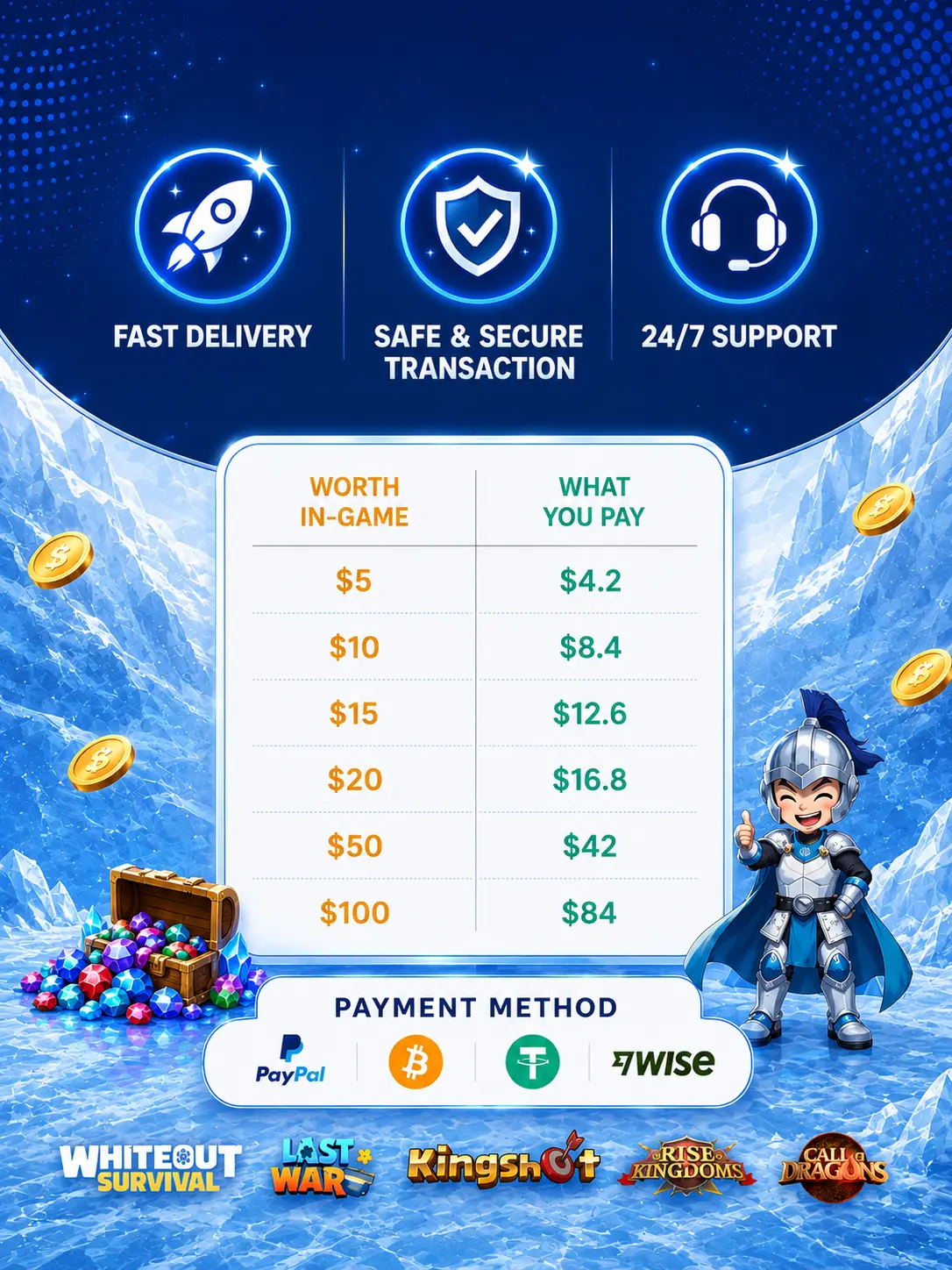
If you are exploring an independent provider, Heaven Guardian’s game top up service is one example of a service-assisted model rather than a standard in-app checkout.
How Heaven Guardian’s Top Up Process Differs From an In-Game Purchase
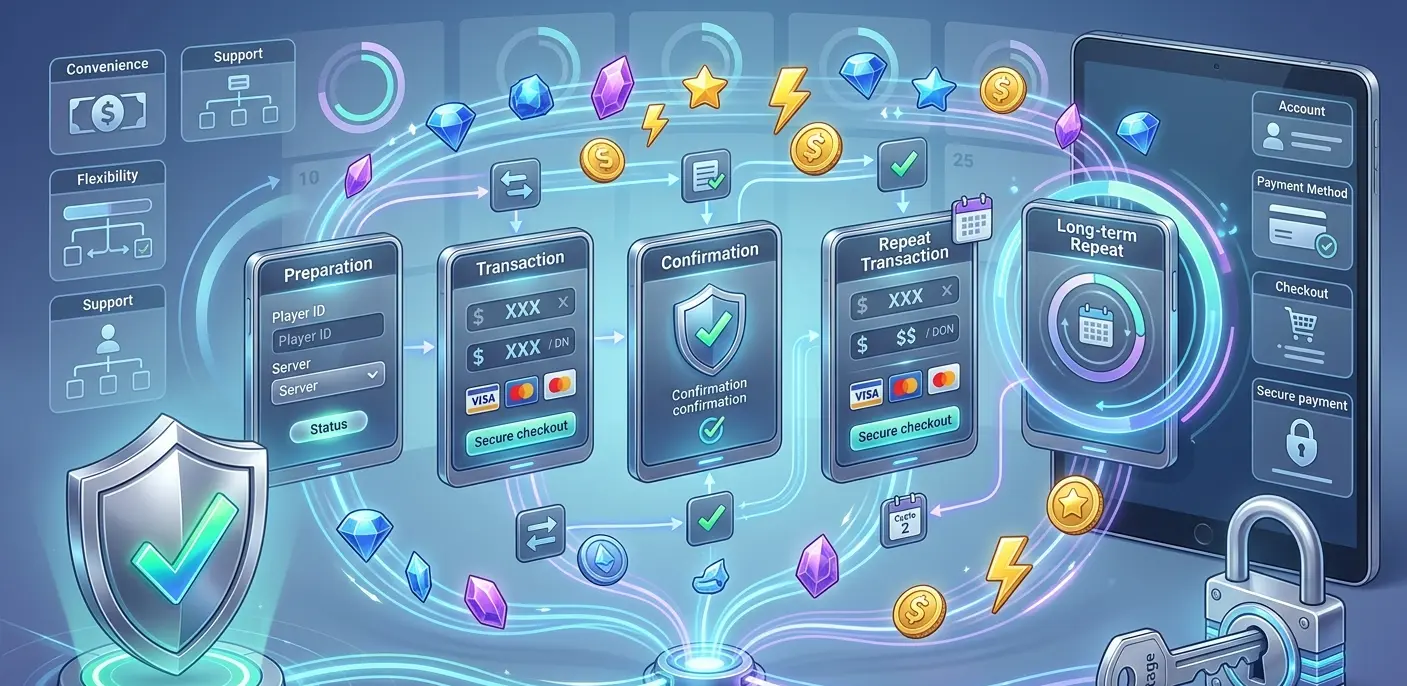 Heaven Guardian currently uses a service-assisted ordering process. It is not the same as pressing a purchase button inside the game.
- Open a private top-up ticket through Heaven Guardian’s official Discord ordering channel.
- Tell the team which supported game and package you want.
- Complete payment using a currently accepted method.
- Provide temporary game-account access when the selected top-up requires it.
- Verify the top-up on the correct account after processing.
The current Game Top Up page lists Crypto and PayPal (Friends & Family) as accepted payment methods. Players should review the characteristics and protections of their chosen payment method before paying.
Heaven Guardian currently publishes an estimated processing time of 5–30 minutes after payment confirmation, while noting that processing may take longer during peak periods. This should be treated as an estimate, not a guaranteed delivery time.
Heaven Guardian is an independent top-up provider. It should not be confused with a game developer, publisher, official in-game store, or platform owner.
How to Choose Between the Two
Instead of asking which method is universally better, compare the specific transaction in front of you.
Before paying, answer these questions:
- What exactly am I receiving? Compare identical packages whenever possible.
- What is the final price? Include taxes, fees, and currency conversion.
- Who is processing my payment? Know which company or platform is responsible for the transaction.
- What account information is required? Understand whether the service needs only an identifier or temporary login access.
- Who helps if something goes wrong? Check the applicable support and refund route before buying.
- Is this provider permitted for the game and region involved? Review applicable game and platform terms when uncertain.
- Am I using the genuine website or support channel? Do not follow payment instructions from unsolicited messages.
If an external provider cannot explain those basics clearly, the direct in-game option is usually the simpler choice.
FAQ
Is a third-party top up service better than buying directly in-game?
Not automatically. Direct purchases usually offer the simplest platform-integrated experience, while a third-party service may offer different prices, payment methods, or service arrangements. Compare the actual transaction rather than choosing solely by category.
Are third-party game top up services safe?
Some established providers can offer legitimate top-up services, but safety varies by provider. Check the official domain, ordering process, payment instructions, support information, account-access requirements, and applicable game policies before paying.
Is buying directly in-game safer?
Direct buying keeps the transaction within the game’s normal purchase environment and may give you access to platform purchase records, verification, and support tools. That removes the need to evaluate a separate top-up company, although normal payment and account-security precautions still apply.
Are third-party top ups always cheaper?
No. Prices vary by provider, platform, package, promotion, region, taxes, and currency conversion. Compare the final price for the same item instead of assuming an external service is automatically less expensive.
Do third-party top up services need my game login?
It depends on how the provider completes the top-up. Some services work with an account or player identifier, while assisted services may require temporary game-account access. Heaven Guardian’s current guide states that temporary login may be needed for some top-ups.
How long does a third-party game top up take?
There is no universal processing time. Automated and manually processed services work differently. Heaven Guardian currently publishes an estimated 5–30 minute processing time after payment confirmation and notes that peak periods can affect completion time.
What should I check before using a third-party top up service?
Verify the website, final price, payment method, account information required, support channel, transaction terms, and what happens if an order is delayed or cannot be completed. Avoid providers that rely on unclear payment instructions or unsolicited private messages.
Conclusion
The third-party top up service vs in-game purchase decision ultimately depends on what you value most and the specific options available for your game.
Direct in-game purchases are generally the simplest route because the transaction stays within the game’s normal purchase environment. Third-party providers can offer a different buying experience, but they require additional checks around the seller, payment method, account access, processing, and support.
Before choosing either method, compare the exact package, final cost, transaction process, and who will be responsible if something goes wrong. That approach is more useful than assuming one purchasing method is automatically better for every player.
For more practical comparisons, safety information, and purchasing advice, explore our latest game top-up guides.