
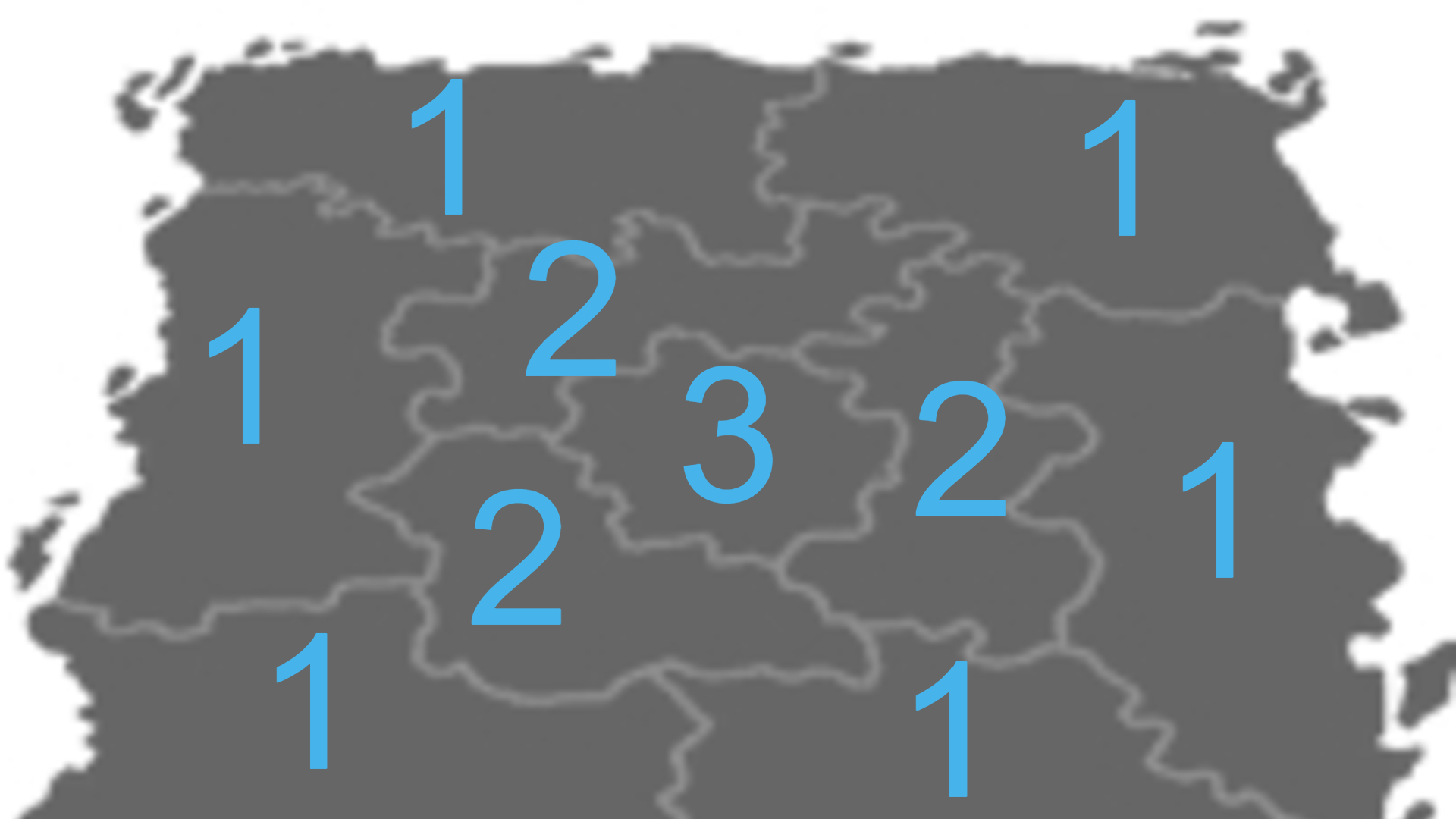
The Home Kingdom map in Rise of Kingdoms is divided into several regions that players commonly call Zone 1, Zone 2, and Zone 3. These zones determine where governors begin, which passes an alliance must control, what Holy Sites are available, and how alliances progress toward the Lost Temple.
A standard Home Kingdom contains six Zone 1 regions, three Zone 2 regions, and one central Zone 3. New governors begin in one of the outer Zone 1 regions. As the kingdom develops, alliances compete for passes that provide access to the inner regions.
Zone 3 sits at the center of the Home Kingdom and contains the Lost Temple. Controlling that objective is particularly important because the leader of the alliance that owns the Lost Temple becomes King.
Zone 1 is the outer starting area, Zone 2 forms the competitive inner ring, and Zone 3 is the single central area containing the Lost Temple. Alliances progress inward by planning territory around the appropriate passes.
What Are Zones in Rise of Kingdoms?
Zones are community names for the different regions separated by mountain ranges and passes on the Home Kingdom map.
They create a natural progression system:
- Zone 1: Six outer starting regions
- Zone 2: Three inner regions surrounding the center
- Zone 3: One central region containing the Lost Temple
As alliances advance toward the center, resource nodes improve, stronger neutral enemies become available, and strategically important Holy Sites become increasingly important.
However, moving inward is not simply a personal progression choice. Your ability to march or relocate into another region depends heavily on alliance territory, pass control, and the kingdom’s current progression stage.
Zone 1 vs Zone 2 vs Zone 3
| Feature | Zone 1 | Zone 2 | Zone 3 |
| Number of regions | 6 | 3 | 1 |
| Map position | Outer kingdom | Inner ring | Center |
| Main progression stage | Early game | Alliance competition | Kingdom leadership |
| Important pass progression | Level 1 passes separate starting regions | Level 2 passes provide access | Level 3 passes provide access |
| Important objectives | Early Holy Sites and alliance territory | Shrines, passes, and strategic territory | Lost Temple |
| Competition | Low to moderate | Moderate to high | Usually highest |
Zone 1: The Six Starting Regions
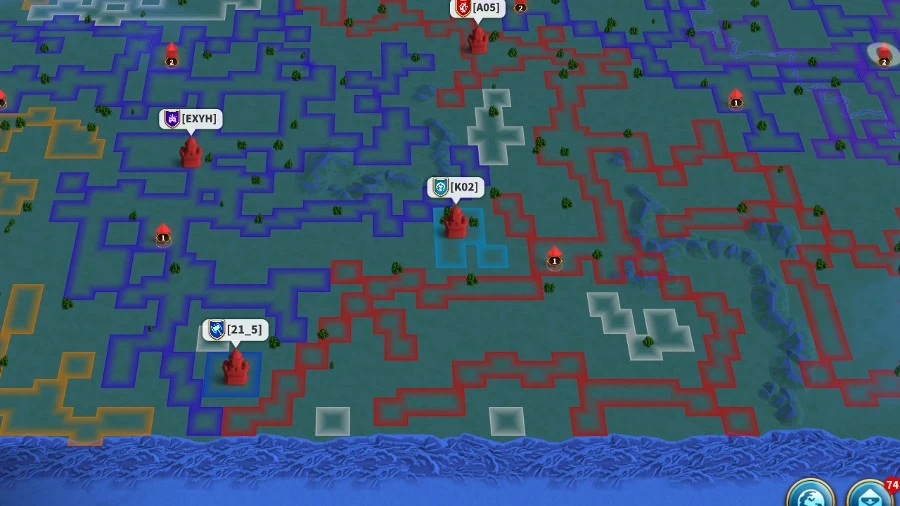
Every new governor begins in one of the six Zone 1 regions around the outside of the Home Kingdom.
This is where the early progression cycle takes place. Governors explore fog, investigate villages and caves, defeat Barbarians, gather resources, develop commanders, and join their first alliances.
At the alliance level, Zone 1 is where leaders establish their initial territorial position.
What Alliances Should Do in Zone 1
- Build the first Alliance Fortress in a useful location.
- Create efficient flag routes instead of expanding randomly.
- Connect territory toward important Holy Sites.
- Position territory toward the passes needed for future expansion.
- Secure Alliance Resource Points where practical.
- Recruit active governors before stronger competition begins.
- Keep important territory compact enough to defend.
Early flags matter because rebuilding a poor territorial route costs alliance resources and time. Therefore, alliance leaders should consider future pass access before placing every flag.
What Individual Players Should Do in Zone 1
New governors should focus primarily on permanent account progression.
- Increase City Hall level.
- Develop one reliable combat march.
- Train troops continuously.
- Upgrade economic and military research.
- Develop gathering commanders.
- Explore villages and caves.
- Participate in alliance rallies.
- Keep the city close to useful alliance territory.
Players still learning the early game can also use the Rise of Kingdoms beginner guide to organize city, commander, research, and resource progression before major zone competition begins.
Level 1 Passes and Zone 1 Movement
The six starting regions are separated by mountain ranges and Level 1 passes.
Early in a kingdom’s development, pass protection limits alliance control. As the kingdom timeline progresses, these passes become available for occupation.
Once passes become contestable, controlling them affects movement between neighboring regions. This makes even the early Level 1 pass network strategically important for diplomacy and alliance positioning.
However, players should not memorize one fixed real-world day for every pass opening. Check the Monument and current kingdom progression because pass protection is tied to the kingdom timeline.
Holy Sites in the Early Kingdom
Holy Sites are alliance objectives that provide useful buffs to the alliance controlling them.
Early Home Kingdom objectives include Sanctums and Altars. Different Holy Sites can provide economic or military bonuses, making them valuable even after an alliance begins expanding farther inward.
Controlling every site is not always necessary. A coordinated alliance should prioritize buffs that support its development strategy while maintaining a practical territorial route toward later passes.
Zone 2: The Competitive Inner Ring
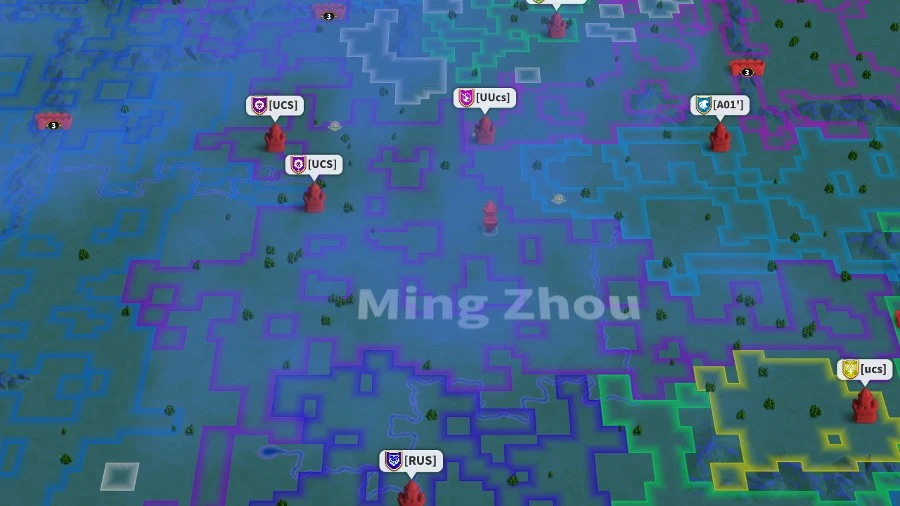
Zone 2 consists of three large regions surrounding the central Zone 3.
This stage is usually where alliance competition becomes much more serious. Fewer regions are available, so alliances that began separately in Zone 1 may now compete for the same passes, Holy Sites, resources, and strategic positions.
How to Enter Zone 2
Level 2 passes are the primary gateways into Zone 2.
An alliance normally needs the appropriate territorial position and pass access before troops can move through the mountain boundary. Therefore, leaders should build toward the desired Level 2 pass before its protection ends.
The basic preparation process is:
- Identify the desired Level 2 pass.
- Build alliance territory toward the pass.
- Coordinate with neighboring alliances before the opening.
- Prepare rally leaders and reinforcements.
- Move active members near the relevant territory.
- Capture or secure passage through the pass.
- Establish useful territory inside Zone 2.
Territorial Teleport vs Pass Access
Pass control and teleporting are related, but they are not exactly the same mechanic.
A pass allows alliance members to march through the corresponding boundary. However, if your alliance already has valid territory inside another region, a Territorial Teleport can allow members to relocate directly onto eligible alliance territory.
As a result, controlling a pass is important for movement and military access, but existing alliance territory also affects where cities can relocate.
Always inspect the teleport conditions before moving. Occupied tiles, invalid terrain, alliance borders, and other restrictions can prevent relocation.
What Makes Zone 2 Valuable?
Zone 2 provides stronger map progression than the outer starting areas. Governors can encounter higher-level neutral enemies and improved resource opportunities, while alliances compete for more important Holy Sites and positioning.
Shrines become major alliance objectives during this stage because their buffs can support both economic development and military preparation.
More importantly, Zone 2 determines who will be positioned to compete for Zone 3.
An alliance trapped far away from useful Level 3 passes may have little influence over the Lost Temple race, even if its individual members are powerful.
Best Zone 2 Alliance Strategy
Successful Zone 2 expansion usually depends more on coordination than raw power.
Before the Pass Opens
- Confirm the target pass.
- Prepare rally and garrison commanders.
- Move active fighters nearby.
- Save healing resources and speedups.
- Review coalition agreements.
- Assign rally fillers and reinforcements.
- Prepare territory builders.
After Entering Zone 2
- Secure territory before spreading too widely.
- Build toward important Shrines and future Level 3 passes.
- Avoid exposed flag chains that enemies can cut easily.
- Move active fighters into defensible positions.
- Protect high-value territorial connections.
- Continue diplomacy with neighboring alliances.
Territory should always have a purpose. Building ten extra flags toward low-value empty land may be less useful than securing one strategic route toward a Shrine or Level 3 pass.
Zone 3: The Center of the Home Kingdom
Zone 3 is different from the other zones because there is only one Zone 3 region in the Home Kingdom.
It sits directly in the center of the map and contains the Lost Temple.
Access is controlled through Level 3 passes. Consequently, competition for these passes can determine which alliances are able to establish territory near the center before the Lost Temple becomes the main objective.
How to Enter Zone 3
The progression is similar to Zone 2, but the stakes are higher.
- Secure territory near a useful Level 3 pass.
- Prepare before pass protection ends.
- Coordinate with coalition partners.
- Capture or secure passage through the Level 3 pass.
- Establish defensible territory inside Zone 3.
- Expand toward the Lost Temple.
- Protect the territory required for the eventual Temple fight.
Why the Lost Temple Matters
The Lost Temple is the central objective of the Home Kingdom map.
The leader of the alliance controlling the Lost Temple becomes the King. Kingdom leadership can then influence titles, kingdom buffs, organization, diplomacy, and preparation for future KvK seasons.
Therefore, capturing the Lost Temple is not only about the rewards from one battle. It helps establish the kingdom’s political structure.
In organized kingdoms, alliances may negotiate Temple control before the final competition. Other kingdoms fight a major internal war for it.
From a long-term perspective, preserving kingdom strength can be more valuable than destroying large numbers of troops during an unnecessary civil war immediately before KvK preparation.
How Pass Control Works
Passes act as gates through otherwise impassable mountain boundaries.
When the relevant protection period ends, alliances positioned next to a pass can contest it. Alliance territory is important because an alliance generally needs territory touching the structure in order to capture it.
Pass control provides several strategic benefits:
- Allows troop movement between connected regions
- Controls important map choke points
- Supports alliance expansion into deeper zones
- Can restrict hostile movement
- Creates defensive positions during alliance wars
- Determines routes toward higher-value objectives
However, owning a pass without territory or active members nearby provides limited strategic value. A pass must be integrated into the alliance’s broader territory plan.
Pass Levels by Home Kingdom Zone
| Pass Level | General Role | Strategic Importance |
| Level 1 | Separates outer Zone 1 regions | Early movement and alliance positioning |
| Level 2 | Provides access toward Zone 2 | First major alliance expansion milestone |
| Level 3 | Provides access into central Zone 3 | Controls routes toward the Lost Temple |
Best Zone Strategy for Individual Players
Individual governors cannot control the kingdom map alone. Your alliance determines much of your access to passes, territory, and Holy Sites.
Therefore, your most valuable contribution is usually supporting the alliance’s current objective.
Stay Near Alliance Territory
A city far from the alliance can struggle to reinforce structures or join important rallies quickly.
Relocate when leadership begins consolidating members around a new zone or strategic pass.
Keep Resources for Fighting
Entering a new zone often increases competition. Maintain enough Food, Wood, Stone, and Gold for healing instead of spending every resource immediately before a pass fight.
Follow Alliance Markers
Markers usually indicate teleport positions, attack targets, rally points, defensive lines, or areas members should avoid.
Following the map plan creates more value than chasing random enemy marches.
Do Not Gather in Active War Areas
Gathering marches are easy targets. Move them away from contested passes and flag lines when a large fight begins.
Reinforce Instead of Watching
Passes, flags, fortresses, and rallies require reinforcement. Even players who are not major spenders can contribute troops, field support, scouting, and territory construction.
Joining an established kingdom? Zone access changes with alliance control, so map position alone does not determine account strength. Players comparing a ROK account for sale should also evaluate commanders, troop tiers, equipment, technology, resources, migration status, and the alliance environment of the destination kingdom.
Best Zone Strategy for Alliance Leaders
Plan From the Pass Backward
Before building a long flag chain, identify the pass or Holy Site that matters most. Then create the shortest practical territory route toward it.
Avoid Overextending Territory
A long exposed flag line can be difficult to defend. Whenever possible, build compact routes with alternative connections around important territory.
Coordinate Teleports Before Fighting
Do not wait for the pass battle to begin before asking members to relocate. Active fighters should already be close enough to reinforce quickly.
Use Diplomacy
Not every pass requires a war. Agreements with neighboring alliances can save troops and resources while still giving both sides access to useful objectives.
Prepare Rally and Garrison Leaders
Identify commanders, equipment, and players before a major structure fight. Randomly changing rally leaders in the middle of combat creates unnecessary delays.
Think Beyond the Lost Temple
The Home Kingdom map is only the first stage of alliance development. Strong kingdoms eventually need cooperation between alliances for KvK.
A costly civil war may win Zone 3 while weakening the kingdom for the battles that follow.
Home Kingdom Zones vs Lost Kingdom Zones
Zone numbers can become confusing because players also use zone terminology for KvK maps.
This guide covers the Home Kingdom’s Zone 1, Zone 2, and Zone 3.
Lost Kingdom maps use different regions, passes, structures, and progression rules. For example, KvK maps include objectives that do not exist on the normal Home Kingdom map, and the central objective is not the Home Kingdom Lost Temple.
| Map | Common Zone Terminology | Main Purpose |
| Home Kingdom | Zone 1, Zone 2, Zone 3 | Early kingdom growth and Lost Temple progression |
| Lost Kingdom / KvK | Different season-specific zones | Cross-kingdom warfare and KvK objectives |
Therefore, advice about a “Zone 4” or higher zone usually refers to a Lost Kingdom map rather than normal Home Kingdom progression.
Common Zone Mistakes
- Staying in an inactive alliance: Poor territory planning can limit access to later zones.
- Building flags without a destination: Territory should lead toward passes, resources, or Holy Sites.
- Ignoring pass timing: Alliances should prepare before protection ends.
- Teleporting far from the alliance: Distance makes rallies and reinforcements slower.
- Confusing pass control with teleport rules: March access and Territorial Teleports do not work identically.
- Expanding too widely in Zone 2: Exposed territory is easier for enemies to cut.
- Using all resources before a pass fight: Keep enough resources for healing.
- Starting unnecessary wars: Diplomacy can preserve kingdom strength.
- Ignoring Holy Site buffs: Strategic buffs can matter more than owning random territory.
- Rushing Zone 3 personally: Access is an alliance objective rather than an individual progression milestone.
- Confusing Home Kingdom and KvK zones: Their structures and progression rules are different.
- Focusing only on power: Activity, territory, coordination, and diplomacy can determine map control.
FAQ
How many zones are in a Rise of Kingdoms Home Kingdom?
The Home Kingdom has six Zone 1 regions, three Zone 2 regions, and one central Zone 3 region.
How do you enter Zone 2 in ROK?
Zone 2 access is primarily controlled through Level 2 passes. Your alliance should establish territory near the correct pass and secure access when the kingdom timeline allows it.
How do you enter Zone 3 in Rise of Kingdoms?
Alliances enter the central Zone 3 through Level 3 passes. Zone 3 contains the Lost Temple and is normally one of the most contested areas of a young kingdom.
What is in Zone 3?
The most important Zone 3 objective is the Lost Temple. The leader of the alliance that controls it becomes King.
Can I teleport to Zone 2 without owning the pass?
If your alliance already has eligible territory inside the destination region, a Territorial Teleport may allow you to relocate directly onto that territory. Pass ownership and city teleport conditions are separate mechanics, so always inspect the current teleport requirements.
What are Holy Sites in Rise of Kingdoms?
Holy Sites are alliance objectives that provide buffs. The Home Kingdom includes Sanctums, Altars, Shrines, passes, and the central Lost Temple.
Is Zone 3 only for whales?
No. Strong accounts are important, but successful Zone 3 campaigns also depend on rally fillers, reinforcements, field fighters, territory builders, scouts, diplomacy, and alliance coordination.
Are KvK zones the same as Home Kingdom zones?
No. Zone 1, Zone 2, and Zone 3 describe normal Home Kingdom progression. Lost Kingdom maps have their own regions, passes, objectives, and season-specific rules.
Conclusion
Understanding zones makes the Rise of Kingdoms Home Kingdom map much easier to navigate. Six Zone 1 regions form the outer starting areas, three Zone 2 regions create the competitive inner ring, and one Zone 3 occupies the center.
Progression between these regions is controlled primarily through passes and alliance territory. Level 2 passes provide the main route into Zone 2, while Level 3 passes lead toward the central Zone 3 and the Lost Temple.
For individual governors, the best strategy is to remain near active alliance territory, maintain healing resources, follow alliance markers, and support rallies and structures. Alliance leaders should plan territory around passes and Holy Sites rather than building flags without a clear objective.
Most importantly, map control is a team objective. Power matters, but coordinated territory building, diplomacy, pass timing, reinforcements, and active participation determine which alliances successfully advance toward the center.
Explore more beginner advice, map strategies, commander guides, and progression tips in the Rise of Kingdoms guide collection.