
The Alliance Championship is a recurring Kingshot alliance event where six alliances compete across five automated rounds. Each matchup uses three lanes, but your alliance only needs to win two of them to take the round. Because combat happens automatically, success depends heavily on registration timing, march strength, lane distribution, and adjustments made by R4 and R5 leaders between rounds.
The most reliable overall strategy is to build two strong lanes and one weaker sacrifice lane. Individual players should register their strongest combat march while useful buffs are active, while alliance leadership should concentrate enough power into two lanes to consistently secure the required two victories.
Register with your strongest three heroes, useful combat buffs already active, and a solid troop formation. Leadership should then distribute the alliance into two competitive lanes and one sacrifice lane rather than trying to win all three equally.
How Alliance Championship Works
Alliance Championship follows five phases: sign-up, matchmaking, preparation, battle, and completion. The current event structure runs through the week, although players should always check the live event timer in case the schedule changes in a future update.
| Phase | What Happens |
|---|---|
| Sign-up | Eligible players register one march into one of three lanes. |
| Matchmaking | Your alliance is grouped with five competing alliances. Registration changes are locked during matchmaking. |
| Preparation | R4 and R5 can reorganize members between lanes before battles. |
| Battle | Five automated rounds determine your results against the other alliances. |
| Completion | Final rankings and applicable rewards are distributed. |
Players need at least Town Center Level 10 to register, and an alliance needs at least 10 registered members to proceed into matchmaking.
There are three lanes with room for up to 20 active fighters in each, allowing as many as 60 participants. Combat order within a lane is influenced by registered combat score, with stronger marches appearing later in the fighting order.
Each registered march can defeat a maximum of two enemy marches per round. After earning two KOs, or after being defeated, that march stops fighting for the remainder of that round. This mechanic is one reason balanced strength across two priority lanes is usually more effective than concentrating every powerful player in one lane.
Registration Is One of the Most Important Steps
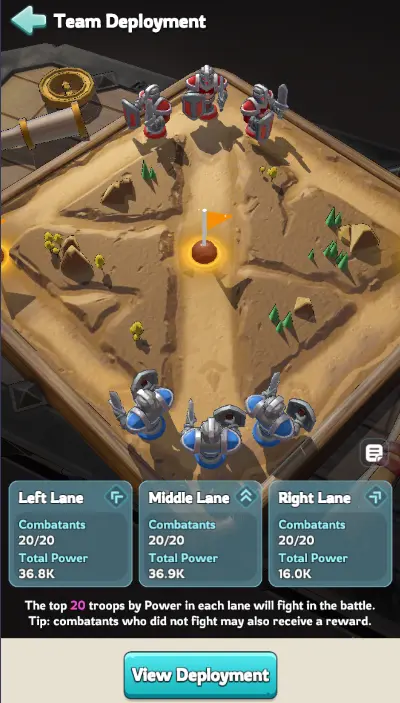
Alliance Championship takes a snapshot of your march when you register. That snapshot includes the march itself and relevant buffs active at the time.
Before confirming registration, prepare the strongest setup you realistically want to use for the event:
- Choose your three strongest suitable combat heroes.
- Equip the gear you want on the registered heroes.
- Activate relevant pet combat buffs when available.
- Use any coordinated temporary combat bonuses that your alliance considers worthwhile.
- Set your intended troop composition.
- Confirm your registration instructions with R4 or R5.
A buff that expires afterward can still remain part of the saved registration state. However, updating or re-registering the march later can replace the previous snapshot, so changes should be made carefully.
Do not casually update your registered march after a strong buffed registration. Re-registering without the same bonuses can replace the stronger setup you originally locked in.
Best Alliance Championship Troop Formation
A commonly used general formation is approximately 50% Infantry, 20% Cavalry, and 30% Archers. It provides a straightforward starting point for players who do not have a specific matchup-based formation assigned by leadership.
That does not mean 50/20/30 is universally optimal. The best troop ratio can change with your heroes, troop strength, lane role, opponent, server progression, and the strategy being used by your alliance.
For most members, following one coordinated formation is more valuable than independently switching to unusual troop ratios. Specialized counter-formations should normally be reserved for situations where leadership has enough information to justify the change.
Which Heroes Should You Register?
Alliance Championship behaves like automated PvP, so prioritize your best-developed combat march rather than choosing heroes simply because they appear in a theoretical tier list.
Your strongest available Expedition-oriented lineup will usually outperform an underdeveloped combination of supposedly better heroes. Hero generations also vary with server age, so there is no single trio that remains the correct recommendation for every kingdom.
When choosing between heroes, consider their actual development, skills, stars, gear, and how well the trio functions together.
Best Alliance Championship Lane Strategy
Use Two Strong Lanes and One Sacrifice Lane
A matchup is decided by lane victories. Since winning two lanes is enough, spreading your best players equally across all three lanes can make the entire formation easier to defeat.
Instead, alliances can concentrate their strongest participants into two priority lanes while placing the remaining roster into a third lane that leadership is willing to lose.
| Lane Role | Typical Assignment | Main Objective |
|---|---|---|
| Primary Lane | Part of the alliance’s strongest group | Win decisively |
| Secondary Lane | Remaining members of the strongest group | Secure the second required victory |
| Sacrifice Lane | Remaining registered members | Absorb the enemy’s strength while still earning KOs where possible |
For a full 60-player roster, this usually means dividing roughly the strongest 40 participants between two competitive lanes and placing the remaining members in the third. The two priority lanes should both remain strong; loading every top player into only one lane wastes power because one lane victory cannot win the round by itself.
The Sacrifice Lane Still Matters
Calling a lane the sacrifice lane does not mean its players are irrelevant. Those members can still defeat opposing marches and contribute to personal performance and applicable KO rewards.
The sacrifice lane can also punish an opponent that sends an unexpectedly weak lineup there. Every registered player should therefore use the strongest practical march available even when leadership expects that lane to lose.
How R4 and R5 Should Counter Enemy Lanes
The first round is largely blind because leadership has no previous opponent arrangement to study. Afterward, R4 and R5 can review information from previous rounds and reposition members during the preparation period.
A useful counter approach is:
- Identify the opponent’s strongest previous lane.
- Consider matching your sacrifice lane against that heavy lane.
- Send your strongest lane toward one of their weaker lanes.
- Use your second priority lane against the remaining favorable matchup.
- Repeat the analysis after every round.
This creates the possibility of trading one deliberate loss for two favorable lane battles.
However, enemy information reflects their previous arrangement rather than guaranteeing their next one. Strong alliances may also rotate lanes specifically to avoid being countered.
Build two balanced power lanes first. After Round 1, treat enemy lane history as scouting information rather than a guaranteed prediction, and rotate your own lanes when becoming predictable would make you easy to counter.
Round-by-Round Strategy for Alliance Leaders
Round 1: Start With a Stable 2-1 Setup
Because the first opponent arrangement is unknown, begin with the alliance’s planned two-strong-one-weak distribution. Avoid unnecessary experimentation during the opening round.
Rounds 2–5: Adapt to Previous Results
After each battle, examine where the opponent concentrated power. Look for an obvious weak lane, an extremely strong lane worth avoiding, or a predictable pattern that can be exploited.
Leadership should also watch its own results. If one priority lane repeatedly loses close battles while the other wins comfortably, moving some strength between them may create a more efficient distribution.
Keep Communication Simple
Alliance Championship does not require players to be online during the actual battles. Leadership therefore benefits more from clear preparation instructions than last-minute activity.
Members mainly need to register correctly and avoid changing their march unnecessarily. R4 and R5 handle the more complicated work of lane assignment and opponent analysis.
Common Alliance Championship Mistakes
- Registering without buffs: You miss the opportunity to lock useful temporary combat bonuses into the registration snapshot.
- Updating a strong registration accidentally: A weaker new snapshot can replace your previous setup.
- Trying to win all three lanes equally: This can leave every lane weaker than an opponent using a focused 2-1 strategy.
- Overstacking only one lane: One guaranteed lane victory still leaves your alliance needing another win.
- Ignoring previous enemy formations: Later rounds give leadership information that should influence positioning.
- Assuming enemies never move: Previous lane data is useful but does not reveal their current arrangement.
- Using weak heroes just to follow a meta list: A properly developed march is usually more useful than an unfinished theoretical lineup.
- Members moving without coordination: Lane strategy works best when R4/R5 control assignments consistently.
Alliance Championship Rewards
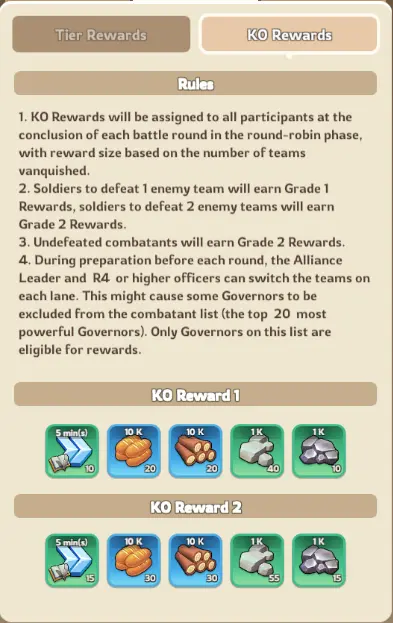
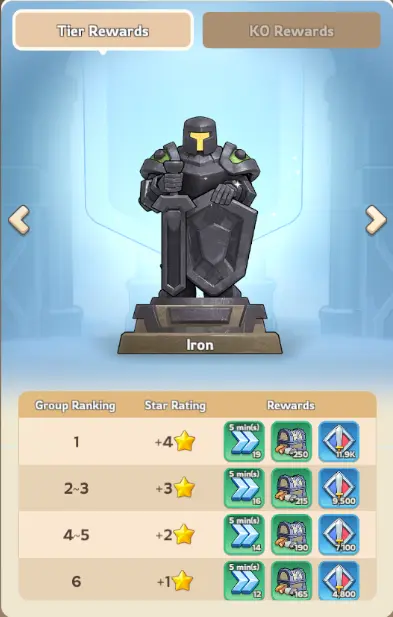
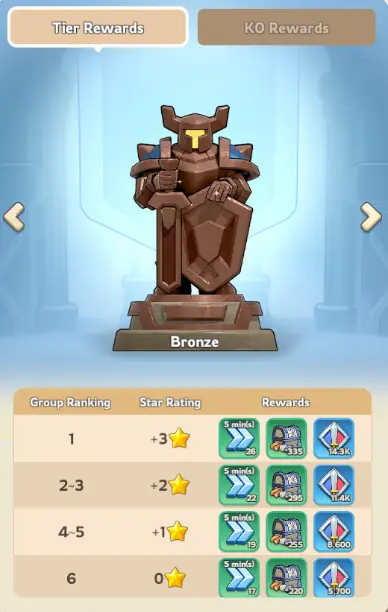
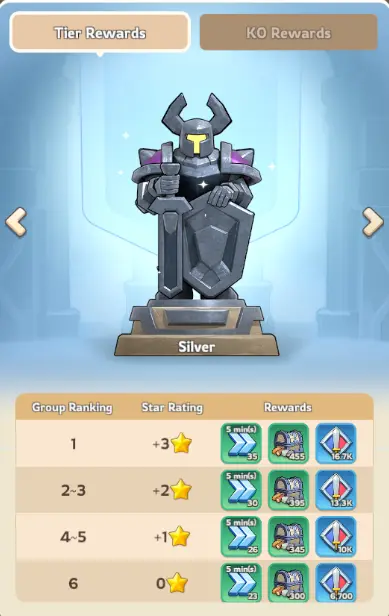
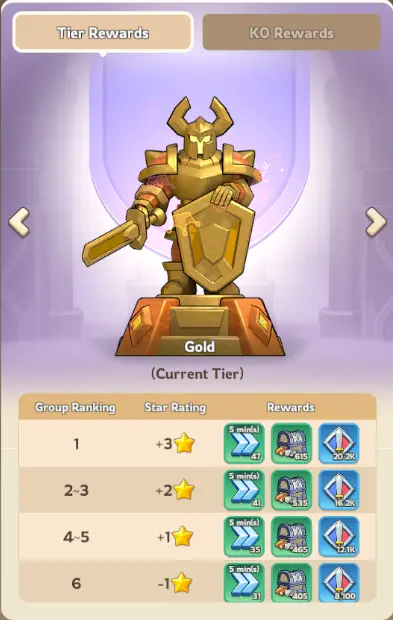
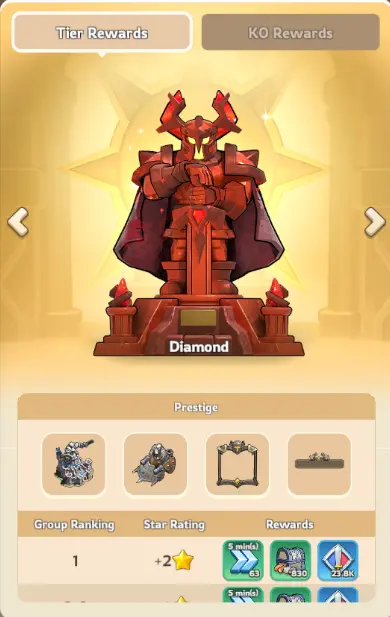
Alliance Championship provides rewards through battle performance and final event results. Defeating enemy marches can provide KO-related rewards such as research speedups and resources, while final alliance rewards depend on performance and competitive tier.
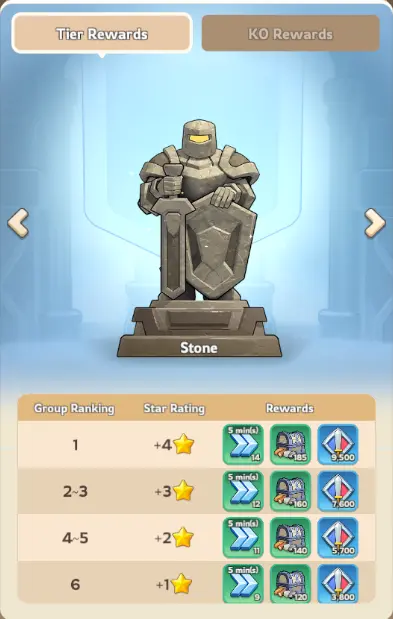
Alliance Championship uses six major tiers:
- Stone
- Iron
- Bronze
- Silver
- Gold
- Diamond
Exact reward quantities and shop availability can change as the game develops, so use the current in-game event and shop screens when planning around specific amounts.
What Should You Buy From the Championship Shop?
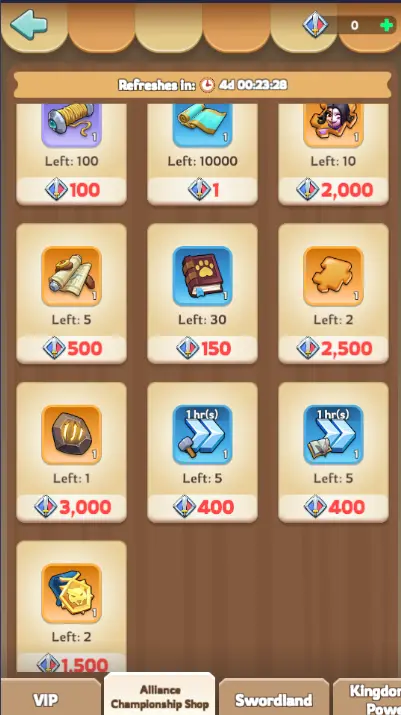
The Championship Shop develops as a server progresses, and some inventory can rotate. Available items may include hero-related progression, Gilded Threads, Satin, speedups, skill materials, and later progression resources.
For long-term progression, prioritize materials that are actively blocking an important upgrade rather than spending badges simply because an item is available. Hero shards are valuable when they belong to a hero you genuinely intend to develop, while scarce equipment or progression materials can provide better value when hero shards do not fit your account plan.
Is Alliance Championship Worth Playing Every Week?
Yes. Alliance Championship requires relatively little active battle time from normal members because combat resolves automatically. Registering a strong march gives you access to event rewards while also helping your alliance compete for better results.
The largest workload belongs to alliance leadership, which must manage lane assignments and respond to opponent formations between rounds.
If you would rather play from an already-developed profile instead of progressing a new account from the beginning, Heaven Guardian also offers Kingshot accounts for sale. This is separate from the event itself and is optional for players looking for a different starting point.
FAQs
What is the best Kingshot Alliance Championship strategy?
The strongest general approach is to concentrate alliance power into two priority lanes and use the third as a sacrifice lane. Winning two of the three lanes is enough to take the matchup.
What troop ratio should I use?
A 50% Infantry, 20% Cavalry, and 30% Archer formation is a practical general starting point. Exact formations can change depending on your heroes, opponent, server progression, and instructions from alliance leadership.
When should I register for Alliance Championship?
Register after preparing your strongest heroes, equipment, troop formation, and relevant temporary buffs. The event saves your march state when you register.
Can R4 and R5 move players after registration?
Yes. During preparation periods, alliance leadership can reorganize registered fighters between lanes to create better matchups.
Do I need to be online during Alliance Championship battles?
No. The actual lane battles resolve automatically using the registered setups and lane assignments prepared beforehand.
How many enemies can one march defeat?
A registered march can defeat up to two enemy marches during a round. After two victories, or after being defeated, it stops fighting for that round.
Should an alliance try to win all three lanes?
Usually not as the primary strategy. Securing two strong lanes is generally safer because two lane victories already win the matchup. A third-lane victory is useful when achievable without weakening the two lanes you need most.
Should I change lanes based on the previous opponent formation?
Leadership should use previous formations as scouting information, but not assume the enemy will remain unchanged. Stronger opponents may deliberately rotate their lanes between rounds.
Conclusion
The Kingshot Alliance Championship is primarily an event of preparation and alliance coordination. Individual players should register their strongest practical march while useful buffs are active, while R4 and R5 should concentrate strength into two lanes, study opponent history after the opening battle, and adjust without becoming predictable.
You do not need to dominate every lane. Consistently creating two favorable matchups is the core objective, and disciplined registration can make just as much difference as raw power. For more event strategies, hero advice, and progression information, visit our additional Kingshot guides.