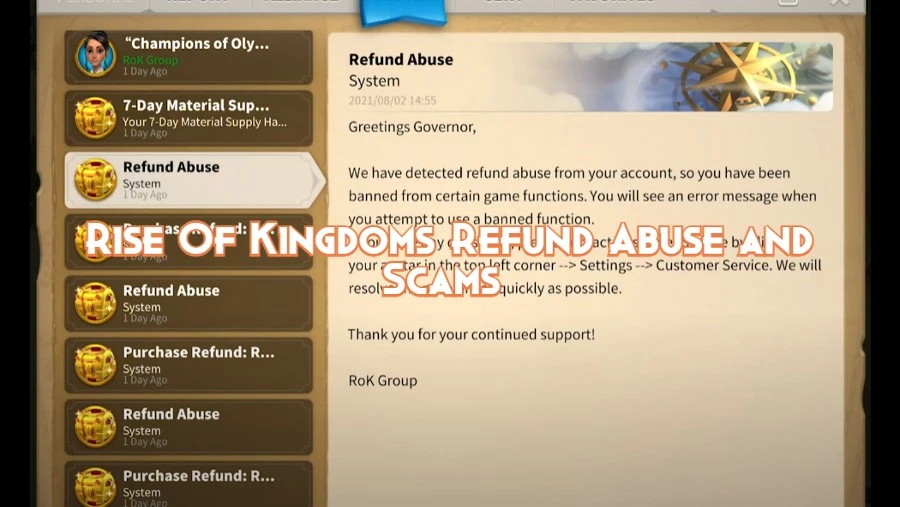
Rise of Kingdoms is an official game published by Lilith Games. However, players may still encounter unofficial top-up sellers, phishing links, fake middlemen, account-recovery scams, unauthorized purchases, and disputed-payment schemes involving the game.
A Rise of Kingdoms refund scam generally begins when someone offers discounted bundles or paid progress through an unofficial arrangement. Later, the payment may be disputed, reversed, or reported as unauthorized, leaving the account owner to resolve the consequences with the game and payment platform.
Use approved purchase channels, never share passwords or verification codes, avoid offers that require account access, keep payment records, and contact official support immediately after suspicious activity.
What Is a Rise of Kingdoms Refund Scam?
A refund scam involves a purchase that is later disputed or reversed after the account has received the related value. In some cases, the person making the purchase may not be the real owner of the payment method.
Other schemes involve a seller who temporarily increases an account’s power before transferring it. Afterward, the seller disputes the transactions or retains access to the original login and recovery method.
Because the circumstances differ, players should not assume that every refund follows the same process. Possible outcomes can depend on:
- The purchase platform
- The payment method
- Whether the purchase was authorized
- Whether the purchased content was already used
- The account’s transaction history
- The evidence provided to support
- Regional consumer and payment rules
Therefore, only official customer support can confirm the result for a specific account.
Common Rise of Kingdoms Scam Types
Unofficial Discounted Top-Up Offers
A seller promises bundles or in-game purchases at a price far below the normal cost. Then, the seller requests the player’s account credentials, verification code, device access, or payment through an unprotected channel.
The transaction may involve:
- A stolen payment method
- A payment that will later be disputed
- An account login captured for later recovery
- A fake receipt or payment confirmation
- A seller who disappears after receiving payment
Although a discount can appear attractive, no legitimate purchase requires a stranger to control your login or recovery information.
Account Power-Up and Refund Scams
In this scheme, a seller adds paid progress to an account before transferring it. Once the buyer receives the account, the original purchaser may attempt to reverse the transactions.
Warning signs include:
- Large recent power gains without clear purchase history
- No original payment receipts
- A seller who still controls the linked email
- Recently purchased bundles included in the sale price
- Pressure to complete the transaction before checking the account
As a result, buyers should review both the account’s recovery control and its recent payment history.
Phishing Links
Phishing links imitate event pages, support forms, login pages, gift-code pages, or marketplace checkouts. Their purpose is to capture passwords, verification codes, payment details, or linked-account credentials.
Before signing in, inspect:
- The complete domain name
- Spelling errors
- Unexpected redirects
- Requests for unnecessary information
- Messages claiming that immediate action is required
Meanwhile, do not trust a page only because it uses Rise of Kingdoms artwork or an official-looking logo.
Fake Middlemen
A fake middleman pretends to protect an account transaction. However, that person may be working with the seller or using an impersonated identity.
Common tactics include:
- Copying a known middleman’s name and profile image
- Creating a similar Discord username
- Moving the transaction into a private group
- Requesting direct cryptocurrency or bank payment
- Claiming that platform protection is unnecessary
Always verify the middleman through the original platform rather than through contact details supplied by the seller.
Account-Recovery Scams
A previous owner may retain control of the original email, Apple account, Google account, Facebook profile, or another linked login. Later, that person can attempt to recover access.
Consequently, changing only the visible game name or secondary email is not enough. The buyer must understand which login and recovery method ultimately controls the account.
Impersonation Scams
Scammers may pretend to be:
- Rise of Kingdoms customer support
- An alliance leader or officer
- A marketplace employee
- A trusted seller
- A known community member
- A payment or recovery specialist
Official support should not require payment through a personal wallet or ask for a password through chat.
Warning Signs of a ROK Scam
| Warning Sign | Why It Is Risky |
| Price far below normal purchase cost | The payment source or transaction may not be legitimate |
| Request for your password | The person gains direct control over the account |
| Request for a verification code | The code may allow a new login, password reset, or account recovery |
| Payment outside the agreed platform | Buyer protection may no longer apply |
| No original receipts | Purchase ownership and transaction history cannot be verified |
| Seller controls the original email | The seller may retain the strongest recovery method |
| Unfamiliar login or support domain | The page may be designed to capture credentials |
| Pressure to act immediately | Urgency reduces the time available for verification |
| Guarantee that refunds cannot affect the account | No unofficial seller can control the final decision of the game or payment platform |
One warning sign does not always prove fraud. Nevertheless, several warning signs together should stop the transaction until the details have been verified.
How to Protect Your Rise of Kingdoms Account
Protect the Linked Login First
The game account is only as secure as the email, Apple, Google, Facebook, or Lilith login connected to it.
Use the following protections:
- Create a unique password that is not used elsewhere.
- Enable two-factor authentication when the linked service supports it.
- Review active login sessions.
- Remove unfamiliar recovery methods.
- Secure the linked email before changing the game password.
- Never share one-time verification codes.
Use Approved Purchase Channels
Purchase in-game content through the game’s approved checkout, the official Lilith Store, or another payment method clearly identified by Lilith.
By contrast, avoid transactions that require:
- Remote access to your device
- Sharing account credentials
- Sending payment to an unknown personal account
- Using a login page sent through private chat
- Allowing another person to add a payment method
Keep Transaction Records
Save:
- Purchase receipts
- Order numbers
- Payment confirmations
- Seller messages
- Account-transfer terms
- Screenshots of account changes
- Dates and times of suspicious logins
These records can help official support and the payment provider review what happened.
What to Do If You Were Scammed
Act quickly, but avoid making additional payments to the same person.
- Stop using suspicious links. Close the page and do not enter more information.
- Secure the linked email or social account. Change its password before changing secondary game credentials.
- Reset passwords. Use new, unique passwords for every affected service.
- Enable or reset two-factor authentication. Remove unknown devices and recovery methods.
- Collect evidence. Save chats, receipts, transaction IDs, screenshots, and timestamps.
- Contact Rise of Kingdoms support. Use the support option available inside the game.
- Contact the payment provider. Report the transaction when it was genuinely unauthorized.
- Inform alliance leadership privately. Share facts rather than making public accusations.
- Monitor the account. Watch for new logins, password changes, purchases, or resource adjustments.
Do not pay a recovery fee to the same seller or an unknown “specialist.” A second payment often creates another loss without restoring the account.
How Alliance Leaders Should Respond
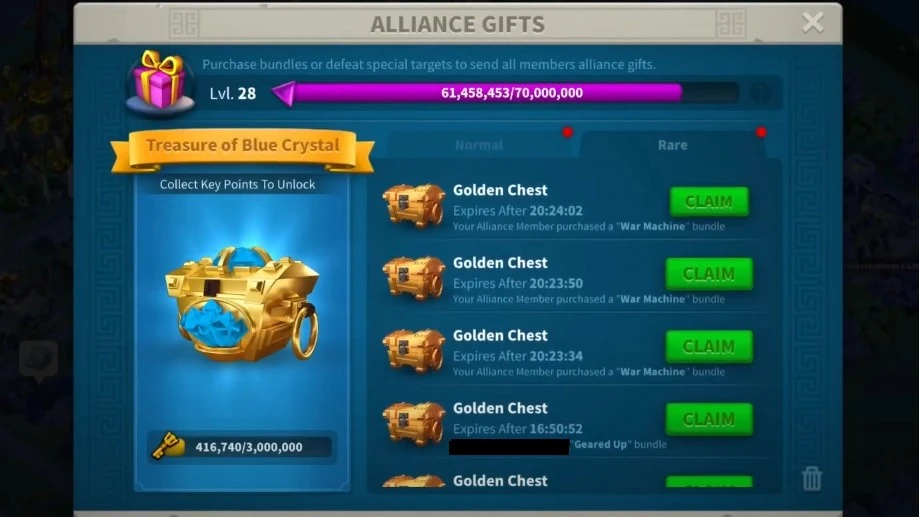
Unusual purchases, rapid power gains, or many alliance gifts can justify a review. However, they are not proof that a player has abused refunds.
Alliance leaders should:
- Document the activity with screenshots and timestamps.
- Speak with the member privately.
- Avoid public accusations without credible evidence.
- Remove sensitive leadership permissions when account access may be compromised.
- Warn members not to use the same unofficial offer.
- Report credible evidence through official support.
- Keep alliance communication factual and calm.
- Review recruitment and account-security rules.
Meanwhile, leaders should not encourage members to use suspicious sellers simply because alliance gifts appear beneficial.
Refund Abuse vs a Legitimate Refund Request
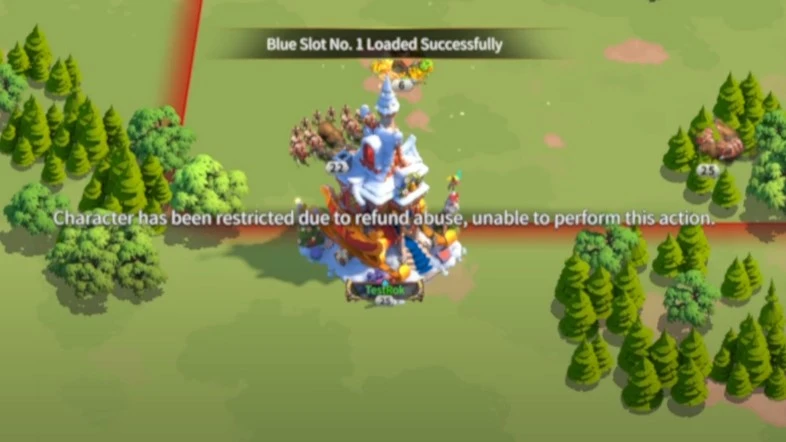
Not every refund request is fraudulent. Legitimate billing mistakes, duplicate charges, unauthorized purchases, and purchases made by a minor can occur.
| Legitimate Response | High-Risk Response |
| Contact in-game support | Ask an unofficial seller to hide the transaction |
| Provide receipts and payment records | Delete receipts or transaction messages |
| Use the payment platform’s official process | Use false information to dispute a valid purchase |
| Explain that the purchase was unauthorized | Claim fraud after intentionally using the purchased content |
| Wait for official review | Pay another person to manipulate the account |
Accordingly, players should resolve billing problems through official channels rather than assuming every dispute is automatically approved.
Common Account-Safety Mistakes
- Sharing a password: The other person gains direct account access.
- Sharing a verification code: The code may authorize a login or recovery attempt.
- Reusing passwords: A breach on another site can expose the game login.
- Allowing remote device access: The other person may view saved passwords and payment details.
- Paying outside a protected checkout: Buyer protection may no longer apply.
- Trusting screenshots as proof: Images can be edited or taken from another account.
- Ignoring the original recovery email: The previous owner may retain control.
- Using an unfamiliar login page: The page may be a phishing copy.
- Publicly accusing an alliance member: Suspicious behavior is not the same as confirmed abuse.
- Paying a second recovery seller: The new person may be connected to the original scam.
- Failing to save receipts: Support has less evidence to review.
- Waiting too long: Additional logins or purchases may occur before the account is secured.
FAQ
What is a Rise of Kingdoms refund scam?
It is a scheme in which a purchase is disputed or reversed after the account has received the related value. The transaction may also involve stolen payment details or an unauthorized purchaser.
Can a refunded purchase affect my ROK account?
It can lead to an account review or adjustment. However, the exact outcome depends on the payment, platform, account history, and official support decision.
Is it safe to use discounted third-party top-ups?
Offers that require login details, verification codes, remote access, or unofficial payment create significant account and payment risks.
Secure the linked login, save the payment evidence, contact in-game support, and report the transaction through the payment provider’s official process.
How can I protect my Rise of Kingdoms account?
Use a unique password, enable two-factor authentication on linked services, review active sessions, and never share recovery codes.
Can a previous owner recover a transferred account?
A recovery attempt may be possible when the previous owner still controls the original email, social login, purchase records, or another recovery method.
How should alliance leaders handle suspected refund abuse?
Document the activity, speak privately with the member, avoid unsupported public accusations, and report credible evidence through official support.
Where should I report a Rise of Kingdoms scam?
Use the customer-support option inside Rise of Kingdoms. Additionally, contact the relevant payment platform when the purchase was genuinely unauthorized.
Review account control before any transaction. Players comparing Rise of Kingdoms accounts should examine the linked login, original recovery method, recent payment history, transfer process, seller verification, and available buyer protection before making a decision.
Conclusion
Most Rise of Kingdoms scams rely on urgency, unrealistic discounts, credential requests, or weak account-recovery controls. Therefore, slow down and verify each step before sending money or sharing information.
First, secure the email or social login connected to the account. Next, use unique passwords and two-factor authentication. Finally, keep receipts and report suspicious activity through official support.
Alliance leaders should treat unusual purchases as a reason to investigate rather than proof of wrongdoing. Clear documentation and private communication reduce the risk of harming legitimate players.
Explore more account, commander, alliance, and progression advice in the Rise of Kingdoms guide collection.