
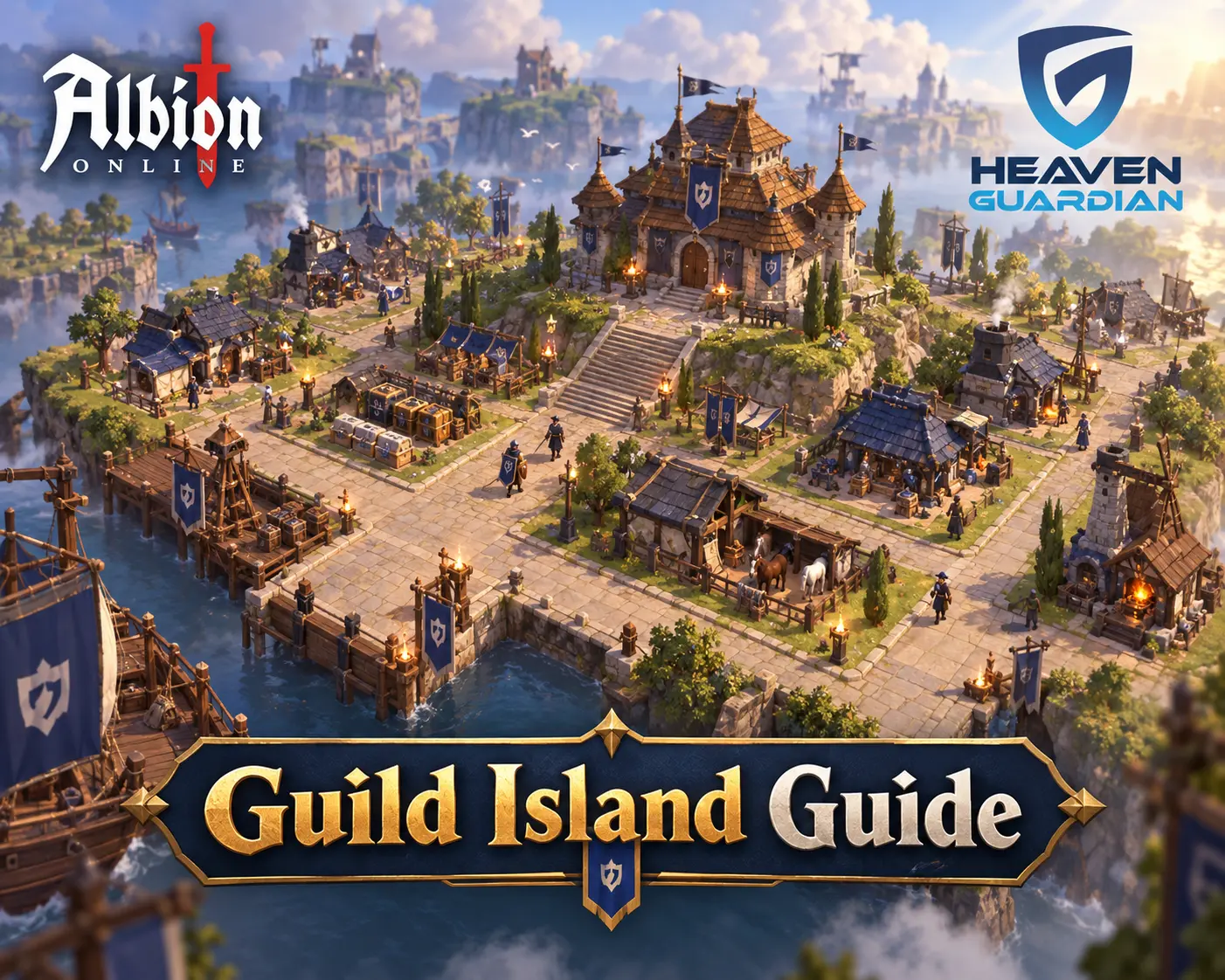
An Albion Online Guild Island is a shared private area used for Guild Halls, buildings, storage, laborers, and organized guild infrastructure. It is different from a Personal Island, hideout, or Outlands territory.
A useful Guild Island needs a clear purpose. Before spending Silver on upgrades and buildings, decide who will manage the island, which facilities members will use, how storage access works, and how construction and maintenance will be funded.
Purchase the Guild Island through the current city island interface, configure access before inviting members, and prioritize a Guild Hall, organized storage, laborers, and buildings that support regular guild activities. Upgrade only when the guild needs additional space.
Guild Island vs Personal Island
Guild Islands and Personal Islands are designed around different types of ownership and infrastructure.
| Feature | Guild Island | Personal Island |
| Ownership | Connected to a guild | Controlled by an individual character |
| Primary purpose | Shared buildings and group infrastructure | Personal economy and private infrastructure |
| Guild Hall | Central building option | Not the main island structure |
| Storage | Can be organized for guild ranks and activities | Managed by the personal owner |
| Laborers | Suitable for larger hall-based setups | Suitable for smaller personal setups |
| Farming | Not the main advantage | More closely associated with personal farming plots |
Do not copy Personal Island farming recommendations into a Guild Island plan without checking whether the same plots and facilities are actually available.
How to Buy a Guild Island in Albion Online
The guild leader or another appropriately authorized player can purchase the island through the Island Merchant or current city island interface. Check the live interface for the current Silver cost and exact requirements.
- Create or join the guild that will own the island.
- Visit the Island Merchant or open the current island interface.
- Select the Guild Island option.
- Confirm the correct guild and city.
- Review the current purchase cost.
- Complete the purchase.
- Configure island access before members begin using it.
Choose the Island City Carefully
Consider where most members operate, bank, craft, and organize activities. A cheaper or quieter city is not automatically better if members rarely travel there.
Evaluate:
- The guild’s main city
- Market and transport access
- Member travel time
- Relevant city bonuses
- Nearby content and staging routes
- Whether members already maintain Personal Islands elsewhere
Before purchasing: Decide who will fund the island, manage access, organize storage, maintain buildings, and approve future upgrades.
Guild Island Upgrade Levels and Costs
Guild Island upgrades unlock additional space for buildings and infrastructure. Exact prices, plot counts, and interface labels may change, so verify them in the current client before publishing a fixed cost table.
Use this planning framework:
| Development Stage | Recommended Priority |
| Initial Island | Guild Hall, basic storage, and access configuration |
| Early Upgrade | Additional storage or the guild’s most frequently used building |
| Intermediate Upgrade | Laborer expansion and proven crafting infrastructure |
| Advanced Upgrade | Specialized buildings with consistent member demand |
| Maximum Development | Only when existing plots are active and maintained |
Upgrade when:
- Existing plots are already useful.
- The guild needs additional storage or laborer capacity.
- A planned building supports regular activity.
- The treasury can cover construction and maintenance.
- A trusted member has accepted responsibility for the new infrastructure.
Do not upgrade simply because the next level is available.
What Is the Albion Online Guild Hall?
The Guild Hall is a central island building that can support laborers, furniture, trophies, storage arrangements, and shared organization.
A Guild Hall may be used for:
- Laborer housing
- Journal-based resource operations
- Furniture and trophies
- Organized storage
- Member staging
- Island administration
Laborers require suitable furniture and happiness conditions. Higher-tier laborers and journals also require an appropriately developed building setup.
Recommended Guild Island Buildings
The best building layout depends on what members actually use. Empty or rarely used stations consume plots and maintenance resources without helping the guild.
| Building | Possible Purpose | Build When |
| Guild Hall | Laborers, furniture, storage, and central organization | As core island infrastructure |
| Houses | Additional laborers and storage | When more laborer capacity is needed |
| Crafting Stations | Convenient equipment production | When members use them regularly |
| Refining Stations | Private material processing | When convenience and economics justify the plot |
| Repair Station | Equipment repair | When the island is used as a staging location |
| Specialized Infrastructure | Supports specific guild programs | Only after demand is demonstrated |
City stations may provide stronger bonuses or better economics. Compare return rates, usage fees, food costs, travel, and convenience before building private alternatives.
How to Organize Guild Island Storage
Shared storage should be divided by purpose. One unrestricted chest is difficult to audit and easy to misuse.
Suggested categories include:
- Member donations
- PvP regear
- Training equipment
- Crafting materials
- Refined resources
- Food and consumables
- Siege supplies
- Event rewards
- Officer-only assets
- Items awaiting transport or sale
Recommended Storage Permissions
| Rank | Suggested Access |
| Visitor | No storage access |
| Recruit | Limited deposits or training equipment |
| Member | Approved shared categories |
| Quartermaster | Assigned equipment and supply storage |
| Officer | Operational storage needed for the officer’s role |
| Leadership | High-value and administrative storage |
Grant storage and building permissions only after members complete the guild’s normal screening and trial process. See the Albion Online guild recruitment guide for applicant screening and onboarding advice.
Crafting Stations and Usage Fees
Private crafting stations can provide convenience, but they are not automatically cheaper or more profitable than city stations.
Before building a station, compare:
- Expected member usage
- Construction and upgrade costs
- Food and maintenance requirements
- City production bonuses
- Public station fees
- Resource-return differences
- Transport time
Set fees high enough to support maintenance but low enough that members have a reason to use the station. Review fees when city conditions or food prices change.
How Guild Island Laborers and Journals Work
Laborers accept matching filled journals and later return resources or other profession-related rewards. Their output depends on the journal, laborer tier, building, furniture, trophies, and happiness.
- Build or upgrade the Guild Hall or house.
- Add suitable beds and tables.
- Place the appropriate trophies.
- Hire laborers matching the guild’s activities.
- Acquire and fill matching journals.
- Give filled journals to the laborers.
- Return after the laborer cycle to collect the output.
- Compare the results with the cost of journals and infrastructure.
Choose laborers that match activities members already perform. A large setup is difficult to maintain when the guild does not generate or purchase enough journals.
Guild Island Access and Management Roles
Visiting the island, using buildings, withdrawing storage, and changing management settings should be treated as separate permissions.
| Role | Main Responsibility |
| Island Manager | Layout, access, construction, and maintenance oversight |
| Quartermaster | Storage, equipment, and supply records |
| Laborer Manager | Journals, furniture, trophies, and collections |
| Station Manager | Food, fees, upgrades, and usage monitoring |
| Member | Uses approved buildings and storage |
| Recruit | Limited access during the trial period |
A Guild Island works best when the guild already has clear leadership, contribution rules, and treasury management. Review the complete Albion Online guild management guide before assigning island responsibilities.
How to Manage Member Contributions
Construction may be funded through guild tax, direct donations, event income, or dedicated contribution campaigns.
Use a transparent process:
- Publish the building or upgrade target.
- List the required materials and Silver.
- Record large donations.
- Explain who controls the completed infrastructure.
- Do not pressure recruits into expensive contributions.
- Report when the target is completed.
Donating resources does not automatically give a member permanent ownership or unrestricted management access.
Guild Island vs Hideout and Territory
| System | Primary Purpose |
| Guild Island | Private city-linked shared infrastructure |
| Hideout | Operational base in dangerous open-world regions |
| Headquarters | Strategic guild base with additional protections where applicable |
| Territory | Outlands objective connected to guild warfare and seasons |
A Guild Island cannot replace a hideout’s open-world location or a territory’s strategic role.
Is a Guild Island Worth the Silver?
A Guild Island can be worthwhile when members actively use its storage, Guild Hall, laborers, or buildings.
It may be worth purchasing when:
- The guild needs organized shared storage.
- Members will use the planned infrastructure.
- The guild has stable funding.
- Trusted members can manage maintenance.
- A laborer or crafting plan has been evaluated.
It may be better to wait when:
- The guild has very few active members.
- No one will manage the island.
- The treasury cannot afford construction.
- Members already use better city infrastructure.
- Storage and permission rules have not been established.
Common Guild Island Mistakes
- Upgrading before existing plots are useful
- Giving recruits broad storage access
- Building stations without comparing city bonuses
- Ignoring station food and maintenance
- Using one chest for every resource
- Building laborer infrastructure without enough journals
- Allowing too many members to change permissions
- Collecting contributions without reporting spending
- Treating a Guild Island as a hideout or territory
- Copying Personal Island farming advice
- Building infrastructure that does not match guild activity
FAQs
What is a Guild Island in Albion Online?
It is a shared private area connected to a guild and used for Guild Halls, buildings, storage, laborers, and organized infrastructure.
How do you buy a Guild Island?
Use the Island Merchant or current city island interface, select the Guild Island option, confirm the guild and city, and pay the displayed cost.
What should a guild build first?
Prioritize the Guild Hall, organized storage, and infrastructure that supports regular guild activities.
Can Guild Islands use laborers?
Yes. Guild Halls and houses can support laborers when they have appropriate furniture, trophies, and matching journals.
Should a Guild Island have crafting stations?
Only when member usage, convenience, fees, maintenance, and city comparisons justify the plot.
How should Guild Island storage be organized?
Separate donations, regear, materials, consumables, event rewards, officer assets, and transport items.
Can recruits access a Guild Island?
They can receive limited visitor or training access, but valuable storage and management permissions should remain restricted.
Is a Guild Island the same as a hideout?
No. A Guild Island is city-linked private infrastructure. A hideout is an operational base placed in dangerous open-world regions.
Is a Guild Island worth buying?
It can be worthwhile when members actively use its Guild Hall, storage, laborers, and buildings. An unused island may not justify the cost.
Conclusion
An Albion Online Guild Island is most valuable when it supports an organized guild. Plan the layout, Guild Hall, storage, laborers, access permissions, and maintenance responsibilities before making major investments.
Upgrade only when existing plots are useful, compare private stations with city alternatives, and limit sensitive permissions to trusted members.
Looking for more guild management, builds, gathering, PvP, and progression advice? Explore more Albion Online guides.