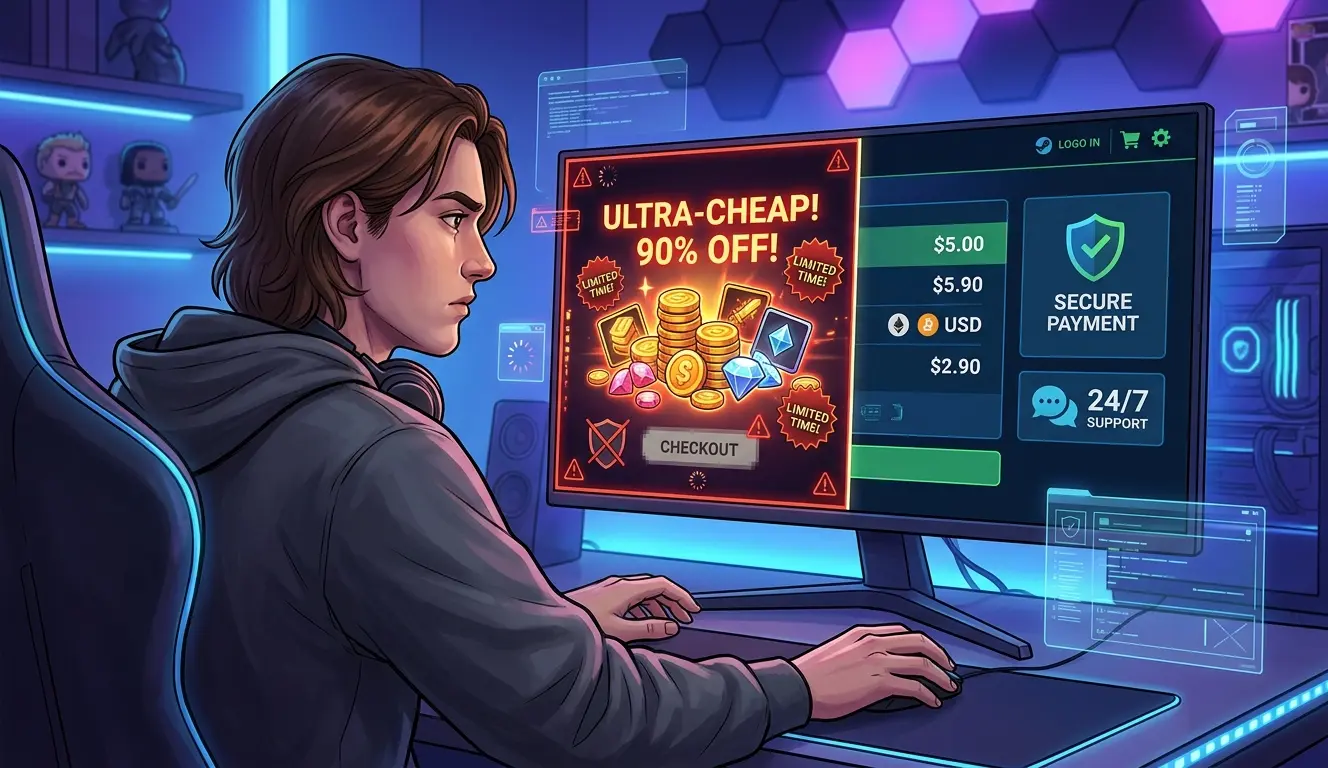
Cheap game currency is always tempting.
For most players, the idea sounds simple: if two websites appear to sell the same in-game currency, packs, or top-up options, why not choose the cheaper one and save money?
That is where the problem begins.
A very low price does not always mean a better deal. In some cases, it can mean poor service, unclear fulfillment, weak account protection, suspicious payment handling, or a website that is trying to win trust with price alone. For players who buy game currency through third-party services, the real cost of a “cheap” top-up is not always visible at checkout.
Sometimes the risk is not the product itself. It is everything around it.
Why cheap prices attract players so easily
There is nothing unusual about wanting better value. Gamers compare prices all the time, especially when buying currency, skins, bundles, or event packs in games where spending can add up quickly. A lower price feels like a smart move, especially when the item looks identical on the surface.
The issue is that price can lower a player’s guard. Once a deal looks far better than everything else available, people often stop asking the important questions. They stop checking whether the site is transparent, whether the payment process is clear, whether the information request makes sense, or whether the service has a trustworthy reputation.
In other words, the cheaper the offer looks, the easier it becomes to focus on the savings and ignore the risk.
Cheap does not always mean fake, but it should make you more careful
This is an important distinction. A lower price by itself does not prove that a website is unsafe. Some services may run promotions, adjust margins, or price products competitively for legitimate reasons. But when a price looks unusually low, players should treat that as a signal to verify more carefully.
A suspiciously cheap offer can sometimes be linked to:
- unclear order fulfillment
- poor customer support
- hidden conditions
- unreliable delivery
- risky checkout methods
- pressure tactics designed to create impulse purchases
The issue is not simply the number on the page. It is whether the low price makes sense when compared with the rest of the buying experience.
The biggest risk is trusting the price more than the website
A lot of players make the same mistake: they evaluate the deal before they evaluate the seller.
That is backwards.
If a top-up website has weak trust signals, vague product pages, limited support, unusual payment methods, or poor checkout transparency, then the lower price should not be treated as a benefit. It should be treated as one more reason to slow down.
A legit top-up service should make players feel comfortable with:
- what is being sold
- how the order is fulfilled
- what information is required
- how payment is handled
- where support is available if something goes wrong
If the only strong thing about the site is the discount, that is not enough.
Cheap offers can hide weak payment protection
This is one of the most overlooked risks.
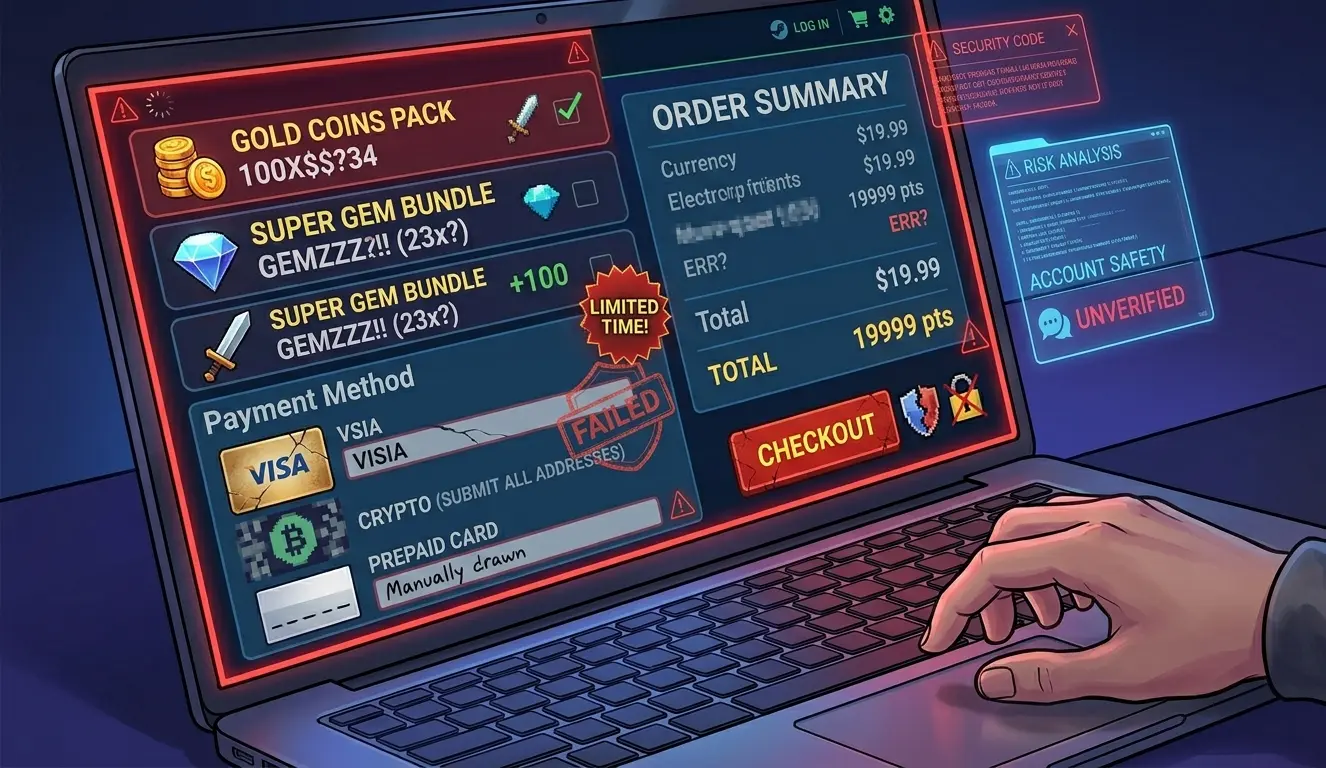
Some low-cost top-up sites push buyers toward payment methods that feel less structured or harder to resolve if there is a problem. The checkout may look rushed, incomplete, or inconsistent with the rest of the website. That matters because price is only part of the transaction. The payment experience matters too.
A safer buying experience usually feels clear and predictable:
- the item is listed properly
- the total cost is shown clearly
- the payment step is easy to follow
- the order confirmation is straightforward
- support is visible if something goes wrong
A risky site often feels different. It may rush you into payment, create confusion at the final step, or make the process feel more improvised than professional. If a cheap offer comes with a messy payment experience, the price advantage may not be worth it.
A low price means very little if the payment process itself does not feel safe, which is exactly why secure payment matters when buying game currency online.
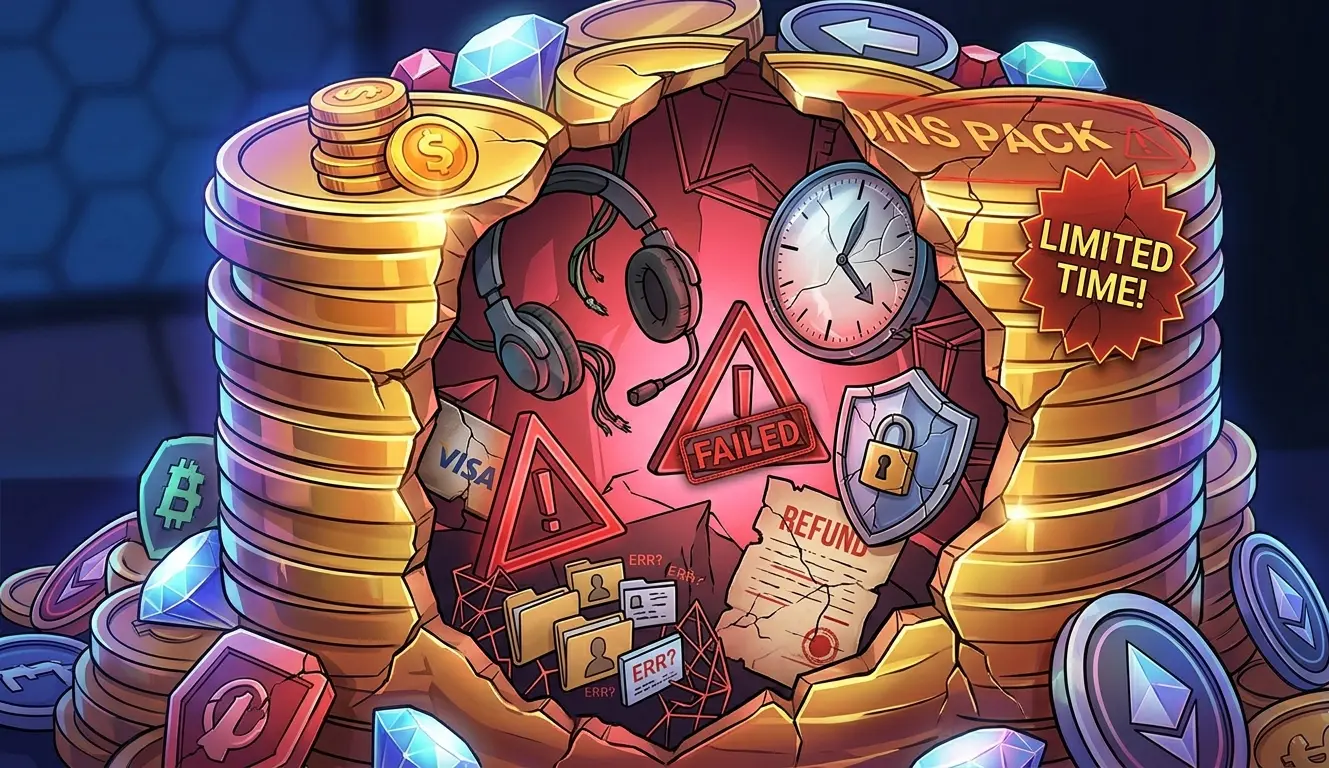
The lower price may look attractive at first, but players should always ask what might be missing behind it.
1. Slower or less reliable delivery
A site may advertise cheap top-ups but provide inconsistent fulfillment times or weak communication after purchase. If there is a delay, the player may have little visibility into what is happening.
2. Limited or poor customer support
Cheap services sometimes cut trust-building features first. That may mean weak support channels, slow responses, or no clear help process when an order goes wrong.
3. Unclear refund or order policies
A site focused only on winning attention with low prices may not be equally clear about what happens if there is a failed order, payment issue, or delivery problem.
4. More aggressive data requests
Sometimes a suspicious site compensates for weak trust by asking for more information than it really needs. If a cheap offer comes with requests for sensitive account details, that is a serious concern.
5. Pressure-based selling
Extreme countdowns, dramatic warnings that stock is almost gone, or repeated “buy now before it disappears” messages often make a low price feel more urgent than it should.
None of these issues automatically appear every time a site offers a discount. But when several of them appear together, the cheap price starts looking much less attractive.
If the price feels too good to be true, check everything else harder
This is the best mindset for players.
You do not need to reject every low-cost top-up immediately. You just need to verify it more carefully.
Before buying cheap game currency, check:
- whether the website looks consistent and professional
- whether support information is easy to find
- whether product details are clear
- whether the payment process looks normal
- whether the site only asks for necessary information
- whether the brand has a trustworthy reputation outside its own website
If a service cannot pass those basic checks, the lower price does not make it safer. It simply makes the risk easier to ignore.
Cheap prices can also increase account risk
This happens when a player becomes more willing to accept questionable requests because the savings feel worth it.
A buyer might think:
- “Maybe it is normal that they need more information.”
- “Maybe the strange payment method is fine.”
- “Maybe I should just finish the order quickly.”
That is exactly the kind of thinking risky sellers benefit from.
A legit top-up service should not need players to lower their standards just because the offer looks good. If the cheaper option comes with requests for passwords, verification codes, recovery details, or anything that gives direct account access, the player is no longer saving money in a meaningful way. They are increasing exposure.
The safer habit is to judge every website by the same rules, no matter how attractive the discount looks. A cheaper deal is never worth it if it puts your account at greater risk, which is why players should know how to protect their account when buying game currency.
Value and safety are not the same thing
This is the main takeaway.
A cheaper top-up can still be a good choice if the service is transparent, the checkout is clear, the support is visible, and the site has earned trust. But cheap prices on their own should never be mistaken for value.
Real value comes from the full experience:
- a trustworthy website
- a clear order process
- reasonable information requests
- normal payment handling
- confidence that the order will be completed properly
When players only compare the number on the page, they risk missing the part that matters most: whether the service is actually safe to use.
How players should approach cheap game currency offers
A smart approach is simple.
Do not ask only, “How much am I saving?”
Also ask:
- “Why is it cheaper?”
- “Does this website look trustworthy?”
- “Would I still feel comfortable buying here if the price were average?”
- “Is the service clear about what it needs and how it works?”
Those questions help separate a genuinely competitive offer from a risky one.
In many cases, the best buying decision is not the absolute cheapest option. It is the one that balances price with trust, clarity, and account safety.
FAQs
1. Is cheap game currency always risky?
No, not always. A lower price does not automatically mean a site is unsafe. But unusually cheap offers should make players verify the website more carefully before buying.
2. Why do some cheap top-up websites feel suspicious?
Because the low price is sometimes used to distract from weak trust signals such as unclear product details, poor support visibility, strange payment methods, or excessive data requests.
3. Can cheap game currency lead to account problems?
It can if the website asks for sensitive account details, uses questionable checkout practices, or encourages players to ignore warning signs just to get the lower price.
4. What should I check before buying cheap game currency?
Look at the website quality, support options, payment flow, information requested at checkout, and the brand’s reputation outside its own site.
5. Is the cheapest top-up always the best value?
Not necessarily. The best value usually comes from a service that balances fair pricing with trust, transparency, and a safer overall buying experience.
6. How do I know whether a cheap offer is still safe?
Ask whether the site would still look trustworthy even without the discount. If the only thing it has going for it is the low price, that is a reason to be cautious.
Conclusion
Cheap game currency can look like an easy win, but low prices do not automatically mean low risk. When players focus only on the discount, they can miss warning signs tied to weak support, unclear checkout flows, poor transparency, or unnecessary account exposure.
The better approach is to treat price as only one part of the decision. A truly good top-up experience should combine value with trust, clarity, and a process that feels safe from start to finish. If a deal looks unusually cheap, that is not always a reason to buy faster. Often, it is a reason to verify more carefully.
💎 Looking for a trusted game top up service? Heaven Guardian helps players top up safely with secure payment and smooth delivery.