
Buying from a third-party top-up service is convenient, but many players still hesitate when they reach the checkout page.
That hesitation is understandable.
A site may ask for your player ID, server, character name, or email address, and in that moment, it is easy to wonder whether those details are normal or whether the service is asking for too much. When you are spending money on game currency, knowing the difference matters.
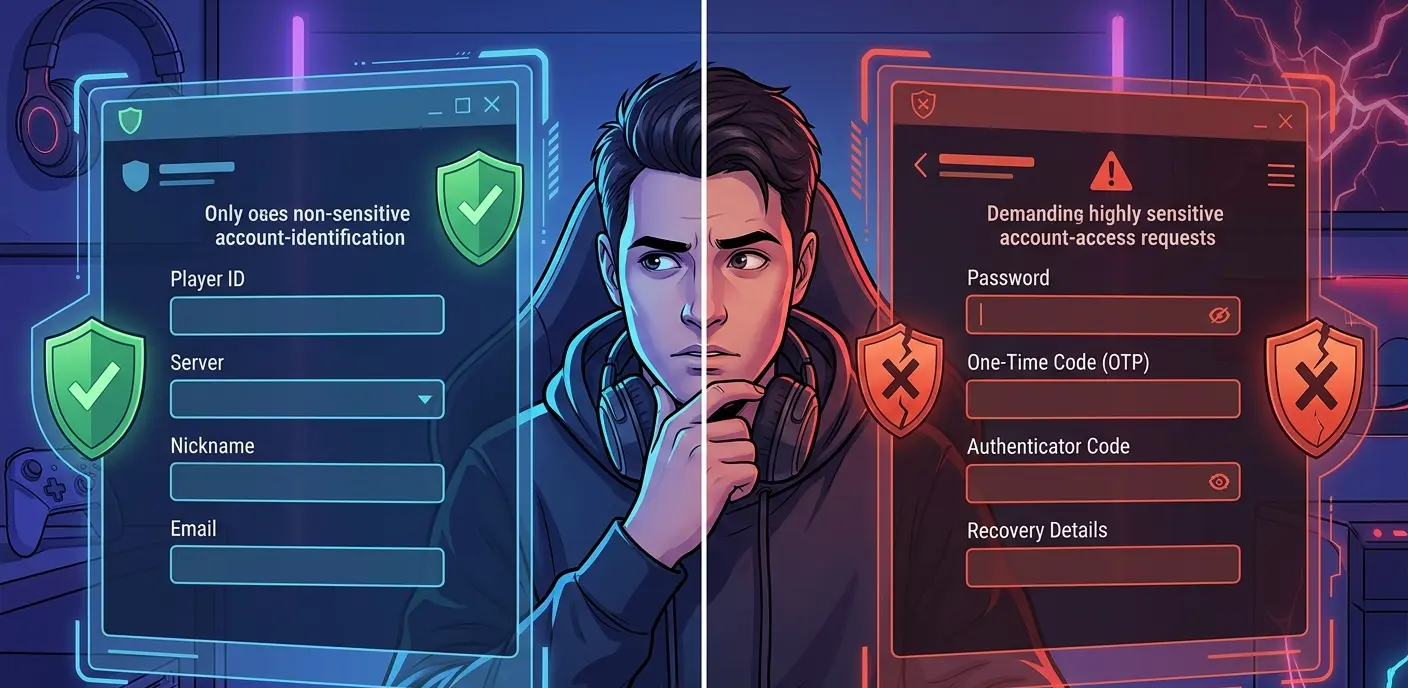
A legit game top-up service may need some information to complete an order correctly. But it should only ask for details that help identify your account, confirm your payment, or support your order. The moment a site starts asking for passwords, one-time codes, or other account-access details, that is a serious warning sign.
The safest way to think about it is this: a normal top-up service may need enough information to find your account, but it should not need enough information to enter it.
Why top-up services ask for account details in the first place
Not every game handles top-ups the same way.
In many games, a purchase has to be matched to a specific player account before currency, bundles, or packs can be delivered. That is why some services ask for details like a user ID, player ID, region, server number, or character name.
Those requests are usually about delivery accuracy, not account access.
If you play games like Whiteout Survival, Last War, Rise of Kingdoms, or Kingshot, a top-up service may need enough information to make sure the order reaches the correct account on the correct server. That is completely different from giving a website access to your login.
A helpful rule is simple: if the information helps identify your in-game profile for fulfillment, it may be reasonable. If it could let someone sign in, bypass your protections, or take control of the account, it has gone too far.
Information a legit game top-up service may reasonably ask for
A trustworthy service should keep its information request practical and limited.
1. Player ID or User ID
This is one of the most common details in game top-ups.
Many games use a unique account number or user identifier that helps connect the order to the right profile. Asking for this is usually normal.
2. Server, region, or realm
Games with multiple servers often require server information so the purchase goes to the correct account. Without it, the chance of delivery mistakes is higher.
3. Character name or nickname
Some services may ask for your in-game name as an extra confirmation step. This can help avoid errors, especially in games with similar account names or multiple servers.
4. Email address
A top-up website may reasonably ask for your email address to send order confirmation, payment receipts, or support updates. That is standard in most online purchases.
5. Payment information through a clear checkout process
Like any online store, a top-up service may need payment-related details to process the purchase. The important part is that the checkout flow should feel secure, clear, and easy to understand.
If there is a problem with an order, support may ask for your order number, game title, payment reference, or basic transaction details to investigate the issue. That is normal when it is directly connected to customer support.
Information a legit game top-up service should not ask for
This is where players need to be more careful.
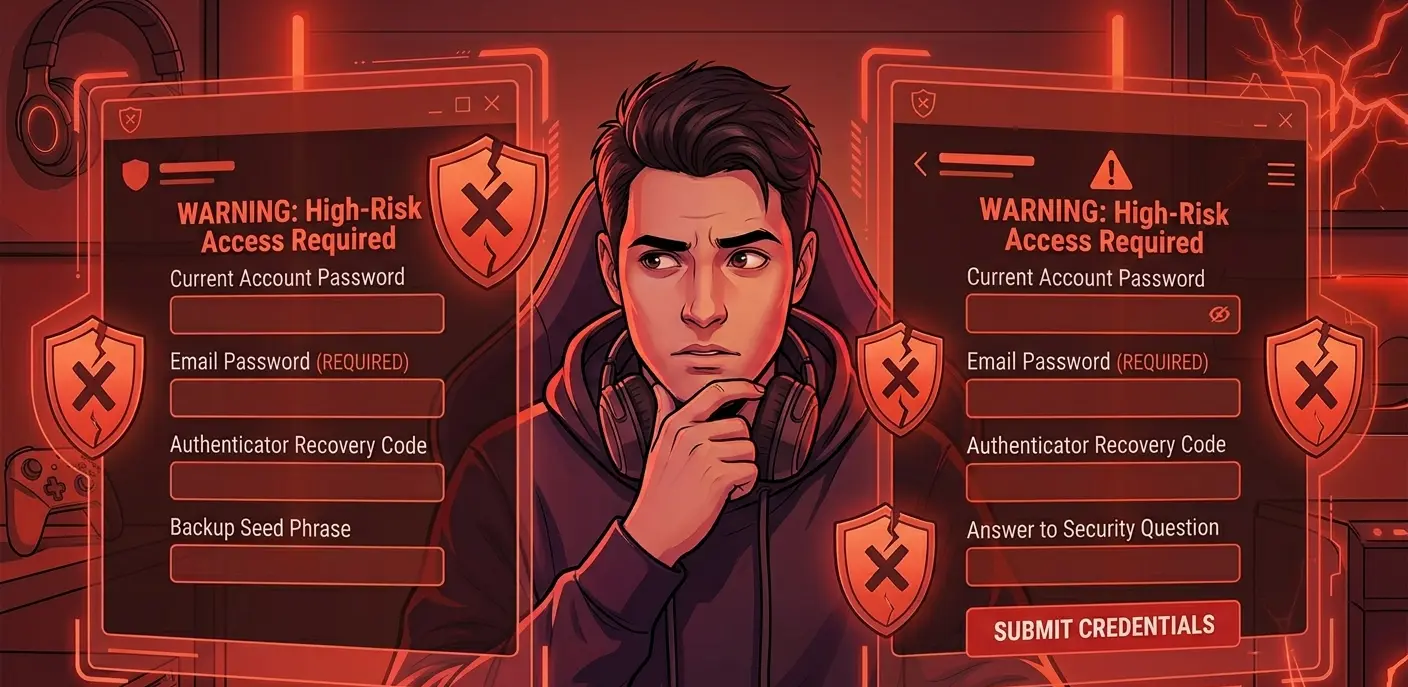
A proper top-up process should not require you to hand over direct access to your account. If a site asks for information that goes beyond order fulfillment and starts moving into login control, you should stop immediately.
1. Your game login password
This is one of the clearest red flags.
A legit top-up service should not usually need your password just to deliver currency or packs. If a site asks for it, that creates unnecessary account risk.
2. Your email password
No top-up service should ever need access to your email account. Email access can expose password resets, payment confirmations, and security messages connected to far more than just one game.
3. One-time verification codes
This includes SMS codes, authenticator app codes, email verification codes, and any temporary login approval.
These codes exist to protect your account. If you give them away, you may be handing over the final step someone needs to break in.
4. Recovery details
A site should not need your backup email, recovery phone number, security questions, or similar account-recovery data. That kind of information does not help fulfill a top-up safely.
If a website asks for personal details that do not clearly help with payment, delivery, or support, take that as a reason to pause. A trustworthy service should be able to explain exactly why each required detail matters.
A legit service should never need full account access, which is exactly why players should understand why they should never share their login details for game top-ups.
The difference between account identification and account access
This is the most important distinction players should remember.
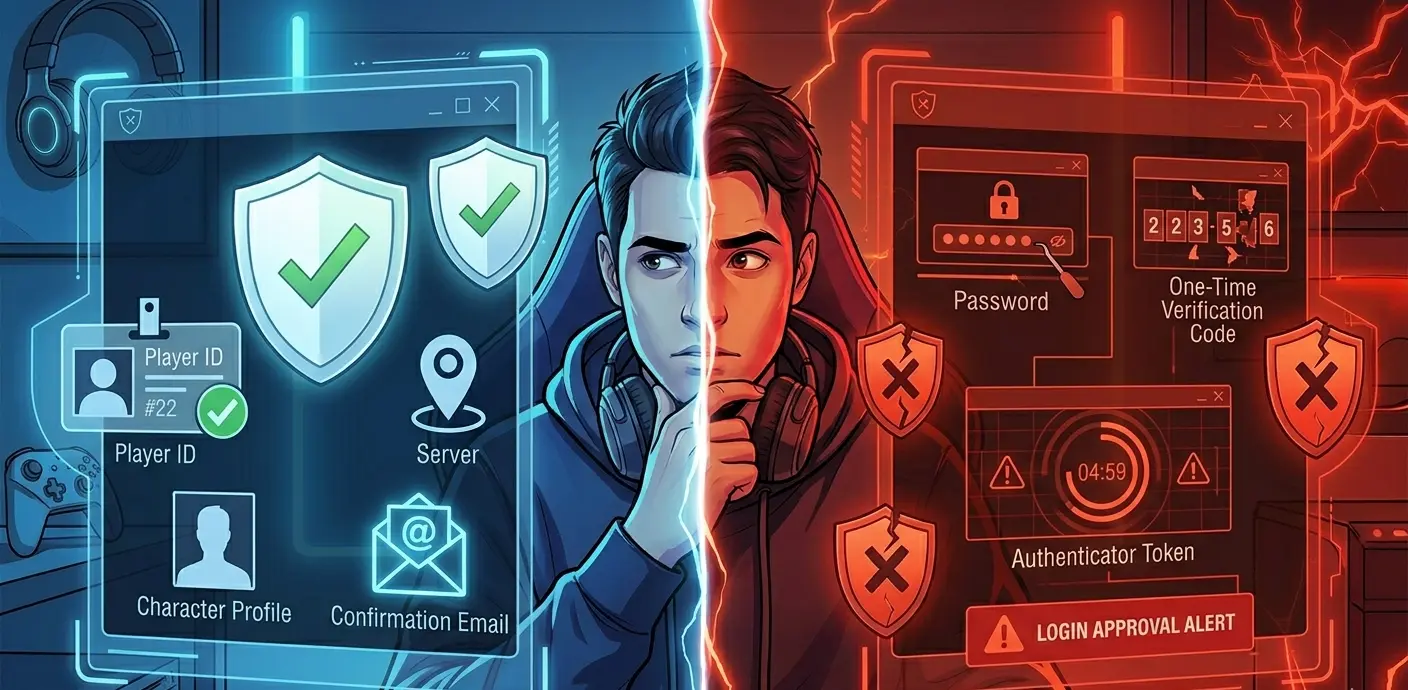
A legit top-up service may need information to identify your account. It should not need information that lets it access your account. That single difference can help you judge almost any checkout page more clearly.
Account identification examples
- player ID
- game UID
- server or region
- character name
- email for order confirmation
Account access examples
- password
- verification code
- login approval request
- recovery details
- authenticator code
The first group helps complete the order. The second group can put the account at risk. If a top-up process starts moving from identification into access, that is the point where you should stop.
Why some players still get confused
The confusion usually comes from how differently games handle purchases.
Some games make top-ups simple and only require a player ID. Others have more account-linked systems, which can make players assume that more invasive requests are normal across the board. They are not.
Another issue is presentation. Risky services often make unreasonable requests sound routine. They may say a password is needed for “verification” or that temporary access is required to “complete the order.” But players should not judge a request by how confidently it is explained. They should judge it by whether the information is truly necessary for fulfillment.
If a detail does not help match the purchase to your account, process the payment, or resolve an order issue, it probably does not belong in the checkout flow.
How to decide whether a request is reasonable
Before entering any account-related information, ask yourself a few simple questions.
Does this information help deliver the order?
If yes, it may be reasonable.
Would this information let someone log into my account?
If yes, it is likely too much.
Is the reason for the request clear?
A trustworthy service should explain why it needs each important detail.
Does the request match the game’s normal top-up process?
If it feels unusual, compare it with how more established services handle the same game.
Does the website look transparent overall?
Information requests do not exist in isolation. A legit service should also have clear product pages, visible support options, and a checkout flow that makes sense from start to finish.
What players should do before submitting any details
Even if a site only asks for your player ID and server, it is still smart to verify the service before placing an order.
Check the website address, review how the checkout works, confirm that the payment methods look normal, and make sure the support section is easy to find. If the site feels vague about what it needs or why it needs it, do not rush the purchase.
It is also worth remembering that your own account security should stay strong before, during, and after any top-up. A good buying experience should never depend on weakening your password habits, sharing codes, or giving away more information than necessary.
Before sharing any account details, it is always worth taking a moment to verify if a game top-up website is legit before you buy.
FAQs
Does a legit game top-up service need my player ID?
Often, yes. Many services use a player ID or user ID to deliver currency or items to the correct game account.
Should a top-up website ask for my password?
In most cases, no. A normal top-up service should not need your password just to process a purchase.
Is it normal for a top-up service to ask for my server?
Yes, especially for games with multiple servers or regions. That information helps make sure the order goes to the correct account.
No. Verification codes are meant to protect your account. Sharing them can expose your account to unnecessary risk.
Why would a top-up site ask for my email address?
Usually for order confirmation, receipts, or support communication. That can be normal as long as the site is transparent and trustworthy.
What should I do if a top-up site asks for too much information?
Stop and verify the website before continuing. If the request includes passwords, recovery details, or verification codes, it is better not to proceed.
Conclusion
A legit game top-up service only needs information that helps complete your order, confirm your payment, or match the purchase to the right in-game account. That usually includes details like your player ID, server, character name, and contact information for updates.
What it should not need is direct access to your account.
If a site asks for passwords, one-time codes, or sensitive recovery details, that is no longer a normal top-up request. It is a warning sign. For players who want a safer buying experience, the smartest habit is to separate account identification from account access and never confuse the two
💎 Looking for a trusted game top up service? Heaven Guardian helps players top up safely with secure payment and smooth delivery.